CM Dhami: Uttarakhand Preserving Lost Regional Literature
Synopsis
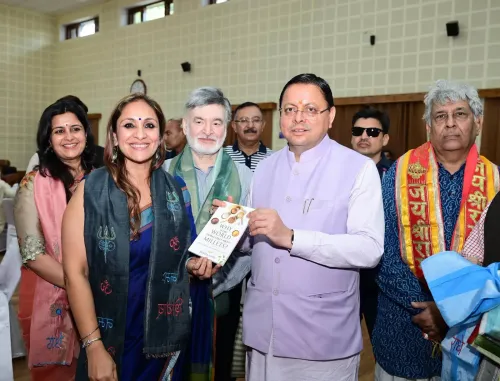
CM Pushkar Singh Dhami has reaffirmed that the Uttarakhand government is continuously collecting, preserving and publishing the state's old, scattered and unpublished literature through the Uttarakhand Bhasha Sansthan, the state body for regional language promotion.
Key Takeaways
CM Pushkar Singh Dhami confirmed the state's ongoing literary preservation drive on 29 July 2026 .
The Uttarakhand Bhasha Sansthan is the state body responsible for collecting, preserving and publishing regional literature.
The effort targets old, scattered and unpublished works — primarily in Garhwali and Kumaoni languages.
Uttarakhand was formed in 2000 , after which state-level institutions began documenting heritage distinct from Uttar Pradesh.
Out-migration and urbanisation have accelerated the risk of losing oral and written literary traditions from hill districts.
Upcoming state budgets and cultural announcements will indicate the scale of funding and specific projects underway.
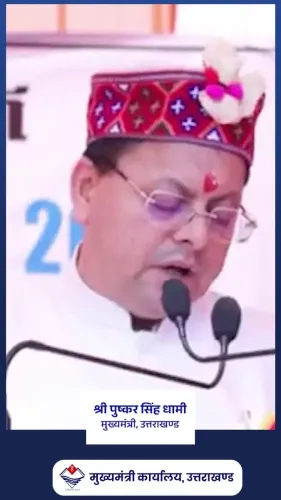
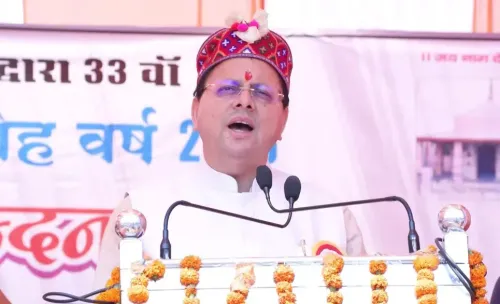
Uttarakhand's scattered and unpublished literary heritage — verses tucked away in mountain villages, manuscripts never formally recorded — is now the focus of a sustained state mission. Chief Minister Pushkar Singh Dhami reaffirmed on Wednesday, 29 July 2026 that the state government is actively collecting, preserving and publishing the region's endangered literary works through the Uttarakhand Bhasha Sansthan.
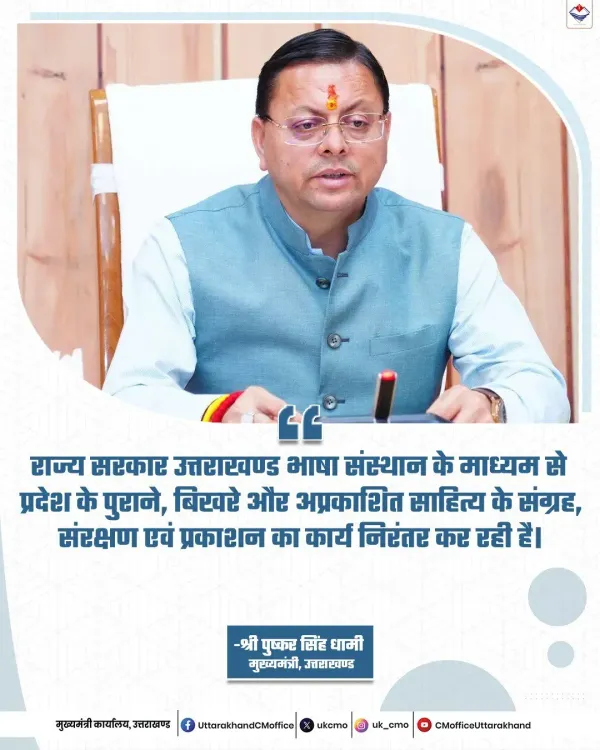
Quoting CM Dhami directly: 'राज्य सरकार उत्तराखण्ड भाषा संस्थान के माध्यम से प्रदेश के पुराने, बिखरे और अप्रकाशित साहित्य के संग्रह, संरक्षण एवं प्रकाशन का कार्य निरंतर कर रही है।' ('The state government, through the Uttarakhand Bhasha Sansthan, is continuously engaged in the collection, preservation and publication of the state's old, scattered and unpublished literature.')
What the Bhasha Sansthan is trying to save
The Uttarakhand Bhasha Sansthan is the state body mandated to promote and document the region's regional languages — primarily Garhwali and Kumaoni — alongside other local literary traditions. When Uttarakhand was carved out of Uttar Pradesh in 2000, it inherited a rich but fragmented cultural record: oral poetry, folk narratives, and handwritten texts that had never made it into formal archives or print. The Sansthan's mandate is to change that. The challenge is real. Decades of out-migration from Uttarakhand's hill districts have thinned the communities that once kept these traditions alive. Urbanisation has accelerated the drift. What was once passed down in village gatherings now risks disappearing with its last custodians.A pattern across India's newer states
Uttarakhand is not alone in this effort. Across India, states created after 2000 have moved quickly to establish dedicated language and culture institutes — partly as an act of administrative identity, partly as a race against time. The logic is straightforward: a state that cannot document its own literary heritage struggles to assert a distinct cultural identity in the national imagination. For Uttarakhand, where Garhwali and Kumaoni literature carries centuries of history but limited institutional support, the Bhasha Sansthan represents the primary — and in many cases the only — formal mechanism for this preservation work.What comes next for Uttarakhand's literary archive
The immediate question is scale and specificity. CM Dhami's statement signals political commitment, but the real test will come in concrete announcements: which manuscripts are being digitised, how many titles are queued for publication, and whether the upcoming state budget allocates dedicated funding to the Sansthan's operations. Regional writers and Garhwali-Kumaoni language communities are watching for exactly those details. A state's literature is its longest memory. Dhami's government has staked a claim to being its keeper — now the archive has to grow.Point of View
However, and carries the hallmark of political signalling ahead of possible budget or cultural-event announcements. The real measure of commitment will be in funding allocations and publication output, not declarations. For Uttarakhand's literary communities, the gap between stated intent and institutional capacity has historically been wide.
NationPress
13 Sept 2026
Frequently Asked Questions
What is the Uttarakhand Bhasha Sansthan?
The Uttarakhand Bhasha Sansthan is a state government body established to promote, collect and publish literature and languages indigenous to Uttarakhand, including Garhwali and Kumaoni.
What did CM Pushkar Singh Dhami say about regional literature?
CM Dhami stated that the state government is continuously engaged in collecting, preserving and publishing old, scattered and unpublished literature of Uttarakhand through the Bhasha Sansthan.
Why is Uttarakhand's regional literature at risk?
Decades of out-migration from hill districts and rapid urbanisation have thinned the communities that preserved oral and written literary traditions, making formal archiving urgent.
What languages does the Uttarakhand Bhasha Sansthan focus on?
The Sansthan primarily focuses on Garhwali and Kumaoni, the two major regional languages of Uttarakhand, along with other local literary traditions of the state.
When was Uttarakhand formed and why does it matter for cultural preservation?
Uttarakhand was formed in 2000 after being carved out of Uttar Pradesh. Statehood triggered the creation of dedicated institutions to document and protect a distinct linguistic and literary heritage separate from the parent state.