Is the US Increasing Its Engagement with Bangladesh's Jamaat-e-Islami?
Synopsis
Recent reports indicate that the US is significantly increasing its engagement with Bangladesh's radical Islamist party, Jamaat-e-Islami, raising concerns about the implications for Bangladesh's future. As the country approaches crucial elections, the potential for a theocratic regime looms large.
Key Takeaways
The US is increasing engagements with Bangladesh's Jamaat-e-Islami, a party with a violent history.
Jamaat-e-Islami is leading in polls ahead of crucial February elections.
Concerns are rising about a potential theocratic regime in Bangladesh.
Increased Islamist activity is noted, along with government crackdowns on dissent.
Historical parallels are drawn with US policies towards the Muslim Brotherhood.
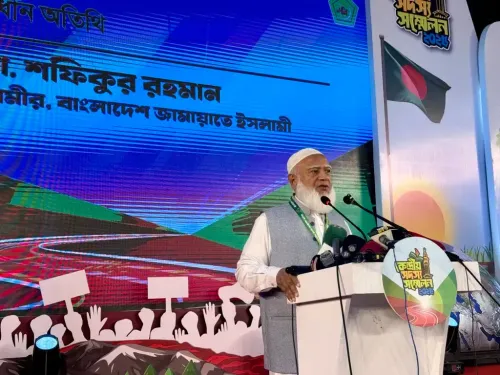
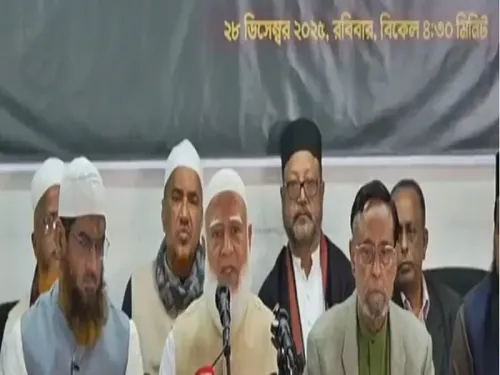
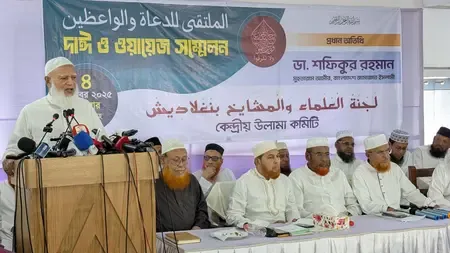
Dhaka, Dec 13 (NationPress) The US government has ramped up its interactions with Bangladesh's radical Islamist party, Jamaat-e-Islami, this year. A recent report highlighted that US embassy officials held discussions with party representatives at Jamaat's regional office located in Sylhet district, a part of this South Asian nation. The report describes the party as a violent, terror-tied Islamist movement responsible for the deaths of hundreds of thousands of civilians during the 1971 Liberation War against Pakistan.
According to Sam Westrop, Director of the Middle East Forum's counter-extremism project, the Sylhet visit was only the latest in a series of meetings between US State Department officials and leaders from Jamaat, as well as other extremist groups. As the February elections approach—seen as a potential resolution to the 2024 mass uprising against Sheikh Hasina's government—there are concerns that Islamists and their allies are gaining ground in the polls, potentially ushering in a theocratic regime in Bangladesh.
“With a presence across South Asia, Jamaat-e-Islami has not only engaged in acts of genocide and mass rape in 1971, but has also promoted theocratic politics and violence for decades. The party's offshoots are involved in terror attacks, while its officials foment hatred and violence against Muslim minorities, Hindus, Jews, and the Western world,” he added.
Westrop indicated that after the anticipated collapse of the Awami League government in 2024, largely due to Jamaat-backed protests, the interim government led by Muhammad Yunus has integrated violent Islamist factions into mainstream politics, neglecting the rise in Islamist and anti-minority violence.
“Authorities have imprisoned numerous journalists, including anti-Jamaat filmmaker Shahriar Kabir, who was arrested seemingly at the behest of Islamists. The US-supported interim government, using authoritarian rhetoric, branded Kabir's supposed crime as 'objectionable and misleading statements detrimental to communal harmony and subversive of the state,' tarnishing both Bangladesh’s and the government's image internationally,” the expert emphasized.
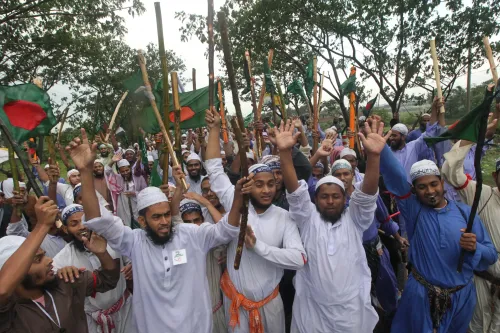
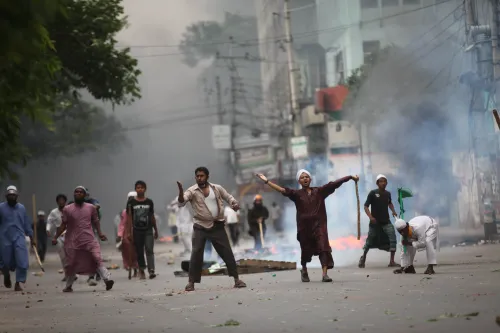
The report underscored that Bangladesh’s Islamist movements are operating with increased impunity, with observers warning of mob assaults on Hindu and Christian communities, escalating calls for draconian blasphemy laws, and a surge in jihadist activities.
“The Trump administration seems to be repeating past errors, as policymakers and intelligence officials previously viewed the Muslim Brotherhood as a potential stabilizing force in a new Egypt and a partner for domestic counter-terrorism efforts,” it stated, drawing attention to the growing US outreach to Jamaat.
Point of View
It is vital to recognize the implications of foreign engagements with groups that have a history of violence. The rise of Jamaat-e-Islami in Bangladesh's political sphere should be monitored closely, as it poses significant risks to social harmony and democratic values in the region.
NationPress
2 Oct 2026
Frequently Asked Questions
What is Jamaat-e-Islami?
Jamaat-e-Islami is a radical Islamist party in Bangladesh known for its violent past, including involvement in mass killings during the 1971 Liberation War.
Why is US engagement with Jamaat-e-Islami concerning?
US engagement with Jamaat raises concerns about legitimizing a party with a history of violence and extremist ideology, potentially threatening democracy and minority rights in Bangladesh.
What are the implications of the upcoming elections in Bangladesh?
The upcoming February elections could result in a shift towards a theocratic government, with Jamaat-e-Islami and its allies potentially gaining significant power.
How has the government responded to opposition against Jamaat?
The Bangladeshi government has cracked down on dissent, imprisoning journalists and activists critical of Jamaat-e-Islami and its influence.
What are the risks associated with increased Islamist activity in Bangladesh?
Increased Islamist activity poses risks of violence against minority communities, the erosion of secular governance, and the potential for widespread human rights abuses.