Why Are Greek Farmers Rejecting Talks as Protests Enter Week Three?
Synopsis
Amid escalating protests, Greek farmers have turned down government discussions, intensifying their actions nationwide. With subsidy delays and rising production costs at the forefront of their demands, the situation poses a significant impact on travel and trade during the holiday season. Explore the unfolding crisis and its implications for both farmers and the public.
Key Takeaways
Farmers are intensifying protests over delayed subsidies.
Protests have disrupted traffic nationwide for three weeks.
Farmers are demanding state support for rising costs.
The government acknowledges payment delays but insists on EU compliance.
Public opinion is divided on the legitimacy of farmers' demands versus the impact on society.
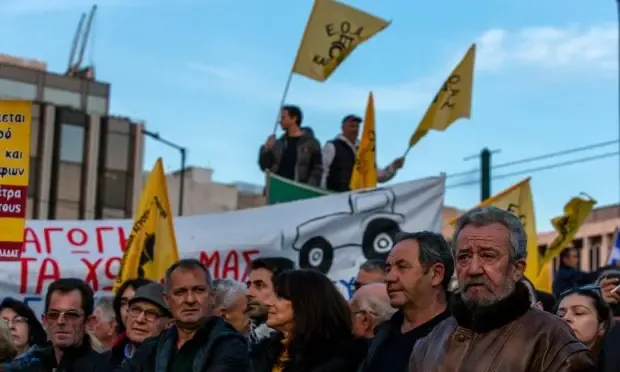
Athens, Dec 14 (NationPress) Greek farmers have declined a governmental proposal for discussions, pledging to intensify protests that have caused traffic disruptions nationwide for a third consecutive week.
This resolution was reached during a nationwide assembly of farmer representatives on Saturday (local time), who expressed their intent to first present a list of demands and only engage in conversations after receiving definitive responses from the government.
The protests, which include blockades of major roads, border crossings, and ports, were initiated due to delays in EU subsidy payments stemming from a corruption probe involving Greece's agricultural payments agency. Farmers are also seeking state assistance to cope with escalating production costs, losses due to livestock diseases, weather-related damages, and persistent structural issues, according to reports by Xinhua news agency.
Experts highlight that Greek farmers are significantly reliant on subsidies, which account for approximately 47 percent of the average farmer's income.
"Farmers are reliant on subsidies. Structural issues have remained unresolved, while expenses continue to escalate," remarked Efstathios Klonaris, a professor of agricultural economics at the Agricultural University of Athens, as quoted by the local daily To Vima.
The government has acknowledged the payment delays and has committed to releasing substantial funds by the end of December, but emphasized that all payments must adhere to EU regulations. It also cautioned that demands should take into account the wider societal impact.
Although public opinion polls indicate that most Greeks find the farmers' demands valid, many oppose the roadblocks. With protests persisting into the Christmas season, there are growing concerns regarding their effects on travel, tourism, and commerce.
On Friday, farmers obstructed several border crossings in northern and central regions as nationwide protests continued over increasing production costs and delayed subsidy payments.
The nationwide protests initiated by Greek farmers on November 30 were a response to the postponed payment of EU-funded agricultural subsidies, which left many producers facing financial difficulties amid surging production expenses.
Point of View
We recognize the critical nature of the farmers' protests in Greece. While their concerns over subsidy delays and rising costs are valid, the ongoing disruptions raise questions about the broader societal impact. It's essential to find a balanced approach that addresses farmers' needs without compromising public order.
NationPress
24 Sept 2026
Frequently Asked Questions
What are the main reasons for the protests by Greek farmers?
The protests are primarily driven by delays in EU subsidy payments, rising production costs, and demands for state support to address livestock disease losses and weather damage.
How long have the protests been ongoing?
The protests have been ongoing for three weeks, having started on November 30.
What impact are the protests having on the public?
The protests are causing significant traffic disruptions, raising concerns over travel, tourism, and trade, especially during the holiday season.
What has the government said regarding the subsidy payments?
The government has acknowledged the delays and pledged to release substantial funds by the end of December, stressing compliance with EU regulations.
How do public opinions vary about the protests?
While many Greeks view the demands of farmers as legitimate, there is considerable opposition to the roadblocks and disruptions caused by the protests.