Why Did Belarus Release 123 Political Prisoners Amid Sanctions Deal with the US?
Synopsis
In a significant diplomatic move, Belarus has released 123 political prisoners, including key opposition figure Maria Kolesnikova, as part of a sanctions deal with the US. This development not only highlights the ongoing political struggle in Belarus but also sets the stage for potential future changes in the country's governance and international relations.
Key Takeaways
Belarus released 123 political prisoners as part of a sanctions deal with the US.
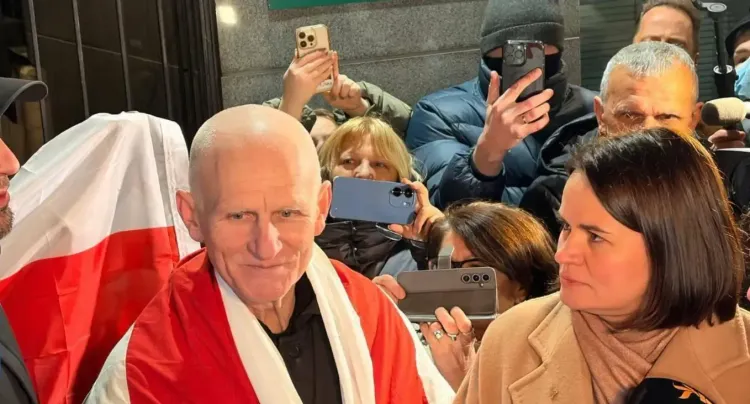
Maria Kolesnikova and Ales Bialiatski were among those freed.
The US lifted sanctions on potash , crucial for Belarus's economy.
Pressure for democratic reforms in Belarus must continue.
The international community is watching closely.
Vilnius, Dec 14 (NationPress) Belarus has liberated 123 inmates, including notable opposition figure Maria Kolesnikova, following a pact that led the United States to lift specific sanctions against the nation.
Nobel Peace Prize recipient Ales Bialiatski is also included among those released after discussions held in Minsk with US President Donald Trump's special envoy for Belarus, John Coale.
Under this agreement, the US has consented to remove sanctions on potash, a crucial element in fertilizer production and one of Belarus's key exports.
Belarus is a close ally of Russia, and the relaxation of restrictions on potash is regarded as a significant economic relief for the nation.
Belarusian President Alexander Lukashenko, however, is not acknowledged as president by the European Union.
Maria Kolesnikova has been incarcerated since 2020, much of that time spent in isolation.
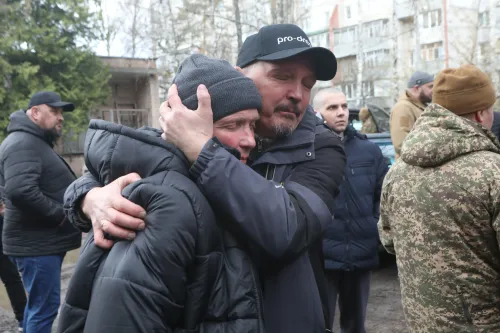
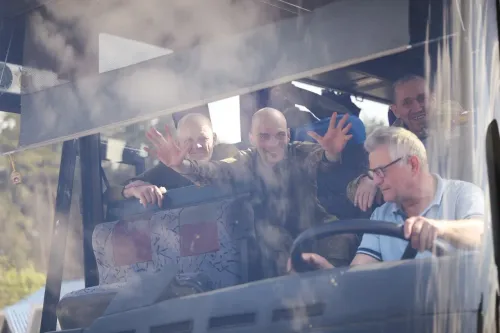
According to Ukraine's Coordination Headquarters for the Treatment of Prisoners of War, Kolesnikova was handed over to Ukraine along with 113 other released prisoners.
In a statement shared on Telegram, Ukrainian officials noted that after receiving necessary medical assistance, the freed prisoners would be moved on to Poland and Lithuania.
In response to this news, exiled Belarusian opposition leader Svetlana Tikhanovskaya, who was at the US embassy in Vilnius awaiting other prisoners, expressed her gratitude to Ukraine.
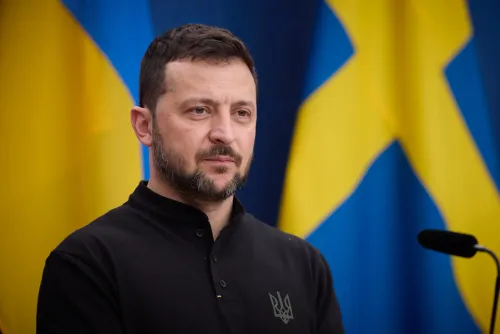
“Today, I extend my heartfelt thanks to Ukraine -- President Volodymyr Zelensky and Chief of the DIU Lieutenant General Kyrylo Budanov -- for welcoming 109 political prisoners, our heroes, released and deported from Belarus. Your openness and solidarity will never be forgotten. Slava Ukraini!,” she remarked.
Tikhanovskaya described the prisoner release as a result of “brilliant” US diplomacy combined with “consistent pressure” from the European Union.
“Pressure must persist until repression ceases, all prisoners are liberated, and Belarus can embark on its democratic journey,” she stated in a post on X.
In another post, she added, “We are one step closer to change in Belarus today. Many of those who facilitated the 2020 uprising are now free. Viktar Babaryka, Maria Kolesnikova, Maksim Znak, Ales Bialiatski -- they symbolize more than just names; they are the conscience of our nation. Yet, our fight isn't over. Over 1,100 political prisoners remain incarcerated, and we will continue to advocate for each and every one.”
This agreement marks a significant accomplishment for President Lukashenko, who benefits from a partial alleviation of his international isolation due to renewed ties with Washington.
Both the European Union and the United States have refused to acknowledge Lukashenko as president following elections held five years ago that were widely condemned as unjust.
These elections sparked mass protests, which were met with a severe police crackdown.
Hundreds were arrested during this time, including Maria Kolesnikova, and the political repression wave has persisted in the years since.
Point of View
It's crucial to recognize the impact of this event not only on Belarus but also on international diplomatic relations. The release of political prisoners signifies a potential thaw in tensions and opens up dialogue for democratic reforms, which is a hopeful prospect for the future of Belarusian society.
NationPress
23 Sept 2026
Frequently Asked Questions
What led to the release of the political prisoners in Belarus?
The release was part of an agreement between Belarus and the United States, where the US agreed to lift certain sanctions in exchange for the freedom of 123 political prisoners, including prominent opposition figures.
Who are some of the notable political prisoners released?
Notable figures among those released include Maria Kolesnikova, a prominent opposition activist, and Nobel Peace Prize laureate Ales Bialiatski.
What sanctions were lifted by the US?
The US lifted sanctions on potash, a vital ingredient in fertilizer production, which is one of Belarus's key exports.
What is the significance of this prisoner release?
This release is seen as a significant diplomatic achievement and may indicate a shift towards improved relations between Belarus and the West.
What challenges remain for the Belarusian political landscape?
Despite the release, over 1,100 political prisoners still remain incarcerated, and ongoing repression continues, necessitating continued pressure for democratic reforms.