Russia-Ukraine Prisoner Swap: 193 POWs Exchanged on April 24
Synopsis
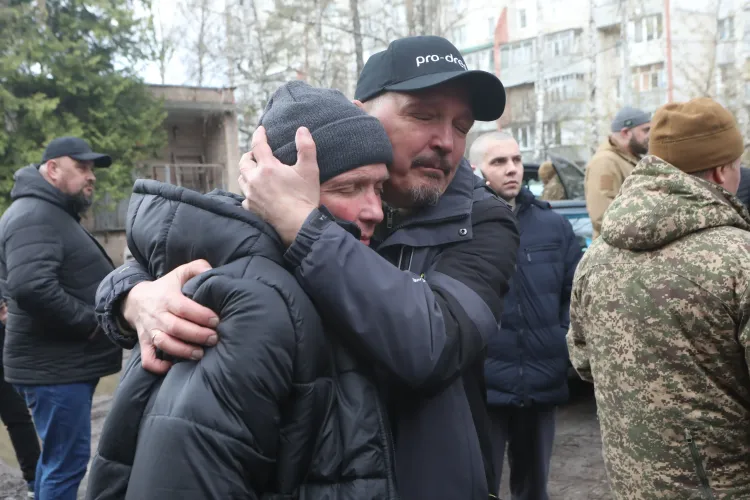
Russia and Ukraine exchanged 193 prisoners of war each on April 24, 2025, with the US and UAE acting as humanitarian mediators. This comes weeks after both nations agreed to their largest-ever swap of 1,000 POWs each following Istanbul talks — signalling rare diplomatic engagement amid an ongoing brutal conflict.
Key Takeaways
193 prisoners of war were exchanged between Russia and Ukraine on April 24, 2025 , with equal numbers returned by each side.
The exchange was brokered through humanitarian mediation by the United States and the United Arab Emirates (UAE) .
Released Russian servicemen were taken to Belarus for initial medical and psychological care before transfer to Russia .
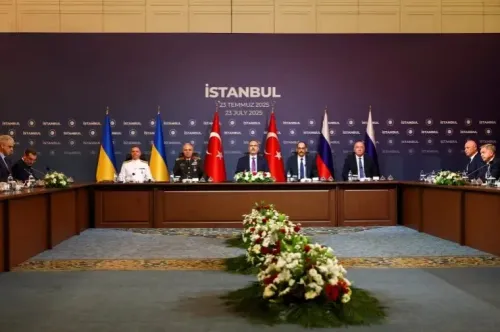
Following Istanbul negotiations on May 16, 2025 , both nations agreed to their largest-ever swap of 1,000 prisoners each .
Russia's Human Rights Commissioner Tatyana Moskalkova had earlier called unblocking prisoner exchanges the key task in January 2025.
The UAE has now mediated multiple exchanges, including swaps in January 2024 , February 2025 , and April 2025 , cementing its role as a trusted neutral broker.
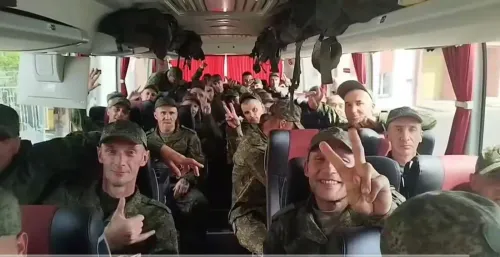
Moscow, April 24, 2025 — In a significant wartime development, Russia and Ukraine completed a major prisoner of war (POW) exchange on April 24, 2025, returning 193 servicemen from each side. The swap, facilitated through humanitarian mediation by the United States and the United Arab Emirates (UAE), marks another step in the fragile but ongoing effort to repatriate captured soldiers from one of the world's most intense active conflicts.
Details of the April 24 Prisoner Exchange
According to a statement released by the Russian Ministry of Defence and cited by state-owned news agency TASS, 193 Russian servicemen were returned from territory under the control of the Kyiv regime on April 24. In exchange, 193 Ukrainian Armed Forces prisoners of war were transferred to Ukrainian authorities.
The released Russian servicemen were initially taken to the Republic of Belarus, where they are receiving psychological and medical assistance. They are subsequently to be transported to the Russian Federation for further treatment and rehabilitation at Russian Ministry of Defence medical facilities.
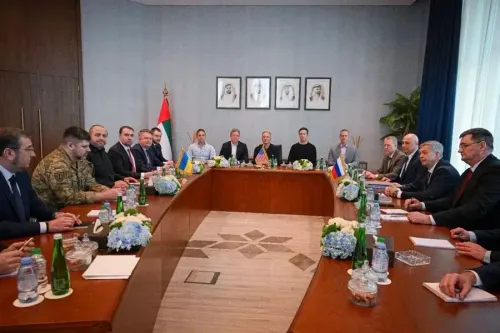
The Russian Defence Ministry formally acknowledged the critical role played by both Washington and Abu Dhabi in securing the return of its military personnel, underlining the growing importance of third-party diplomatic channels in the Russia-Ukraine war.
Pattern of Exchanges: A Timeline of POW Swaps
This exchange is part of a sustained — though often interrupted — series of prisoner swaps between the two nations since the conflict escalated in February 2022. In January 2024, 195 servicemen from each side were exchanged, also brokered by the UAE. At the time, Russian President Vladimir Putin stated emphatically: We will not stop the exchanges. We have to bring our own guys back home.
In February 2025, 150 prisoners of war were exchanged from each side, again with UAE humanitarian mediation. A separate exchange in February saw 157 servicemen swapped, with released Russian soldiers receiving medical care upon return.
Most significantly, following direct negotiations in Istanbul on May 16, 2025, Russia and Ukraine agreed to exchange 1,000 prisoners each — the largest prisoner swap since the start of the conflict in 2022, signalling a possible shift in diplomatic momentum.
Role of UAE and US as Humanitarian Mediators
The United Arab Emirates has emerged as a consistent and trusted broker in Russia-Ukraine POW exchanges, having facilitated multiple swaps across 2024 and 2025. Its neutral diplomatic positioning — maintaining ties with both Moscow and Western nations — makes it uniquely suited for such sensitive negotiations.
The involvement of the United States in this latest exchange is particularly noteworthy, given the broader geopolitical tensions between Washington and Moscow. It suggests that even amid adversarial relations, back-channel humanitarian cooperation remains functional — a pattern that analysts view as a critical safety valve in prolonged conflicts.
Russia's Human Rights Commissioner on POW Unblocking
In January 2025, Russia's Commissioner for Human Rights, Tatyana Moskalkova, described unblocking prisoner exchanges as the key task at hand. She confirmed that she had personally handed over lists of Ukrainian servicemen held on Russian territory whom Russia was prepared to transfer, and that Ukraine had similarly submitted its lists.
Moskalkova expressed cautious optimism, saying: We hope that the exchanges will be resumed. Her statement came at a time when exchange mechanisms had faced bureaucratic and political obstacles on both sides.
Broader Implications and What Comes Next
The regularity of these POW exchanges — despite the absence of a ceasefire — reveals a paradox at the heart of the Russia-Ukraine conflict: both nations remain locked in brutal combat while simultaneously engaging in structured humanitarian negotiations. This duality underscores the complex nature of modern warfare, where military escalation and diplomatic engagement coexist.
The Istanbul agreement of May 2025 to exchange 1,000 prisoners each could serve as a confidence-building measure, potentially opening doors for broader peace talks. However, analysts caution that prisoner swaps, while humanitarian in nature, do not necessarily translate into political breakthroughs or ceasefires.
With the UAE and US firmly embedded as mediators, and with both sides demonstrating willingness to engage on humanitarian grounds, the coming months may see further exchanges — and possibly the groundwork for more substantive negotiations. The world will be watching closely whether the Istanbul framework holds and whether the 1,000-prisoner exchange can be executed without disruption.
Point of View
To show their publics that captured soldiers are not forgotten. The UAE's repeated role as broker is a masterclass in transactional neutrality, and Washington's quiet participation signals that the US still holds back-channel leverage over Moscow despite public posturing. The Istanbul agreement for a 1,000-prisoner exchange is the real story here — it is the largest diplomatic deliverable of the war so far, and its success or failure will define whether humanitarian diplomacy can eventually scale into peace talks.
NationPress
16 Sept 2026
Frequently Asked Questions
How many prisoners were exchanged between Russia and Ukraine on April 24, 2025?
Russia and Ukraine exchanged 193 prisoners of war each on April 24, 2025. The swap was facilitated through humanitarian mediation by the United States and the United Arab Emirates.
Who mediated the Russia-Ukraine prisoner swap in April 2025?
The United States and the United Arab Emirates provided humanitarian mediation for the April 24, 2025 prisoner exchange. The UAE has been a consistent mediator in multiple Russia-Ukraine POW swaps since 2024.
What is the largest prisoner swap between Russia and Ukraine?
Following direct negotiations in Istanbul on May 16, 2025, Russia and Ukraine agreed to exchange 1,000 prisoners each — the largest POW swap since the conflict began in 2022. This agreement represents a significant diplomatic milestone in the ongoing war.
Where are released Russian POWs taken after prisoner exchanges?
Released Russian servicemen are first taken to the Republic of Belarus, where they receive psychological and medical assistance. They are then transported to Russia for further treatment and rehabilitation at Russian Ministry of Defence medical facilities.
How many prisoner exchanges have Russia and Ukraine conducted since 2022?
Russia and Ukraine have conducted several POW exchanges since the conflict began in 2022. Key exchanges include 195 each in January 2024, 150 each and 157 each in February 2025, 193 each in April 2025, and an agreement for 1,000 each following Istanbul talks in May 2025.