Is the Five-Hour Work Plan for Women in Bangladesh a Step Backward?
Synopsis
Shafiqur Rahman's proposal to cut women's working hours has sparked a fierce debate in Bangladesh. Is this move genuinely aimed at supporting mothers, or does it reflect a troubling trend towards restricting women's rights and roles in society? Discover the implications of this controversial plan as we delve into its potential impact on gender equality and women's advancement.
Key Takeaways
Shafiqur Rahman's five-hour work proposal has sparked significant controversy.
Many view this as a tactic to restrict women's roles and freedoms.
The proposal may negatively impact women's career advancement and economic independence.
Historical perspectives on women's roles in JI play a crucial role in understanding this issue.
The implications of such policies extend beyond individual choice, affecting broader gender dynamics.
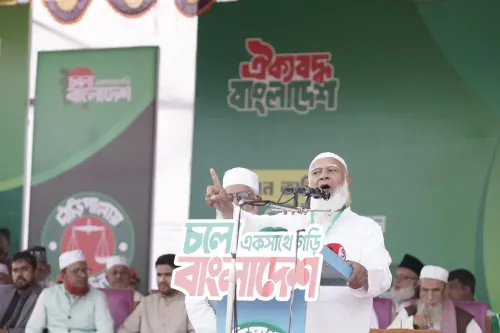
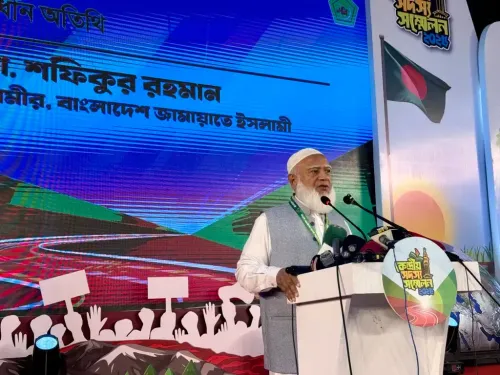
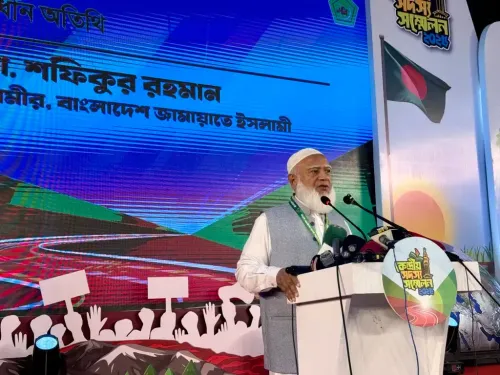
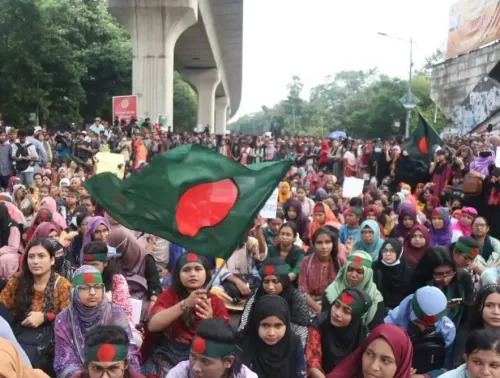
Dhaka, Dec 3 (NationPress) The chief of Bangladesh Jamaat-e-Islami (JI), Shafiqur Rahman, has come under significant fire after announcing a proposal to limit women’s working hours, which many perceive as an attempt to push women back into domestic roles, thereby limiting their freedom, mobility, and opportunities in the workforce, according to a report released on Wednesday.
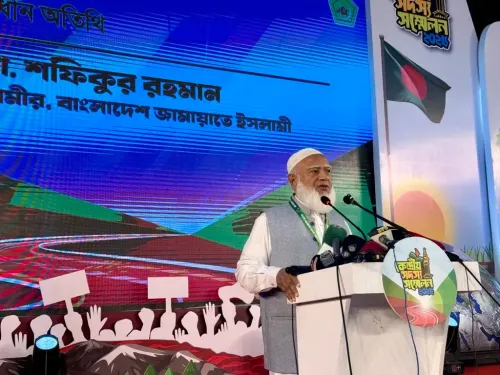
During a speech in New York in October, Shafiqur Rehman stated, "Upon gaining power, we will reduce women’s working hours to assist mothers in fulfilling their responsibilities towards their children and to honor their roles as mothers." His comments sparked outrage on social media and drew criticism from various political entities, including the Bangladesh Nationalist Party (BNP). Despite the backlash, Rehman stood firm on his comments, reiterating his stance during an event in Dhaka, as reported by The Diplomat.
He proposed that women in the workforce would work only five hours but receive remuneration equivalent to eight hours, with employers covering five hours and the government subsidizing three hours of wages. Those involved in domestic duties would be celebrated as ‘Rotnogorva’ (mother of gems). Women who opt to work the full eight hours would also be acknowledged and honored.
The Diplomat's report emphasized that the Jamaat leader's remarks have ignited intense discussions and debates within Bangladesh. Many are questioning the political motivations behind his statements.
"Will the reduction in women’s working hours genuinely facilitate their development, or is this merely a political maneuver to garner votes? Has JI chief evaluated the economic ramifications of such subsidies for Bangladesh? A significant portion of the populace believes this is a tactic by Jamaat to revert working women to domestic roles, which could undermine their economic status and exacerbate gender disparities," the report suggested.
In the past year, JI has strived to reshape its image following its association with the 1971 genocide and has aimed to present itself as a "moderate" Islamic party. However, Shafiqur Rehman's recent statements about limiting working hours have led to new controversies. This proposal could hinder women’s progress in the workplace, placing them at a disadvantage in the competition for similar positions against men. Consequently, employers may lean more towards hiring men, making it harder for women to advance professionally. Working women not only achieve financial independence but also contribute significantly to their family’s income and the educational advancement of their children.
"Rehman’s suggestion to shorten women’s workdays from eight to five hours to allocate more time for household chores aligns with the Jamaat’s long-standing ideological perspective on women’s roles, which confines them to domestic spaces to ensure they focus on what JI considers women’s responsibilities: cooking, cleaning, and child-rearing. Recently, Rehman claimed that if he were to gain power, he would not enforce burqa mandates on women, suggesting instead that modest dressing would be a personal choice as they recognize the virtues of a welfare state," the report noted.
"He did not clarify what he meant by 'modest dressing'. However, historically, JI has endorsed strict gender segregation and the wearing of burqas. With an eye on the upcoming elections, JI is attempting to position itself as an Islamic left party. In this context, many perceive the five-hour workday for women as part of a broader strategy to redirect women towards home duties, thus restricting their freedom, mobility, and role in the workforce, all under the pretense of promoting a welfare state," it concluded.
Point of View
We remain committed to presenting unbiased reporting. The recent remarks by Shafiqur Rahman regarding the reduction of women's working hours have ignited significant debate. As we analyze the implications of such proposals, it is essential to consider both the potential benefits and the risks posed to women's rights and economic independence in Bangladesh.
NationPress
24 Sept 2026
Frequently Asked Questions
What is the proposal by Shafiqur Rahman regarding women's working hours?
Shafiqur Rahman proposed reducing women's working hours to five, while they would receive pay equivalent to eight hours, with the government subsidizing part of the wages.
Why has this proposal faced criticism?
Critics argue that this plan aims to confine women to domestic roles, restricting their freedom and participation in the workforce.
What are the potential implications of this proposal on women's rights?
Limiting working hours may hinder women’s economic independence, skew gender dynamics, and reduce opportunities for career advancement.
How does this relate to Jamaat-e-Islami's historical stance on women's roles?
Historically, Jamaat-e-Islami has promoted strict gender roles, advocating for women's confinement to domestic responsibilities.
What should be considered in the debate over this proposal?
The debate should consider the balance between supporting mothers and the potential negative impact on women's rights and economic participation.