Will Bangladesh Voters Decide the Future of Their Government and Regional Security?
Synopsis
As Bangladesh heads toward its pivotal election on February 12, the outcome will influence not just the government but also regional security and diplomatic relations. Voters must weigh economic reforms against ideological divides in this critical moment for the nation.
Key Takeaways
Voters will influence regional safety and security.
Major competition between BNP and Jamaat.
Awami League is currently banned from participation.
Minorities face significant threats during the election.
Economic concerns dominate voter priorities.
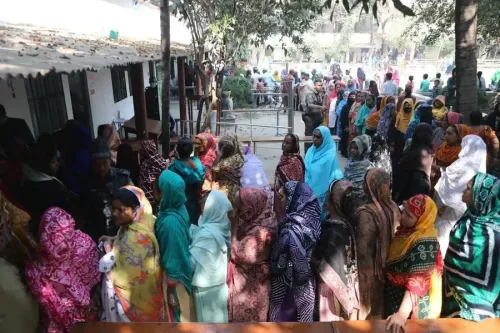
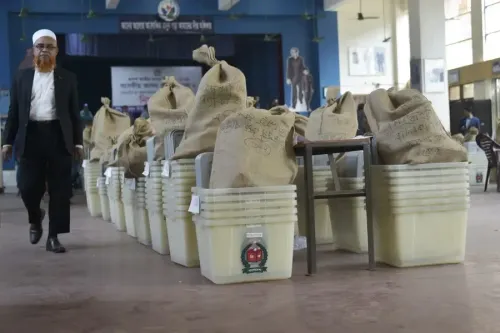
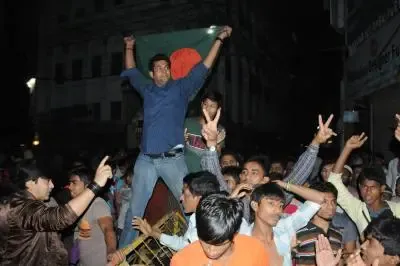
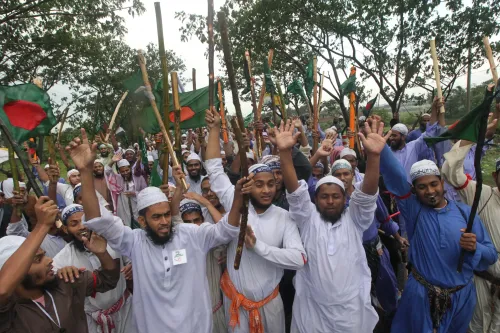
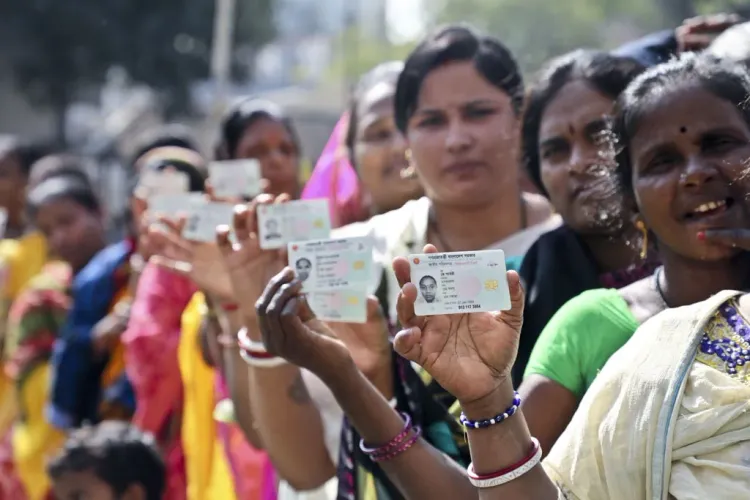
New Delhi, Feb 9 (NationPress) As voters in Bangladesh cast their ballots on February 12, they will engage in a pivotal electoral process, influencing not only the formation of a new government but also the trajectory of regional safety, security, and collaborative relations.
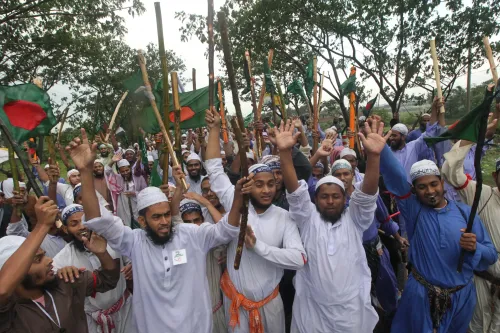
This upcoming national parliamentary election marks the 13th for Bangladesh and occurs during a defining moment. The main contest is between two significant factions: one led by the Bangladesh Nationalist Party (BNP) and the other by its former ally, the Bangladesh Jamaat-e-Islami.
For the first time, the legacy of Sheikh Mujibur Rahman, revered as the architect of Bangladesh's liberation, faces scrutiny within the nation.
The Awami League, the party he established and led until his assassination in 1975, is currently prohibited from engaging in political activities, effectively sidelining it from this election.
This electoral process signifies a shift from the traditional rivalry, primarily between the Awami League and the BNP, with Mujib's daughter Sheikh Hasina, the present leader of the Awami League and a former Prime Minister, living in exile and facing a death sentence.
In this political landscape, the return of Tarique Rahman following 17 years in exile has reportedly galvanized BNP supporters, while the recent death of his mother, former Prime Minister Khaleda Zia, has evoked sympathy for the party.
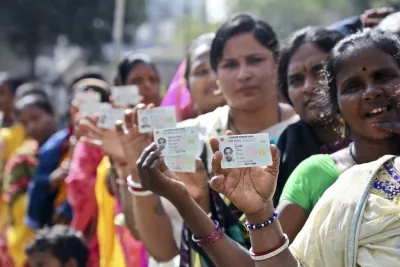
All political factions are intensely campaigning, particularly targeting undecided voters, which includes former Awami League supporters and minority groups.
Minorities, especially Hindus, experience heightened threats and violence, with numerous reports of targeted lynchings. Concurrently, the interim government faces accusations of harboring terror leaders, raising concerns about South Asia’s overall stability.
Israel's Ambassador to India, Reuven Azar, has expressed significant apprehensions regarding the security situation relating to Hamas and its activities in nations like Bangladesh and Pakistan, as part of a broader strategy to widen its regional and global influence.
In an interview with Bangladesh's weekly Blitz, Azar noted that a local Islamist faction in Bangladesh had reportedly hosted senior Hamas figures.
Moreover, amid security worries over Dhaka reestablishing direct flights to Pakistan, senior investigative journalist Sahidul Hasan Khokon recently highlighted the arrival of four operatives from Lashkar-e-Taiba from Karachi to Dhaka on Biman flight BG-342.
These occurrences pose serious challenges to peace and security in South Asia, particularly along India's eastern borders, where the neighbor’s tolerance for militants and insufficient border controls present potential dangers.
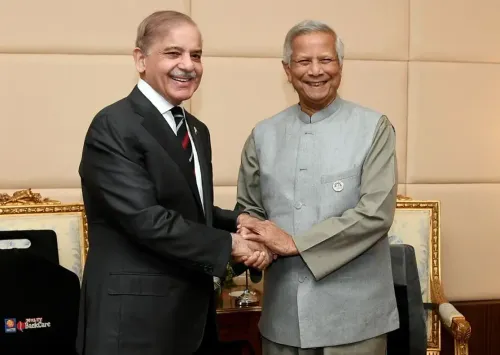
There are indications of a shift in Bangladesh’s foreign policy, increasingly leaning towards Pakistan and China in recent times.
During the election campaign, the BNP accused the Jamaat of collaborating with Pakistan during the 1971 Liberation War, while Jamaat asserts it resisted Hasina’s authoritarianism in Rahman's absence.
Some analysts propose that while the BNP may strive for a balanced relationship with India, Jamaat has shown clear alignment with Islamabad and Beijing, as evidenced by its delegation’s meetings since Hasina's ousting.
Therefore, this election transcends domestic politics; it has the potential to redefine Bangladesh’s diplomatic ties and relations with neighboring countries, while also testing whether voters prioritize economic reform over ideological concerns.
On the economic front, Bangladesh grapples with inflation, dwindling reserves, and sluggish investment, compelling it to pursue billions in foreign loans since 2022. Surveys indicate that voters' primary issues revolve around corruption and economic challenges rather than religious or symbolic matters. Bangladesh stands at a critical juncture, with approximately 12.8 crore registered voters poised to cast their votes on Thursday, shaping the future trajectory of this emerging democracy.
Point of View
It's essential to recognize that the upcoming election in Bangladesh represents more than just a political event. It symbolizes a crucial moment in the nation's history where voters will determine not only their governmental structure but also the stability and security of the entire region. The implications of this election extend far beyond domestic politics, making it imperative for all stakeholders to approach the situation with a sense of responsibility and foresight.
NationPress
9 Oct 2026
Frequently Asked Questions
What is the significance of the upcoming election in Bangladesh?
The election is pivotal as it will determine not just the new government but also the future of regional safety, security, and diplomatic relations.
Who are the main political parties involved in the election?
The main parties are the Bangladesh Nationalist Party (BNP) and the Bangladesh Jamaat-e-Islami, with the Awami League currently banned from participating.
What challenges are minorities facing during this election?
Minorities, especially Hindus, are facing threats and violence, with reports of targeted attacks and lynchings.
How does this election affect Bangladesh's foreign relations?
The election may redefine Bangladesh's diplomatic balance, particularly in its relations with Pakistan and China.
What are the economic issues voters are concerned about?
Voters are primarily worried about inflation, corruption, and sluggish investment, which have been major issues since 2022.