Will Bangladesh's National Election Change the Political Landscape?
Synopsis
As Bangladesh approaches its national election, the likelihood of significant political change appears slim. With the BNP poised to regain power and the Jamaat-e-Islami making strides, the political landscape remains static, despite the façade of democracy. Are voters ready for the same old narrative?
Key Takeaways
Political landscape remains static BNP likely to regain power Jamaat-e-Islami gaining traction Voter disenchantment prevalent Concerns over democratic integrity
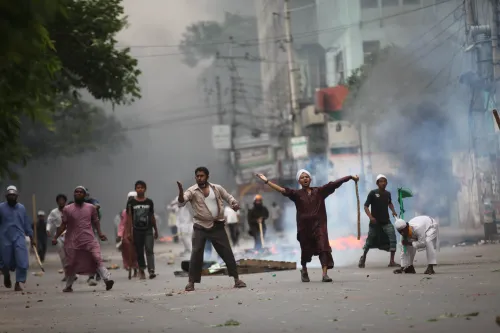
London, Feb 11 (NationPress) The national election in Bangladesh on Thursday is not expected to significantly alter the political scene, with the Bangladesh Nationalist Party (BNP) likely to take power, the Jamaat-e-Islami gaining traction, and a handful of students potentially entering parliament.
While there may be a shift in power within this South Asian nation, the entrenched arrangement — "affordable labor, weak institutions, funds sent abroad, and managed dissent" — is set to persist, as noted in a report published on Wednesday.
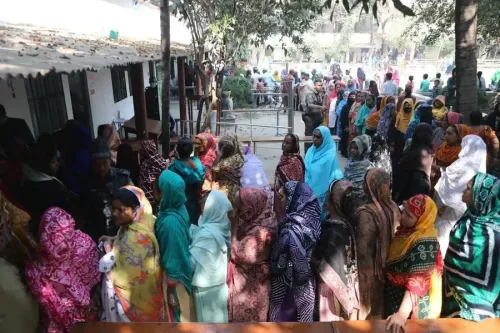
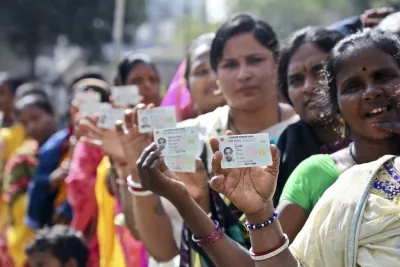
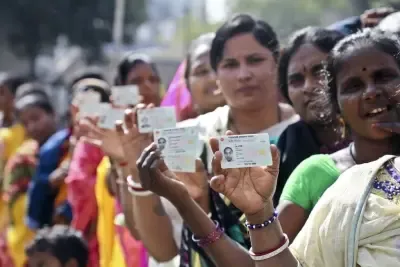
“From a distance, the upcoming election in Bangladesh resembles an age-old morality tale, pitting Sensible Centrism against Unhinged Islamism — the reliable dichotomy that recurs repeatedly from Morocco to Malaysia. Approximately 128 million voters are anticipated to head to polling stations tomorrow, with two out of five having never experienced a genuinely free and fair election. With around 150 parties registered, the resulting ballots are lengthy enough to serve as picnic mats,” highlighted British media outlet UnHerd.
“However, in Bangladesh, the prevailing sentiment is not one of excitement but rather boredom, as voters face a Hobson’s choice disguised as pluralism. This is democracy as theater: grand, loud, somewhat impressive — and entirely irrelevant. In reality, nothing is truly at stake,” it conveyed.
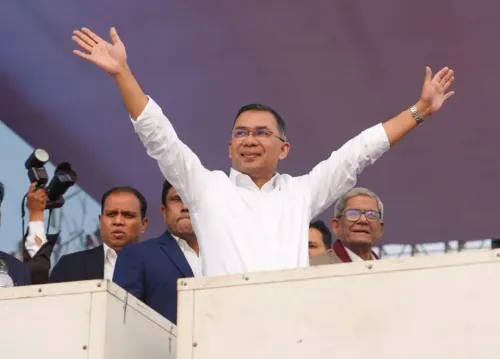
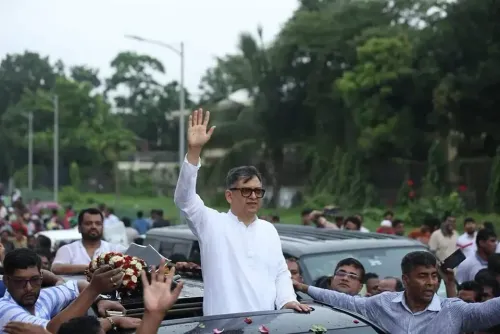
The report indicates that the likely victor is the center-right Bangladesh Nationalist Party (BNP), which is polling comfortably above 50% and is currently led by Tarique Rahman, who returned to Bangladesh in December after 17 years in self-imposed exile.
“His supporters, both domestically and internationally, portray him as a tempered liberal: a reliable figure, sobered by history and refined by absence. His voters, who back him faute de mieux, have longer memories. During the BNP’s terms in office in the 1990s and 2000s, power was wielded by his mother, Khaleda Zia — the formidable widow of soldier-president Ziaur Rahman, who was assassinated in a failed coup in 1981. She shattered the glass ceiling as Bangladesh’s first female Prime Minister and soon after broke records, presiding over a nation that endured the rare distinction of being ranked the world’s most corrupt for four consecutive years by Transparency International,” it elaborated.
“Rahman himself was later described in leaked diplomatic cables as a walking symbol of kleptocracy. However, in Bangladeshi politics, memory is a luxury,” it continued.
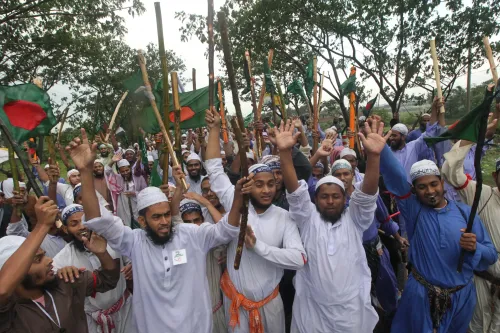
The report pointed out that the main contender is the Jamaat-e-Islami, the once-banned Islamist party now experiencing a revival under the leadership of Shafiqur Rahman, a “solemn scold, skull-capped and maned.” With a disciplined grassroots operation and an electorate “tired of secular strongmen,” the party is polling around 30%.
“The Jamaat asserts it has reformed — no theocracy, no Taliban theatrics — yet urban liberals remain rightly skeptical. Notably, the party has not nominated a single female candidate and has also suggested limiting women’s working hours. Additionally, there is a sense of amateurism: hardly surprising for a party that has never managed anything larger than a student union,” it observed.
Point of View
My stance is clear: while significant changes may seem unlikely in the upcoming election, it remains crucial for citizens to exercise their right to vote. The political landscape in Bangladesh may appear stagnant, yet every electoral process is an opportunity for the populace to voice their aspirations and hold power accountable. We stand with the nation in advocating for genuine democratic engagement.
NationPress
26 Sept 2026
Frequently Asked Questions
What is the significance of the Bangladesh national election?
The Bangladesh national election is significant as it shapes the country's political landscape and governance, impacting its democratic processes and citizens' rights.
Who are the main political parties involved in the election?
The main political parties are the Bangladesh Nationalist Party (BNP) and Jamaat-e-Islami, among others.
What challenges do voters face in this election?
Many voters face the challenge of limited experience with free and fair elections, leading to skepticism about the electoral process.
How does the political climate in Bangladesh affect its citizens?
The political climate can greatly affect citizens by influencing economic conditions, governance quality, and social freedoms.
What is the role of the Jamaat-e-Islami in Bangladeshi politics?
The Jamaat-e-Islami plays a significant role as a political party advocating for Islamist policies and has been experiencing a resurgence in recent years.