Have Voters in Bangladesh Closed the Door on Islamist Jamaat and Pro-Pakistan Nostalgia?
Synopsis
This article explores the recent electoral shift in Bangladesh where voters have decisively rejected extremist ideologies and pro-Pakistan political sentiments, marking a significant moment in the nation's democratic journey. It delves into the implications of this choice and what it means for Bangladesh's future governance and identity.
Key Takeaways
Voters chose balance and democracy over extremism.
The BNP led a significant electoral victory .
Expectations for governance demand transparency and moderation .
The electorate rejected pro-Pakistan political nostalgia .
Constitutional reforms are anticipated without Islamist bloc reliance .
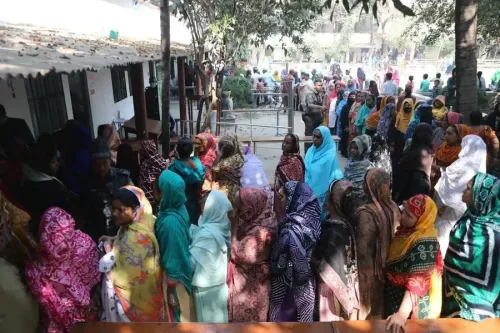
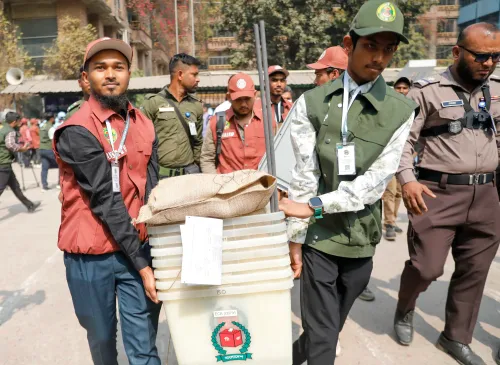
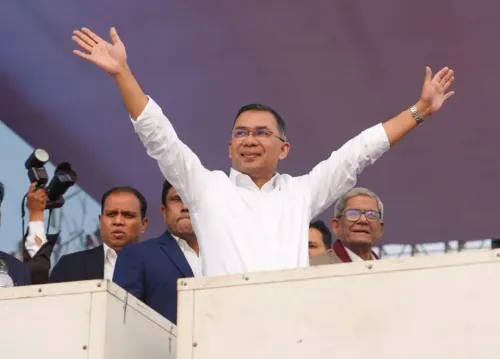
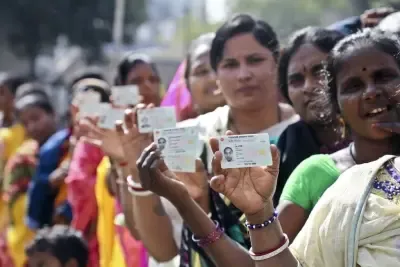
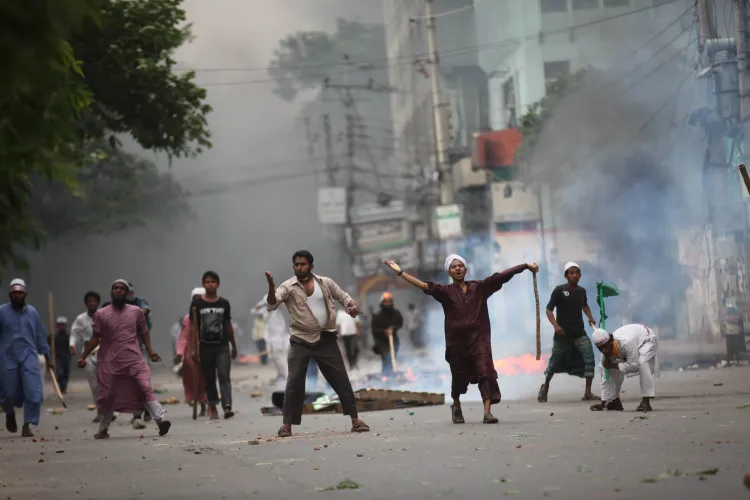
Dhaka, Feb 14 (NationPress) This week, voters in Bangladesh opted for balance over extremism, democracy over rigid ideologies, and sovereignty over subtle obedience, as the election results showcased their quiet rebellion against radicalism and pro-Pakistan sentiments, according to a recent report.
"History tends to resurface, albeit rarely in the same manner. The 2026 elections in Bangladesh were not just a power shift; they represented a judgement on national identity. By granting the Bangladesh Nationalist Party (BNP) a sweeping victory, securing nearly two-thirds of Parliament, voters signified not only the end of 15 years of Awami League rule but also a rejection of the insidious re-emergence of pro-Pakistan political nostalgia in the public sphere," political and defense analyst M A Hossain expressed in the weekly Blitz.
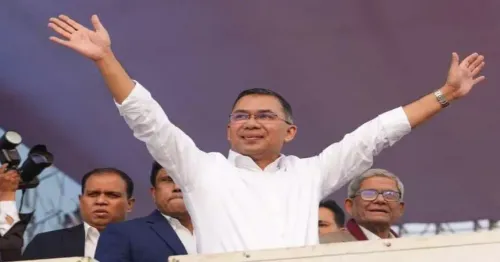
The BNP-led coalition celebrated a significant win in the Bangladesh elections on Friday, obtaining 210 seats and easily exceeding the majority threshold, thus setting the stage for a new government.
According to Hossain, the challenge now lies with the BNP: to involve all parties without yielding to any.
"The electorate has drawn a line: no more trials with ideological extremism; no more covert arrangements made in the name of convenience. Voters have called for transparency in governance and clarity in foreign policy. They expect Bangladesh to neither be a pawn nor a proxy," he articulated.
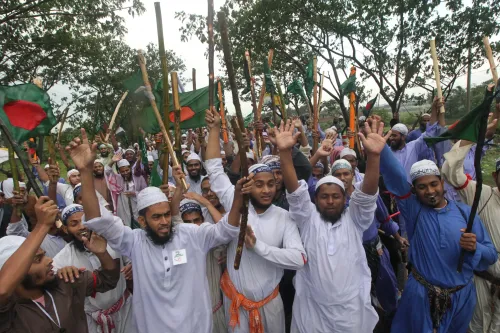
The electorate, Hossain noted, was able to see through the limited perspective of the Islamist Jamaat-e-Islami party, which equated religious attachment with strategic insight.
"Young Bangladeshis are digitally savvy, globally conscious, and impatient with ideological theatrics. They have observed the Middle East's forays into political Islam, Europe's struggles with extremism, and South Asia's swings between authoritarian rule and democratic resurgence. Their stance was not radical; it was notably moderate. They opted for liberal democracy over ideological romanticism," Hossain commented in the weekly Blitz.
The opinion piece pointed out that the 51-point manifesto from Tarique Rahman-led BNP resembles more of a technocratic repair guide than a revolutionary document.
"Bangladesh has undergone what might be termed a democratic reset. The removal of Sheikh Hasina in 2024 led to uncertainty; however, the 2026 elections reinstated procedural legitimacy. The BNP’s substantial majority guarantees constitutional reforms without reliance on Islamist factions. Jamaat, holding 63 seats, continues to be a vocal opposition but lacks kingmaker status," it concluded.
"This arithmetic is significant. It mitigates the ideological overreach that many feared. It reassures regional partners that Dhaka's direction will not unpredictably shift towards Islamabad or any other capital," Hossain added.
Point of View
The recent elections in Bangladesh reveal a significant shift in the political landscape. The rejection of ideological extremism in favor of democratic values underscores a collective demand for governance that prioritizes transparency and sovereignty. This pivotal moment reflects the electorate's aspirations for a balanced and inclusive political environment.
NationPress
1 Sept 2026
Frequently Asked Questions
What was the outcome of the recent elections in Bangladesh?
The BNP-led alliance won decisively, securing 210 seats in Parliament and marking a significant shift in governance.
What does this election result signify for Bangladesh?
It represents a rejection of extremism and a call for transparency and moderation in politics.