Is BNP Leading in Bangladesh Elections Amid Rising Violence?
Synopsis
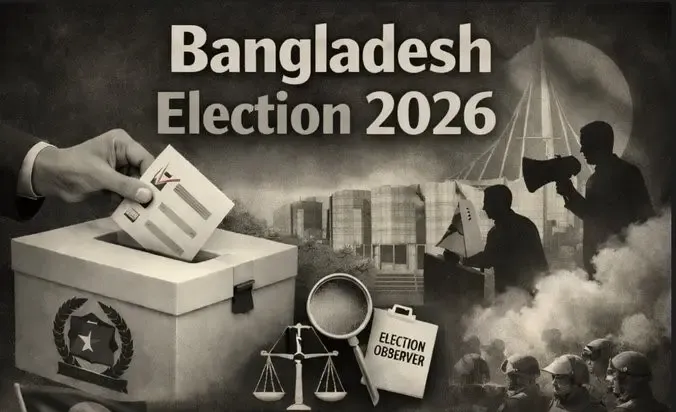
As Bangladesh approaches its elections on February 12, the BNP emerges as a strong contender, leaving the Jamaat in its wake. With public sentiment shifting dramatically, violence threatens to overshadow the political landscape. How will this impact the future of Bangladesh?
Key Takeaways
BNP is leading in polls with 70% support.
Jamaat's backing has fallen to 19%.
Violence is escalating ahead of elections.
Public sentiment is shifting towards BNP.
India hopes for a stable BNP government.
New Delhi, Jan 6 (NationPress) The balance appears to be shifting towards the Bangladesh Nationalist Party (BNP), with recent opinion surveys indicating a potential landslide win in the forthcoming elections set for February 12. Last month, forecasts indicated a tight contest between the BNP and Jamaat-e-Islami, but the BNP has now advanced significantly, with 70 percent of respondents indicating they plan to support the party led by the late Khaleda Zia.
In contrast, the Jamaat's backing has dwindled to 19 percent, highlighting a considerable gap. The newly established National Citizen Party (NCP) holds a mere 2.9 percent of public support, as per a survey conducted by Eminence Associates for Social Development (EASD).
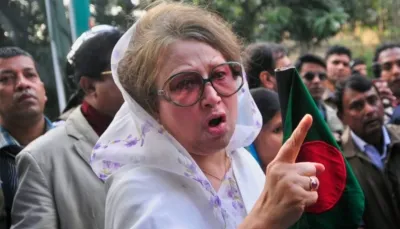
Poll analysts attribute this shift to various factors favoring the BNP, notably the public's sympathy following the death of their leader, Khaleda Zia. Additionally, the return of her son, Tarique Rahman, has energized party members, who are actively campaigning.
Moreover, a growing number of Bangladeshis are rejecting the Jamaat due to the persistent violence plaguing the nation. An official from the Intelligence Bureau pointed out that many citizens fear that a Jamaat-led government would compromise the country’s sovereignty, with potential control by the ISI.
Ordinary citizens desire a nation focused on prosperity rather than religious extremism; they do not want a governance model reminiscent of Iran. The public is cognizant that an ISI-influenced Jamaat could lead to such a scenario, the official noted.
The poll results also reveal a notable shift among supporters of Sheikh Hasina, with a significant number abandoning the Awami League in favor of the BNP. Following the party's ban from the electoral race, experts believe this has contributed to the shift, with 60 percent of former Awami League supporters now leaning towards the BNP, while 25 percent are aligning with the Jamaat.
The Jatiya Party currently garners only 1.4 percent support. Additionally, the BNP is particularly popular among women, with 71 percent indicating their intention to vote for the party. The BNP also maintains strong support in Rajshahi and Chattogram, where they are expected to secure 70 percent of the votes.
The survey, conducted between December 20 and January 1, found that 77 percent of respondents are confident in the BNP's chances of gaining power. Officials note that the Jamaat is rapidly losing its influence in the country.
The reliance on religious politics and support from the ISI has not benefited the Jamaat. While its student wing, the Islamic Chhatra Shibir, previously dominated university elections, current developments indicate a decline in their national appeal.
Another official commented that the Jamaat has succumbed to the ISI's agenda, leading to a chaotic situation in Bangladesh. The majority of citizens aspire for a peaceful nation governed by the Constitution, rather than Sharia Law.
India is reportedly hoping for a BNP administration in Bangladesh. Following Khaleda Zia's death, Prime Minister Narendra Modi expressed condolences through a message to Rahman, delivered by External Affairs Minister Dr. S. Jaishankar.
New Delhi has been engaging with members of the BNP leadership, and should the BNP gain power, experts believe it could foster a collaborative relationship between the two nations.
Intelligence Bureau officials note that the BNP's significant lead is positive, but also caution that violence could escalate, and both the Jamaat and ISI may attempt to justify postponing the elections by creating a climate of fear.
In the past 18 days, there has been rampant violence resulting in the targeted killings of six Hindus. In just the last 24 hours, two Hindu men fell victim to radical elements. Intelligence agencies warn that such incidents are likely to surge as elections approach.
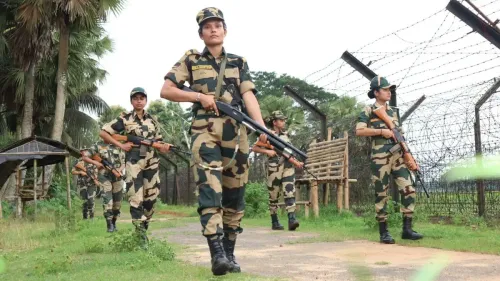
Officials emphasize the need for heightened vigilance along the borders, as there is a risk that the ISI may attempt to incite unrest that spills over into India.
Point of View
It is crucial to acknowledge the political dynamics shaping Bangladesh today. The emergence of the BNP, coupled with the escalating violence, raises significant concerns for national stability. It is imperative for all stakeholders to prioritize peace and democratic values as the elections draw near.
NationPress
19 Sept 2026
Frequently Asked Questions
What are the predicted election outcomes in Bangladesh?
Recent polls suggest the BNP is likely to win decisively, with significant support from voters.
How is violence impacting the elections?
Escalating violence, including targeted killings, poses a serious threat to the electoral process and public safety.
What role does India play in this situation?
India appears to favor a BNP-led government, seeking to maintain stable relations with Bangladesh.
What factors are contributing to the BNP's rise?
Public sympathy following Khaleda Zia's death and the return of Tarique Rahman are pivotal in boosting BNP support.
Why is the Jamaat losing support?
The Jamaat is facing backlash due to its association with violence and perceived external influence.