What Impact Will Khaleda Zia's Passing Have on BNP's Political Future?
Synopsis
The death of former Prime Minister Khaleda Zia could reshape Bangladesh's political landscape as the nation heads towards elections. With her legacy fueling a sympathy wave for the BNP, the party could gain significant traction against rivals, especially as Tarique Rahman returns. How will this affect the dynamics with India and the ISI’s support for Jamaat?
Key Takeaways
Khaleda Zia's passing may significantly influence the BNP's electoral prospects.
The sympathy wave following her death is likely to bolster the party's chances in the February elections.
Tarique Rahman’s return is expected to invigorate the BNP.
Relations with India may evolve depending on the BNP's leadership decisions.
The ISI is actively seeking to influence the BNP's direction amidst this political shift.
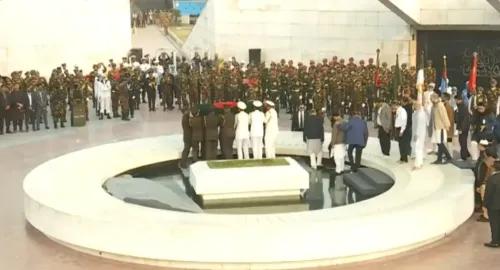
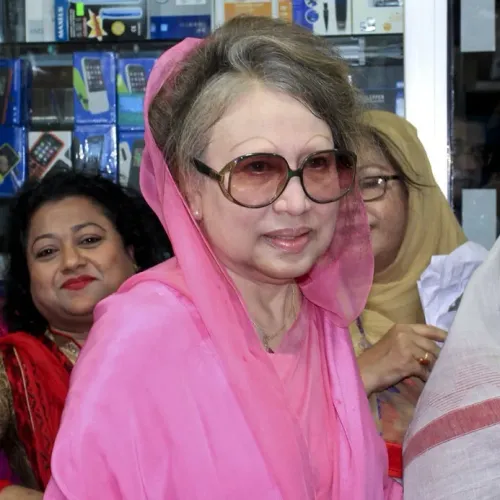
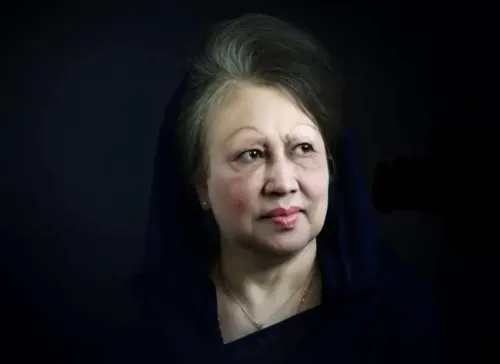
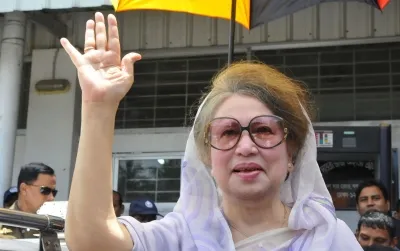
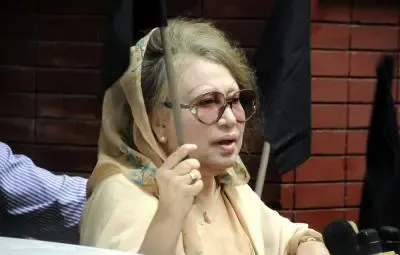
New Delhi, Dec 30 (NationPress) The passing of Khaleda Zia, Bangladesh’s pioneering Prime Minister, occurs as the nation prepares for a pivotal election scheduled for February 12. Zia, aged 80, succumbed this morning following a lengthy illness, having been on life support for the preceding weeks. She passed away at 6 a.m. on December 30.
Experts suggest that the Bangladesh Nationalist Party (BNP), once led by Zia, is now well-positioned to secure a greater number of seats in the upcoming elections. A surge of sympathy for Zia's legacy is likely to play a significant role in the electoral outcome, benefiting the BNP substantially.
Observers of Bangladeshi politics note that Zia has been absent from the political scene for some time due to health issues. The BNP and Jamaat-e-Islami, which were previously allied during the events that led to the downfall of Sheikh Hasina, have since diverged paths, opting to contest the elections independently.
The return of Tarique Rahman, Zia’s son, has also invigorated the BNP’s prospects. His recent homecoming attracted considerable public interest, breathing new life into the party's ranks, according to analysts.
Rahman, who has filed nominations from two constituencies, is viewed as a leading candidate for the next Prime Minister of Bangladesh. His return after a 17-year absence has solidified his role in the nation’s political landscape.
Current opinion surveys indicate that the BNP holds an advantage over both the Jamaat and the newly established National Citizen Party (NCP). However, the Jamaat is trailing closely behind, while the NCP is expected to decline further due to internal divisions.
Zia's passing is anticipated to reshape the political landscape, with the BNP likely capitalizing on the wave of public sentiment. The widespread mourning following her demise underscores her enduring popularity among the populace.
In the wake of Sheikh Hasina's departure from the country, India has sought to engage with BNP leadership to foster amicable relations. This outreach has been met with discontent from the ISI, which has historically supported the Jamaat.
Officials indicate that while the BNP has maintained an anti-India stance in the past, it remains a more viable partner compared to the Jamaat, which has openly opposed India. Rahman, who is often perceived as pro-ISI, is showing signs of a potential shift towards improving ties with India.
Intelligence sources reveal that the rapidly evolving situation in Bangladesh has prompted the ISI to intensify its efforts to influence BNP leadership, fearing that the party may prove less amenable than the Jamaat.
Reports suggest that the ISI is attempting to inject funds into the BNP to cultivate similar relations as those enjoyed by the Jamaat with Pakistan. The BNP is expected to heavily leverage Zia's legacy during its election campaign, indicating that her death could significantly enhance their electoral prospects, diminishing the Jamaat's chances of power.
Indian intelligence is closely monitoring activities within the Pakistan High Commission in Dhaka, where the ISI has been active in manipulating the electoral landscape. The agency recognizes the urgent need to align with the BNP to counter any outreach from New Delhi.
Experts assert that much hinges on Rahman’s decisions. While he has expressed a desire for improved relations with India, the extent to which the ISI can influence him remains uncertain. Should he prioritize Bangladesh's advancement, establishing a constructive relationship with India would be advantageous.
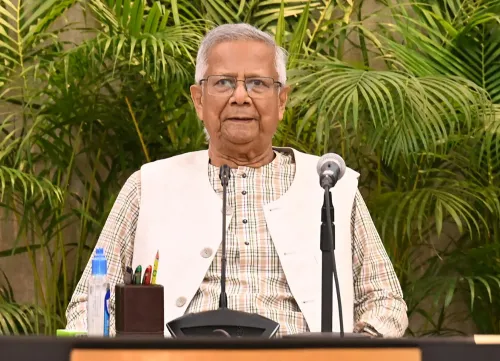
However, the future remains unpredictable. Upon his return, Rahman's first call was to Muhammad Yunus, expressing gratitude for facilitating his return. His subsequent engagements will be crucial to observe; he recently paid his respects at the burial of student leader Sharif Osman Hadi, known for his anti-India rhetoric and accusations against India for Bangladesh's issues.
Point of View
It is essential to approach the situation surrounding Khaleda Zia's death with sensitivity while recognizing its potential impact on Bangladesh's political landscape. The BNP's prospects seem promising, driven by public sentiment. However, the relationship dynamics with India and the ISI's influence on the Jamaat cannot be overlooked. A balanced analysis is crucial as the nation prepares for this pivotal election.
NationPress
23 Sept 2026
Frequently Asked Questions
What caused Khaleda Zia's death?
Khaleda Zia passed away due to prolonged illness after being on life support for several weeks.
When are the upcoming elections in Bangladesh?
The crucial elections in Bangladesh are scheduled for February 12.
What impact might Zia's death have on the BNP?
Zia's death is expected to create a sympathy wave that could significantly benefit the BNP in the upcoming elections.
Who is Tarique Rahman?
Tarique Rahman is the son of Khaleda Zia and is seen as a potential candidate for the next Prime Minister of Bangladesh.
How does India view the BNP compared to Jamaat?
India perceives the BNP as a more viable political partner than Jamaat, which has had a history of open opposition to India.