CM Sukhu Targets Himachal as India's Richest State by 2032

Synopsis
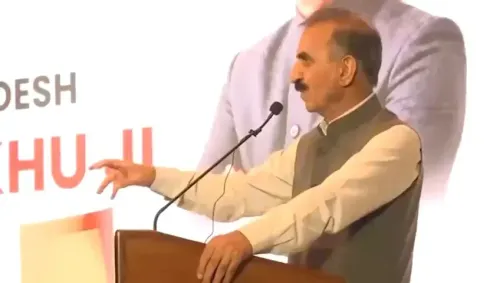
Chief Minister Sukhvinder Singh Sukhu, speaking at the TiE Leadership Conclave on 18 July 2026, declared that Himachal Pradesh will become India's most prosperous state by 2032, citing connectivity, infrastructure, and balanced development as the pillars of that ambition.
Key Takeaways
CM Thakur Sukhvinder Singh Sukhu set a target of making Himachal Pradesh India's most prosperous state by 2032 .
The declaration was made from the TiE Leadership Conclave platform on 18 July 2026 .
The Chief Minister identified better connectivity, robust infrastructure, and balanced development as the three foundations of the state's prosperity.
Himachal Pradesh 's economy is anchored in tourism, hydropower, and horticulture — all connectivity-dependent sectors.
The Sukhu government has prioritised road connectivity and sustainable infrastructure since taking office in December 2022 .
State budget allocations from 2027-28 onwards and per-capita income rankings will be the key metrics to watch.
The Chief Minister's Office of Himachal Pradesh shared remarks by Chief Minister Thakur Sukhvinder Singh Sukhu on Saturday, 18 July 2026, in which he declared that Himachal Pradesh would become the most prosperous state in India by 2032, speaking from the platform of the TiE Leadership Conclave.
Context
Addressing the conclave, CM Sukhu stated — 'बेहतर संपर्क, सुदृढ़ आधारभूत ढाँचा और संतुलित विकास ही हिमाचल प्रदेश की समृद्धि का आधार बनेंगे' ('Better connectivity, robust infrastructure and balanced development will form the foundation of Himachal Pradesh's prosperity'). He added that he was making the declaration from the TiE platform with the conviction that Himachal would be the country's richest state by 2032.
The TiE Leadership Conclave is organised by TiE (The Indus Entrepreneurs), a global non-profit founded in 1992 to support entrepreneurship and innovation ecosystems. The forum brings together business leaders, investors, and policymakers to discuss state and national economic direction.
Policy Backdrop
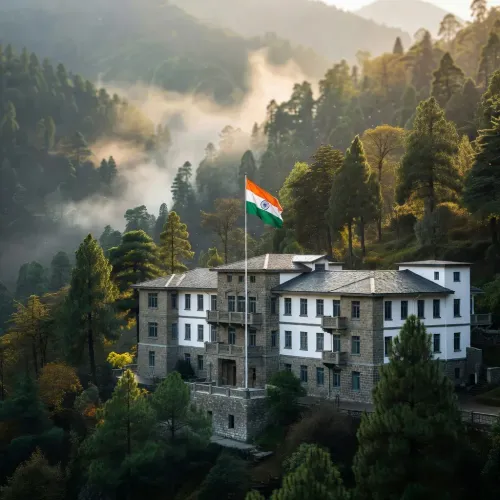
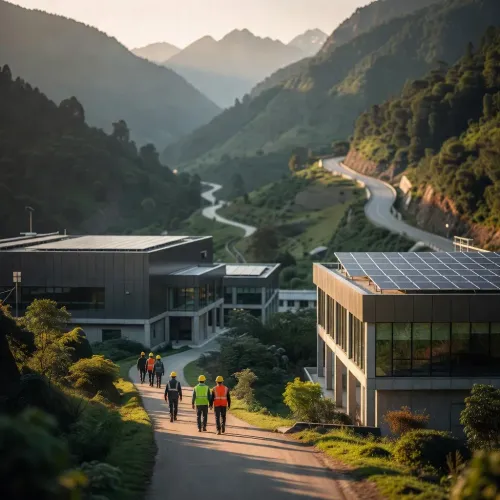
Since assuming office in December 2022, the Sukhu government has consistently identified road connectivity and sustainable infrastructure as central pillars of its economic agenda. Himachal Pradesh's economy rests on three primary sectors — tourism, hydropower, and horticulture — all of which depend heavily on physical connectivity and reliable infrastructure to scale.
The 2032 prosperity target fits into a broader pattern visible across Indian states, where long-horizon economic aspirations are used to signal policy direction and attract private capital. Several hill states and north-eastern states have issued similar multi-year targets in recent years, typically aligning their ambitions with central government schemes covering roads, power transmission, and tourism circuits.
Stakeholders and Impact
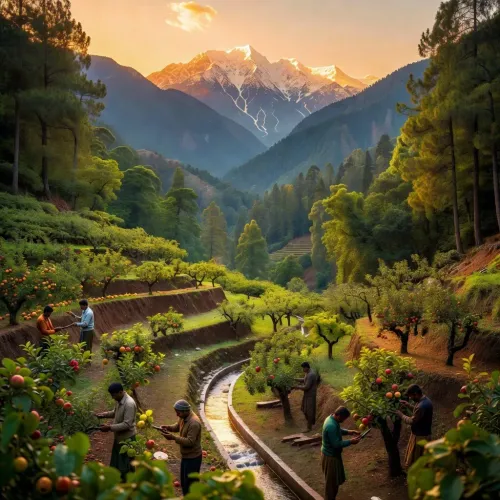
The audience most directly addressed by CM Sukhu's declaration includes state residents, local entrepreneurs, and potential investors in tourism and renewable energy. A credible connectivity and infrastructure push would have downstream effects on agricultural supply chains — particularly the apple and horticultural belts — as well as on the hospitality sector that drives a significant share of state revenues.
For the entrepreneurial community present at the TiE Conclave, the Chief Minister's remarks signal that the state government is positioning Himachal Pradesh as investment-ready, with long-term policy continuity as an implicit assurance.
What's Next
The credibility of the 2032 target will be tested in successive state budget cycles, beginning with the 2027-28 budget, where allocations for roads, hydropower, and tourism infrastructure will be closely watched. Economic survey rankings on per-capita income will serve as the most objective benchmark against which progress can be measured.
If the Sukhu administration translates its connectivity-first rhetoric into sustained capital expenditure and measurable improvements in ease of doing business, Himachal Pradesh could meaningfully close the gap with higher-income states — though the scale of the ambition will demand both fiscal discipline and effective implementation over the next six years.
Point of View
Raising the stakes for delivery. Whether the ambition hardens into measurable budget commitments or fades into the long list of Indian state aspirational targets will define the Sukhu government's economic legacy.
NationPress
17 Oct 2026
Frequently Asked Questions
What did CM Sukhu say at the TiE Leadership Conclave?
Chief Minister Sukhvinder Singh Sukhu declared at the TiE Leadership Conclave on 18 July 2026 that Himachal Pradesh would become India's most prosperous state by 2032, citing connectivity, infrastructure, and balanced development as the key drivers.
When will Himachal Pradesh become the richest state in India according to CM Sukhu?
CM Sukhu set 2032 as the target year for Himachal Pradesh to become the most prosperous state in India.
What is the TiE Leadership Conclave?
The TiE Leadership Conclave is an annual gathering organised by The Indus Entrepreneurs (TiE), a global non-profit founded in 1992, bringing together entrepreneurs, investors, and policymakers to discuss economic development and innovation.
What are CM Sukhu's priorities for Himachal Pradesh's development?
CM Sukhu has identified better connectivity, robust infrastructure, and balanced development as the three pillars of Himachal Pradesh's economic growth since taking office in December 2022.
How will Himachal Pradesh's 2032 prosperity target be measured?
Progress will primarily be tracked through state budget allocations for roads, hydropower, and tourism infrastructure, as well as economic survey rankings on per-capita income in subsequent years.