Awami League alleges police crackdown at Tofail Ahmed's Dhaka funeral
Synopsis
The funeral of a nine-time Bangladeshi parliamentarian and 1971 war veteran turned into a flashpoint, with the Awami League alleging baton charges, detentions and curbs in both Dhaka and Bhola. The party's sharpest charge: a state that polices grief is signalling insecurity, not strength — and the ‘New Bangladesh' narrative is fraying at its humanitarian edges.
Key Takeaways
Tofail Ahmed , nine-time parliamentarian and 1971 Liberation War organiser, died on 1 June .
The Awami League alleged detentions and baton charges after ‘Joy Bangla' slogans at the Dhanmondi funeral on 3 June .
The party said heightened security and administrative curbs were also imposed at Ahmed's ancestral home in Bhola district .
The Awami League accused the Tarique Rahman -led BNP government of ‘policing grief' and undermining the ‘New Bangladesh' claim.
The party urged the international community to take note of what it called negotiable humanitarian norms.
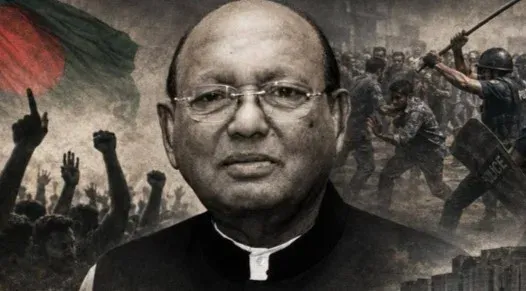
The Awami League on 3 June alleged that the funeral of senior party leader and 1971 Liberation War organiser Tofail Ahmed in Dhaka was disrupted by police detentions, baton charges, and administrative restrictions, accusing the interim establishment in Bangladesh of policing public grief. The nine-time parliamentarian, who died on 1 June, was denied what the party called ‘a dignified national farewell'.
What the Awami League alleged
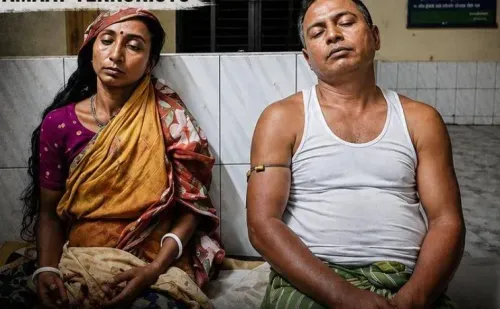
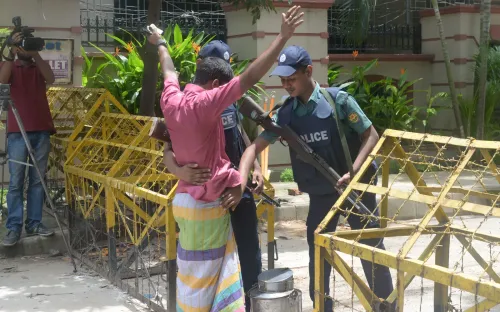
According to the party, after the funeral prayers in Dhaka's Dhanmondi, supporters raised slogans including ‘Joy Bangla', prompting police to move in and detain several individuals. Videos showing baton-wielding officers dispersing mourners were reportedly circulated widely on social media.
‘This was not a violent protest. It was the funeral of a man who had spent decades at the centre of Bangladesh's political life. Yet even grief was treated as a potential threat,' the Awami League said in a statement.
Crackdown extended to Bhola, party claims
The party alleged the curbs were not confined to the capital. At Ahmed's ancestral home in Bhola district, authorities reportedly deployed heightened security and imposed administrative restrictions to limit large spontaneous gatherings. Critics cited by the party argued the intent was to prevent the burial of ‘a beloved local son' from turning into ‘a powerful show of collective mourning'.
Sharp questions for the BNP-led government
The Awami League directed pointed criticism at the Tarique Rahman-led Bangladesh Nationalist Party (BNP) government, asking whether a state that ‘polices funerals and fears public grief' can credibly claim to represent a ‘new' or ‘civilised' Bangladesh.
‘When a government feels compelled to control the mourning of even its historical adversaries, it reveals not strength, but deep insecurity. True political confidence does not fear tears or slogans at a graveside,' the party noted.
Appeal to the international community
The party urged the international community to take note, alleging that in the ‘so-called New Bangladesh', basic humanitarian norms around death appeared ‘negotiable'. ‘If a state cannot extend minimum courtesy to the mortal remains of a veteran national leader, what protections exist for the living who dare to disagree?' it asked.
Why this matters
Tofail Ahmed's stature as a Liberation War organiser and long-serving parliamentarian made his funeral a politically charged moment in a country still navigating the aftermath of the 2024 political transition that ousted the Sheikh Hasina-led Awami League government. The episode, the party argued, raises a deeper question about whether Bangladesh is building a future ‘grounded in dignity and restraint, or one where political vengeance follows a man even into the grave'. The interim authorities are yet to issue a detailed response to the specific allegations.
Point of View
Not a rally, was met with batons — and that is the story they want the world to see. Even allowing for partisan amplification, the optics of policing a Liberation War veteran's burial cut against the Yunus-era ‘New Bangladesh' branding that the BNP-led dispensation is trying to project. The deeper concern is institutional: when mourning becomes a security event, the line between transitional justice and political vendetta blurs. Dhaka's silence on the specifics will only deepen that suspicion.
NationPress
26 Sept 2026
Frequently Asked Questions
Who was Tofail Ahmed?
Tofail Ahmed was a senior Awami League leader, a 1971 Bangladesh Liberation War organiser, and a nine-time parliamentarian. He died on 1 June and was widely regarded as one of the veteran figures of Bangladesh's political life.
What did the Awami League allege about his funeral?
The Awami League alleged that police detained several mourners and used batons to disperse crowds after ‘Joy Bangla' slogans were raised at the funeral in Dhaka's Dhanmondi. The party said similar restrictions were imposed at Ahmed's ancestral home in Bhola district.
Why is the incident politically significant?
It marks a rare public flashpoint between the Awami League and the Tarique Rahman-led BNP government that took charge after the 2024 transition. The party has framed the episode as evidence that political vengeance is being extended even to funerals of veteran leaders.
Has the Bangladesh government responded?
The interim authorities are yet to issue a detailed public response to the specific allegations of detentions and obstruction. The Awami League has called on the international community to take note of the incident.