Bangladesh Awami League flags 'false cases' and bail obstruction crisis
Synopsis
Bangladesh's Awami League is accusing the police administration of running a covert 'five-layer clearance' system that effectively nullifies court-granted bail orders — with money allegedly demanded at each bureaucratic stage. With evidence cited from at least 20 Dhaka police stations, the allegations strike at the credibility of Bangladesh's justice system at a moment of acute political tension.
Key Takeaways
Awami League on 6 May 2025 alleged a surge in "false and baseless" cases against ordinary citizens across Bangladesh .
Party investigations found bail obstruction evidence in at least 20 cases across Dhaka police stations.
Alleged "five-layer invisible clearance" system within police is blocking implementation of court-granted bail orders.
Lawyer Farzana Yasmin Rakhi of the Dhaka Judge Court cited the practice of inserting detainees' names into fresh cases just as they are about to be released.
Party accused officers of facilitating release of influential individuals linked to July 2024 protests in exchange for money.
Awami League demanded digital tracking and accountability mechanisms to restore public trust in the justice system.
Bangladesh's Awami League on Wednesday, 6 May raised grave concerns over a surge in what it termed "false and baseless" cases being filed against ordinary citizens across the country, while also alleging that detainees face systematic obstruction in securing their release even after courts have granted them bail. The party made its concerns public via a post on X (formerly Twitter), citing its own investigations into cases across Dhaka.
The Scale of the Alleged Problem
The Awami League said its investigations revealed that in at least 20 cases filed at different police stations in Dhaka, there is documented evidence of delays in release even after bail was granted by the court. The party described the situation as a "deadly trap for ordinary people", with two simultaneous pressures — the filing of allegedly fabricated cases and the failure to implement bail orders in practice.
According to the party's statement, a "five-layer invisible clearance" system within the police and a chain of "commercialised shown arrests" are together making bail orders effectively unenforceable on the ground.
How the Bail Obstruction System Allegedly Works
The Awami League alleged that once a bail order is granted by the court, a fresh and prolonged bureaucratic process begins at the administrative level. The order reportedly passes through the Deputy Commissioner (Prosecution), divisional police offices, intelligence branches, and finally the concerned police station — with intentional delays created at each stage before the report reaches the prison.
"Allegations suggest that large sums of money are demanded at each step," the party stated in its post.
The Awami League also cited Farzana Yasmin Rakhi, a lawyer at the Dhaka Judge Court, who was quoted as saying: "In political and conflict-related cases, if the police station is not 'managed', release becomes extremely difficult. Just as someone is about to be freed in one case, their name is inserted into another case at a nearby police station."
Families Left Waiting, Detainees Re-Arrested
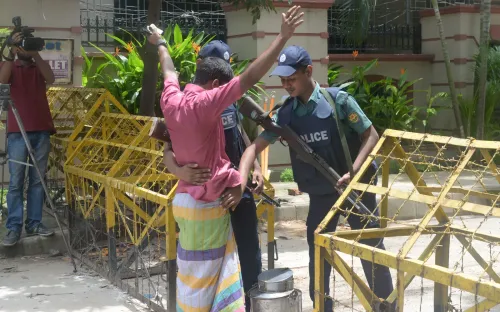
The party noted that in several instances, families waiting anxiously outside prison gates have watched their relatives get "shown arrested" in a new case at the last moment, effectively nullifying the bail already secured. This practice of inserting names into fresh cases at nearby police stations, critics argue, has become a tool to keep individuals in custody indefinitely.
The Awami League further alleged that provisions under the country's Criminal Procedure Code for an "interim report" — originally designed to prevent harassment of innocent individuals — have "become a tool of corruption."
Accusations of Selective Justice
The party also accused investigating officers of facilitating the release of influential individuals linked to the July 2024 protests in exchange for money, while those without financial means continue to suffer in detention. This, the Awami League argued, reflects a two-tiered justice system where access to liberty is effectively determined by economic capacity.
The Party's Demands
Asserting that legal experts consider bail a "constitutional right", the Awami League called for urgent measures to end what it described as the commodification of this right at the administrative level. The party specifically demanded digital tracking of bail implementation and accountability mechanisms across the bail processing chain. "When this right turns into a commodity at the administrative level, public trust in the justice system is severely undermined," the party stated. The developments come amid a broader political climate of tension in Bangladesh, and how the interim administration responds to these allegations is likely to be closely watched in the weeks ahead.
Point of View
If verified, point to something more corrosive than individual corruption — a systemic monetisation of constitutional rights within Bangladesh's law enforcement apparatus. The 'five-layer clearance' claim is significant because it suggests institutional design, not just rogue behaviour. What mainstream coverage risks missing is the political context: the Awami League is itself out of power and under pressure, which means these allegations serve a dual purpose — genuine advocacy and political positioning. The credibility test lies in whether independent legal bodies or civil society groups can corroborate the 20-case evidence the party claims to hold.
NationPress
24 Sept 2026
Frequently Asked Questions
What is the Awami League alleging about bail procedures in Bangladesh?
The Awami League alleges that a 'five-layer invisible clearance' system within Bangladesh's police is systematically obstructing the implementation of court-granted bail orders, with money allegedly demanded at each bureaucratic stage. The party cited evidence from at least 20 cases across Dhaka police stations.
What is the 'shown arrest' practice mentioned by the Awami League?
'Shown arrest' refers to the alleged practice of inserting a detainee's name into a new case at a nearby police station just as they are about to be released on bail from an existing case. This effectively nullifies the bail already granted and keeps the individual in custody.
Who is Farzana Yasmin Rakhi and what did she say?
Farzana Yasmin Rakhi is a lawyer at the Dhaka Judge Court who was quoted by the Awami League as saying that in political and conflict-related cases, release becomes extremely difficult unless the police station is financially 'managed', with names being inserted into fresh cases at the last moment.
What does the Awami League want done about the bail obstruction issue?
The party has called for urgent measures including digital tracking of bail implementation and accountability mechanisms across the bail processing chain to prevent the constitutional right to bail from being treated as a commodity.
What is the significance of the July 2024 protests mentioned in the statement?
The Awami League alleged that investigating officers facilitated the release of influential individuals linked to the July 2024 protests in exchange for money, while those without financial means remained in detention — pointing to what the party describes as selective justice.