CM Revanth Reddy Meets Women SHG Members at Vikarabad Mega Rythu Mela
Synopsis
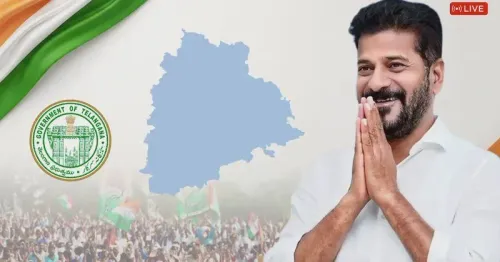
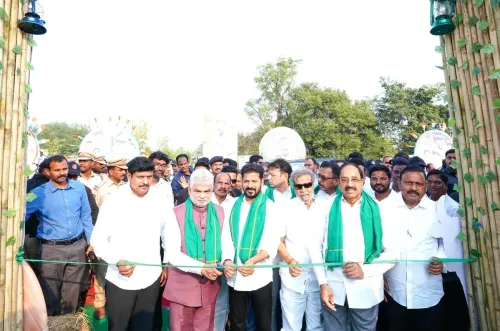
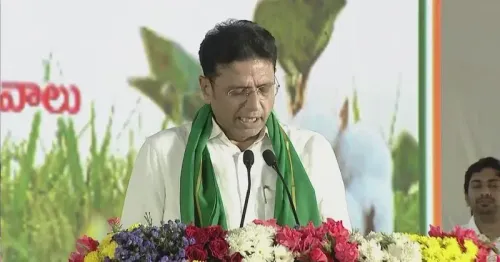
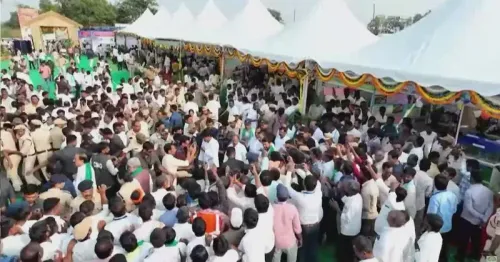
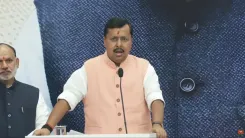
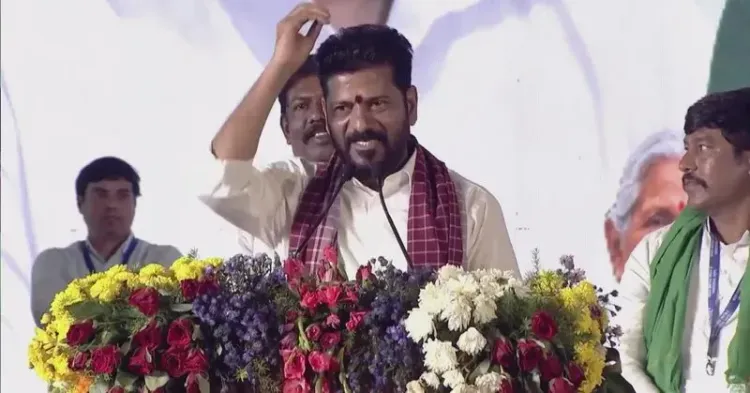
Telangana Chief Minister A. Revanth Reddy on 8 November 2026 interacted live with women Self-Help Group members at the Mega Rythu Mela in Hakeempet, Kodangal, Vikarabad District, continuing the state's grassroots welfare and agricultural outreach model.
Key Takeaways
Revanth Reddy held a live interaction with women Self-Help Group members on 8 November 2026 .
The event was held at Mega Rythu Mela Meeting Hall, Hakeempet, Kodangal, Vikarabad District .
Vikarabad District has a significant agricultural and tribal population; Kodangal is Revanth Reddy's own assembly segment.
Telangana has conducted district-level Rythu Melas since 2014 to connect farmers and SHG members with government schemes.
Women SHGs in Telangana benefit from the National Rural Livelihood Mission (2011) , which expanded bank linkage and skill programmes across the state.
Direct CM-level SHG interactions form part of a broader pattern of grassroots engagement seen across successive Telangana governments.
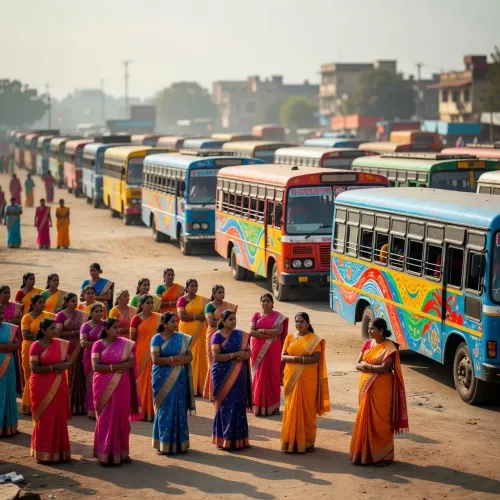
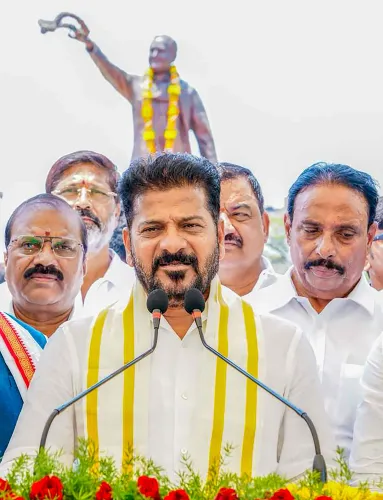
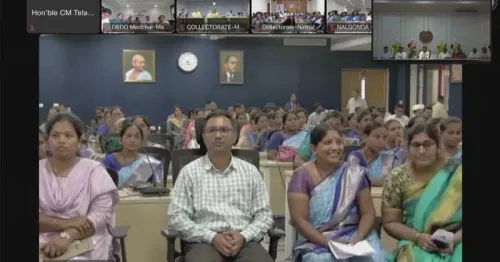
Taking the government's welfare outreach directly to the grassroots, Chief Minister A. Revanth Reddy on Sunday, 8 November 2026 participated in a live interaction with women Self-Help Group members at the Mega Rythu Mela Meeting Hall, Hakeempet, Kodangal, Vikarabad District — bringing the state's top executive face-to-face with rural women who form the backbone of Telangana's village-level economy.
A Mela Built for the Field, Not the Secretariat
The Mega Rythu Mela format — district-level farmers' fairs that combine scheme dissemination, subsidy access and direct official engagement — has been a fixture of Telangana governance since 2014. Placing a CM-level interaction inside this format signals an intent to compress the distance between policy and the people it is designed to reach. Vikarabad District, which carries a substantial agricultural and tribal population and falls within the Kodangal assembly segment, is itself a politically significant venue for Revanth Reddy.
Women SHGs at the Centre of Telangana's Rural Welfare Architecture
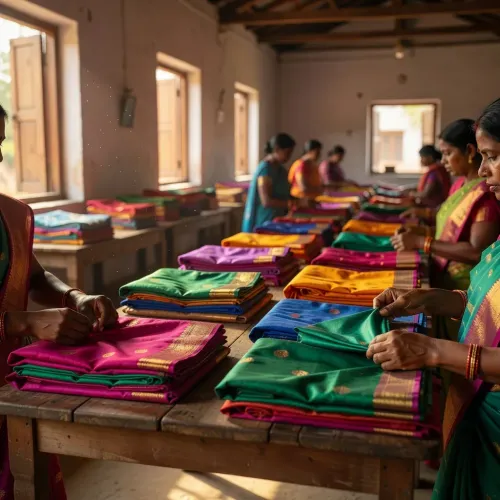
Women's Self-Help Groups in Telangana operate at the intersection of savings, credit and livelihood support — a structure reinforced nationally through the National Rural Livelihood Mission launched in 2011, which expanded bank linkage and skill programmes across the state. The Congress government under Revanth Reddy, in power since December 2023, has positioned rural and women-centric welfare as a core pillar of its governance agenda. Direct CM interactions with SHG members at district melas have historically served as forums where local livelihood grievances surface alongside formal scheme announcements.
What the District Interaction Model Tells Us
Successive Telangana administrations — across party lines — have used SHG platforms as both a welfare delivery channel and a political outreach mechanism. The pattern is consistent: combine agricultural outreach with women's group engagement, hold the event at the district level, and ensure senior leadership visibility. What distinguishes the current administration's version is its frequency and the chief minister's personal participation, which aides describe as a deliberate effort to build direct feedback loops outside the bureaucratic chain.
Point of View
Still building administrative credibility after taking power in December 2023, grassroots visibility events serve a dual function: they signal policy intent to rural women who form a large voter bloc, and they create direct-feedback pressure on the bureaucracy. The long continuity of the Rythu Mela format across administrations also shows that in Telangana, district-level welfare theatre is now a structural expectation, not a one-off gesture. The real test, as always, will be in the follow-through — whether credit lines, scheme disbursements or new livelihood announcements emerge from the interaction.
NationPress
8 Nov 2026
Frequently Asked Questions
What is the Mega Rythu Mela in Telangana?
The Mega Rythu Mela is a district-level farmers' fair held across Telangana since 2014 to disseminate agricultural schemes, subsidies and welfare programmes, and to enable direct interaction between farmers, SHG members and government officials.
Why did CM Revanth Reddy visit Vikarabad District?
CM A. Revanth Reddy visited Vikarabad District on 8 November 2026 to participate in a live interaction with women Self-Help Group members at the Mega Rythu Mela in Hakeempet, Kodangal — a constituency he personally represents.
What are women Self-Help Groups and why are they important in Telangana?
Women Self-Help Groups are rural collectives that promote savings, credit access and livelihood activities. In Telangana they form a key channel for welfare delivery, supported by the National Rural Livelihood Mission since 2011 through bank linkage and skill programmes.
When did A. Revanth Reddy become Chief Minister of Telangana?
A. Revanth Reddy became Chief Minister of Telangana in December 2023, leading the Congress government after it won the state assembly elections.
What is Kodangal and why is it significant?
Kodangal is an assembly segment within Vikarabad District, Telangana. It is the constituency represented by CM A. Revanth Reddy, making district-level events held there particularly significant for both governance and political reasons.