Revanth Reddy launches SHG saree designs, lays foundation for 8,000 buildings
Synopsis
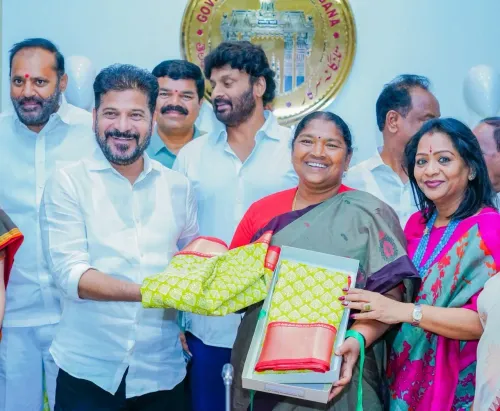
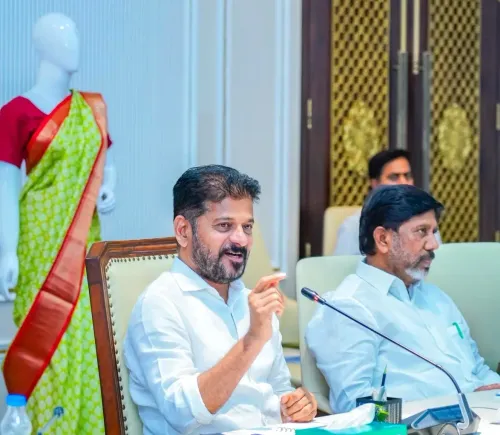
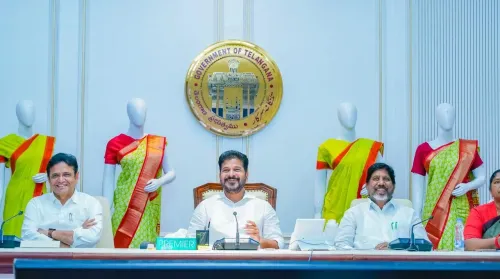
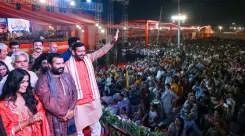
Telangana Chief Minister A. Revanth Reddy on 25 May 2026 launched new saree designs for SHG artisans and virtually laid the foundation for 8,000 Self Help Group buildings, marking a major push for rural women's infrastructure and livelihoods across the state.
Key Takeaways
Revanth Reddy presided over the event virtually on 25 May 2026 .
Foundation stones were laid for 8,000 Self Help Group buildings across Telangana in a single ceremony.
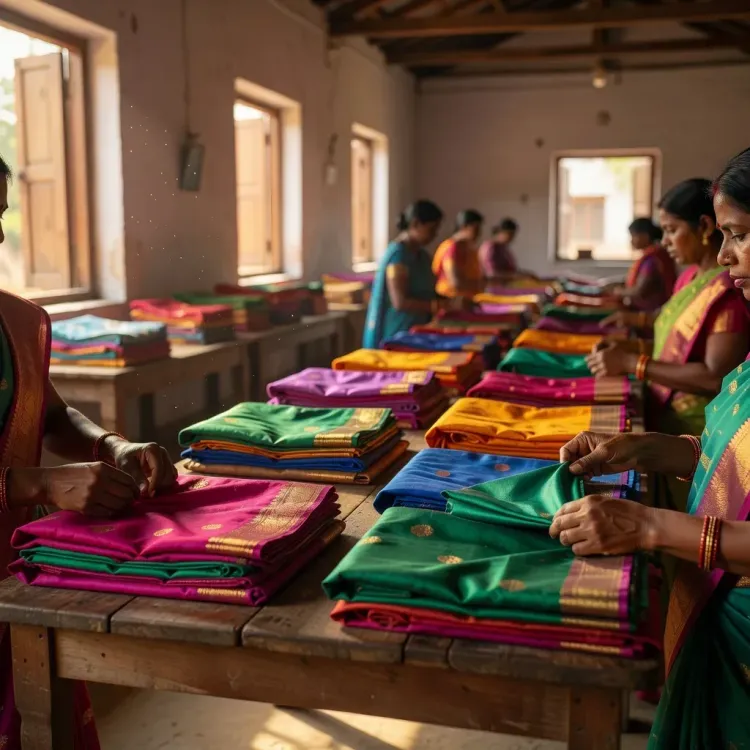
New saree designs were launched, aimed at boosting income for SHG-linked handloom weavers and artisans .
The initiative builds on Telangana's SHG infrastructure programme, rooted in the national DAY-NRLM framework launched in 2011.
The primary beneficiaries are rural women enrolled in SHGs who will gain dedicated meeting and training spaces.
Construction progress and marketing arrangements for the new saree designs will be key indicators of on-ground delivery.
Telangana Chief Minister A. Revanth Reddy on Monday, 25 May 2026 launched new saree designs and virtually laid the foundation stone for 8,000 Self Help Group (SHG) buildings across the state, reinforcing the Congress-led government's focus on women-centric welfare delivery.
Context
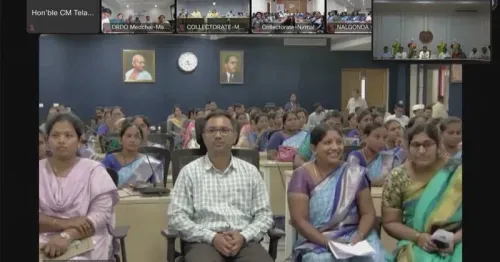
The twin announcements — new handloom saree designs attributed to SHG artisans and a large-scale infrastructure push for SHG meeting and training spaces — were made through a virtual ceremony streamed live on the Chief Minister's official channels. Virtual foundation-laying events have become a standard administrative tool for simultaneous state-wide rollout announcements, allowing a single ceremony to cover dispersed locations.
Revanth Reddy, who has held the office of Chief Minister since December 2023, has consistently positioned women's welfare and rural livelihoods as signature priorities of his administration. The event reflects a broader effort to combine economic empowerment with physical infrastructure for grassroots women's groups.
Policy Backdrop
Self Help Groups in Telangana trace their institutional support to the national SHG movement that gained momentum in the 1990s and was formalised through the National Rural Livelihoods Mission (NRLM), launched by the Government of India in 2011 and later rebranded as DAY-NRLM. The mission promotes thrift, credit, and livelihood activities among women-led community organisations across states.
Since Telangana's formation as a separate state in 2014, successive governments have expanded SHG networks and introduced dedicated infrastructure support — including meeting halls and skill-training centres — to strengthen the operational capacity of these groups. The current administration's announcement of 8,000 SHG buildings represents a significant addition to that physical infrastructure base.
On the handloom side, state agencies have historically served as marketing and design partners for SHG-linked weavers, providing design inputs and procurement channels that connect artisans to wider consumer markets. The launch of new saree designs fits within this established model of state-supported product development for rural craftswomen.
Stakeholders and Impact
The primary beneficiaries are rural women enrolled in SHGs across Telangana, who stand to gain dedicated spaces for group meetings, financial literacy sessions, and skill-training activities once the announced buildings are constructed. Dedicated infrastructure has been shown in comparable state programmes to improve group cohesion, regularity of meetings, and access to credit facilities.
SHG-linked handloom weavers and artisans form a second beneficiary group. New saree designs, when backed by state marketing support, can open premium retail and e-commerce channels, potentially improving income for women engaged in weaving as a primary or supplementary livelihood. The scale of the foundation-laying — covering 8,000 structures — signals an intent to reach groups across both urban-fringe and remote rural areas of the state.
What's Next
Attention will now shift to the pace of construction of the 8,000 SHG buildings and the mechanisms through which the new saree designs will be marketed — whether through state handloom corporations, e-commerce tie-ups, or government procurement channels. Timelines for completion and the funding split between central and state schemes are expected to be detailed in follow-up administrative orders.
The event also sets a political benchmark: with assembly elections on the horizon in the medium term, the delivery of visible infrastructure for SHG members will be closely watched as a measure of the administration's ability to translate welfare announcements into ground-level outcomes for Telangana's women.
Point of View
000 buildings, the announcement is among the largest single-event SHG infrastructure commitments in Telangana's recent history, raising the political stakes for actual delivery. The move also aligns with a nationwide pattern of state governments using SHG-linked welfare as a durable electoral asset, particularly with women voters. How quickly construction begins and whether the saree designs find sustained commercial channels will determine whether this event marks a genuine policy inflection or remains a symbolic milestone.
NationPress
21 Oct 2026
Frequently Asked Questions
What did Telangana CM Revanth Reddy announce for Self Help Groups on 25 May 2026?
Telangana Chief Minister A. Revanth Reddy launched new saree designs for SHG artisans and virtually laid the foundation stone for 8,000 SHG buildings across the state on 25 May 2026.
What are SHG buildings and why are they important for rural women in Telangana?
SHG buildings are dedicated physical spaces — meeting halls and training centres — for Self Help Group members. They provide rural women with consistent venues for group meetings, financial literacy sessions, and skill training, which strengthens group cohesion and access to credit.
What is the connection between Telangana's SHG programme and the central government's DAY-NRLM?
Telangana's SHG infrastructure and support programmes are built on the foundation of the central government's DAY-NRLM (Deendayal Antyodaya Yojana – National Rural Livelihoods Mission), launched in 2011 to promote and federate women's self-help groups across Indian states.
How does the new saree design launch benefit SHG members in Telangana?
The new saree designs, when supported by state marketing and procurement channels, can connect SHG-linked handloom weavers to broader retail and e-commerce markets, potentially improving incomes for women who rely on weaving as a primary or supplementary livelihood.
When was Revanth Reddy appointed as Telangana Chief Minister?
A. Revanth Reddy was appointed Chief Minister of Telangana in December 2023, following the Congress party's victory in the state assembly elections.