CM Revanth Reddy Lays Foundation for 8,000 SHG Buildings, Launches Saree Design

Synopsis
Chief Minister A. Revanth Reddy on 25 May 2026 virtually laid the foundation stone for 8,000 SHG Mahila Grama Sangham buildings across Telangana and launched a new saree design for 1 crore women of the state, combining infrastructure investment with a collective-identity initiative for rural women.
Key Takeaways
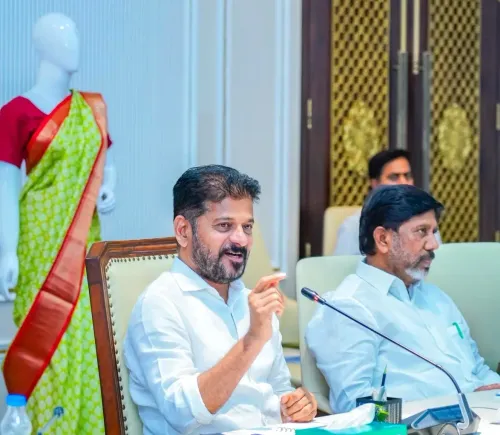
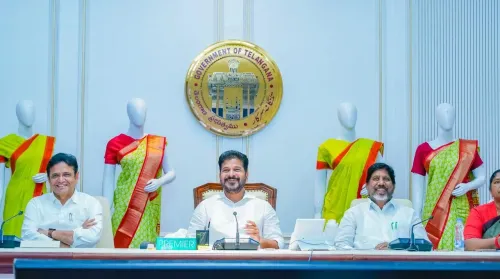
Revanth Reddy participated in a virtual foundation stone laying ceremony on 25 May 2026 from the Telangana State Secretariat .
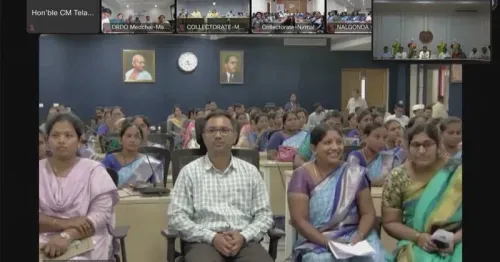
Foundation stones were laid for 8,000 SHG Village Organisation Mahila Grama Sangham buildings across Telangana.
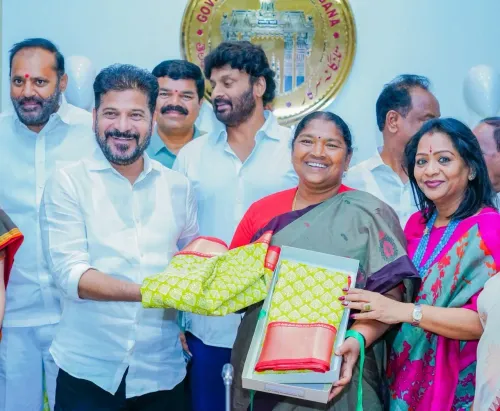
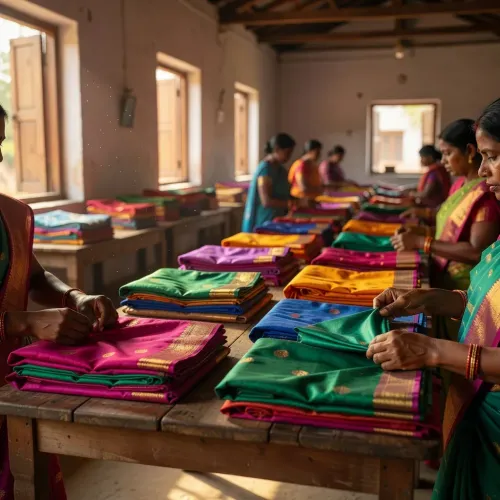
A new saree design was launched simultaneously for 1 crore women of Telangana.
Mahila Grama Sanghams are village-level federations of women's SHGs that coordinate local development, micro-credit and livelihood activities.
Telangana's SHG infrastructure has been built over successive governments since the early 2000s, supported by central programmes such as the National Rural Livelihoods Mission .
The dual focus on buildings and a common saree design follows a broader Indian pattern of combining physical assets with symbolic identity markers for rural women's mobilisation.
The Chief Minister's Office of Telangana announced on Monday, 25 May 2026 that Chief Minister A. Revanth Reddy participated in a virtual foundation stone laying ceremony for 8,000 Self Help Group (SHG) Village Organisation Mahila Grama Sangham buildings and simultaneously launched a new saree design for 1 crore women of Telangana, from the Telangana State Secretariat.
Context
The event, conducted virtually, marks a significant infrastructure push for women-led community organisations across Telangana's rural landscape. The Mahila Grama Sanghams are village-level federations of women's SHGs that serve as the primary institutional architecture for coordinating local development, micro-credit, and livelihood activities at the grassroots level. The simultaneous launch of a new saree design for 1 crore women adds a symbolic dimension to the initiative, combining a tangible asset programme with a collective identity marker.
Policy Backdrop
Telangana's SHG ecosystem has deep institutional roots. The Society for Elimination of Rural Poverty (SERP) began scaling SHG federations across the region from the early 2000s, well before state formation in 2014. The National Rural Livelihoods Mission, launched in 2011, provided the central funding architecture and institutional scaffolding that state governments, including Telangana's successive administrations, built upon to expand rural women's networks. The current government, led by CM Revanth Reddy since December 2023, has continued to prioritise welfare and women-centric schemes as a core policy plank.
The dual focus on physical buildings and a common saree design mirrors broader trends seen in Andhra Pradesh, Bihar, and Odisha, where state governments have linked physical assets for SHG federations with symbolic measures — such as uniforms and textiles — to reinforce collective identity and economic agency among rural women. These strategies are understood by policymakers as tools for strengthening mass women's mobilisation beyond purely economic metrics.
Stakeholders and Impact
The primary beneficiaries are the women members of SHGs organised under the Mahila Grama Sangham structure across Telangana's villages. Dedicated buildings for these organisations are expected to provide a formal, permanent space for conducting savings meetings, distributing micro-credit, and coordinating with government welfare programmes — functions that often take place in informal or borrowed spaces in the absence of dedicated infrastructure. The new saree design, reaching up to 1 crore women, is positioned as both a welfare delivery and a collective-identity initiative for the state's rural women's movement.
SHG members, district rural development agencies, and state-level programme officers under the Telangana State Rural Livelihoods Mission are among the key institutional stakeholders who will oversee implementation and utilisation of the new buildings.
What's Next
Attention will now turn to the construction timelines for the 8,000 Mahila Grama Sangham buildings and the logistics of distributing the new saree design to 1 crore women across the state's districts. The scale of the programme will test the state's rural development delivery machinery and could set a benchmark for similar infrastructure-plus-identity initiatives in other Indian states. Progress on ground-level utilisation of the buildings, and any further rollout of textile or uniform schemes in district-level budgets, will be closely watched by both welfare administrators and political observers.
Frequently Asked Questions
What is the Mahila Grama Sangham in Telangana?
A Mahila Grama Sangham is a village-level federation of women's Self Help Groups (SHGs) in Telangana that coordinates local development, micro-credit distribution and livelihood activities for rural women.
What did CM Revanth Reddy announce on 25 May 2026?
CM Revanth Reddy virtually laid the foundation stone for 8,000 SHG Village Organisation Mahila Grama Sangham buildings and launched a new saree design for 1 crore women of Telangana at the State Secretariat.
How many SHG buildings are being constructed in Telangana?
Foundation stones were laid for 8,000 Mahila Grama Sangham buildings across Telangana during the 25 May 2026 virtual ceremony.
What is the significance of the new saree design for Telangana women?
The new saree design, announced for 1 crore women of Telangana, serves as both a welfare delivery measure and a collective-identity initiative, continuing a broader Indian pattern of linking symbolic markers with rural women's mobilisation programmes.
What is the National Rural Livelihoods Mission and how does it relate to Telangana SHGs?
The National Rural Livelihoods Mission, launched by the central government in 2011, provides funding and institutional architecture for state-level SHG programmes; Telangana has built its Mahila Grama Sangham network partly on this central framework.