CM Revanth Reddy lays foundation for 8,000 Indira Stree Shakti Bhavans
Synopsis
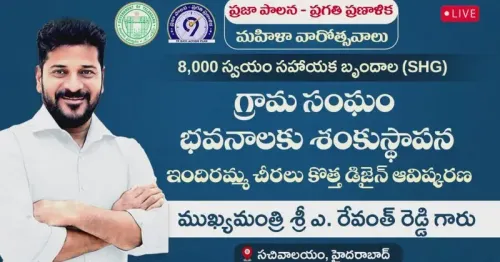
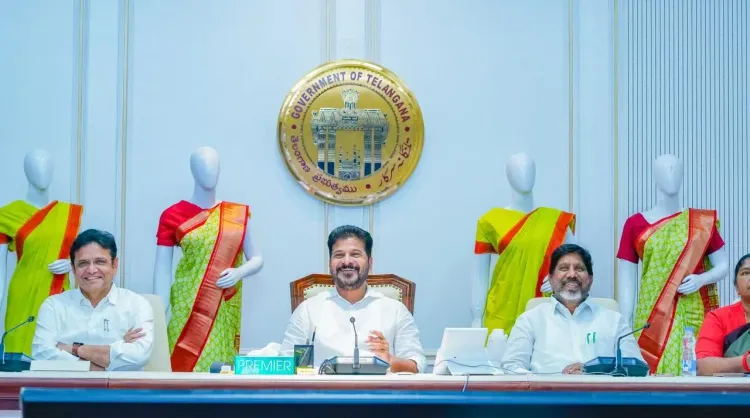
Telangana CM A. Revanth Reddy on 25 May 2026 virtually laid the foundation for 8,000 Indira Stree Shakti Bhavans from the Secretariat, creating dedicated community centres for women's self-help groups statewide. Deputy CM Bhatti Vikramarka and senior ministers attended the ceremony.
Key Takeaways
Revanth Reddy virtually laid the foundation for 8,000 Indira Stree Shakti Bhavans from the Telangana Secretariat on 25 May 2026 .
The buildings will serve as dedicated community centres for the Indira Mahila Shakti Sangham , the state federation of women's self-help groups.
Deputy CM Bhatti Vikramarka and ministers D.
Sridhar Babu , Seethakka , and P.
Srinivas Reddy attended the ceremony alongside thousands of women.
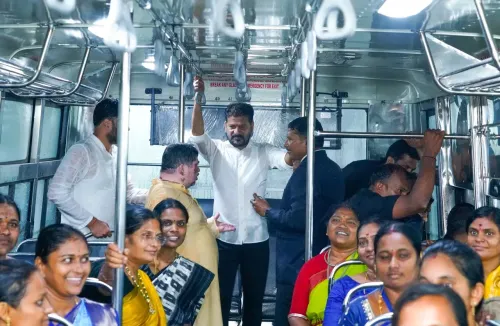
The initiative extends a welfare arc that already includes free RTC bus travel for women , introduced after the Congress government took office in December 2023 .
Women's SHG infrastructure in the Telugu-speaking states traces back to the Velugu/Indira Kranthi Patham programme launched in Andhra Pradesh in 2000 .
Construction timelines and budget allocation in the next state budget will determine whether the announcement translates into completed infrastructure.
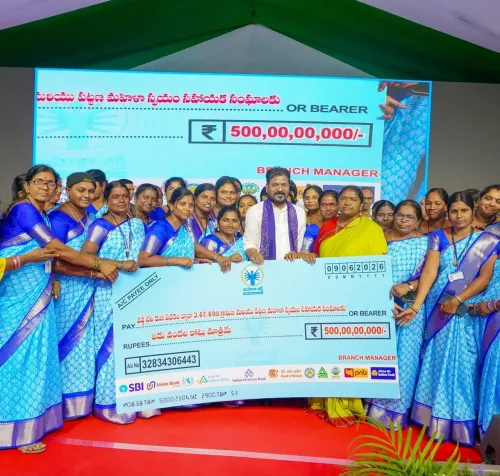
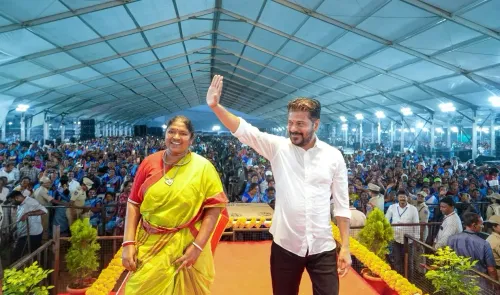
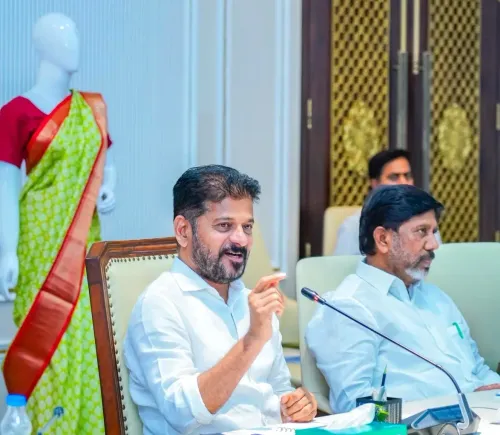
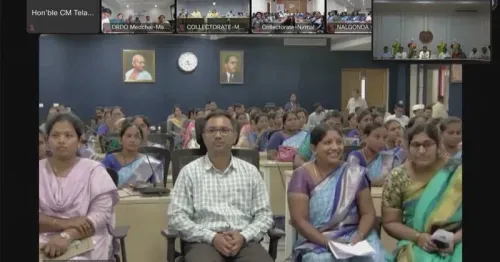
Telangana Chief Minister A. Revanth Reddy on Monday, 25 May 2026 virtually laid the foundation stone for 8,000 Indira Stree Shakti Bhavans across the state, conducting the ceremony from the Secretariat in the presence of thousands of women beneficiaries. The buildings are envisioned as dedicated community centres for the Indira Mahila Shakti Sangham, the state-level federation of women's self-help groups.
Context
Posting in Telugu on X, CM Revanth Reddy said the government had begun its governance journey with the blessings of 'daughters of the state' — aadabiddala aaseervadamtho praja paalanaku sreekaaram chuttaam ('we launched people's governance with the blessings of our daughters'). He described women as 'maharanis' — queens — and said their aspirations were being given shape one step at a time, from free travel on RTC buses to expanded business opportunities.
The Chief Minister described the Indira Stree Shakti Bhavan as the physical address of the Indira Mahila Shakti Sangham, framing it as a symbol of women's unity. The virtual foundation-laying was attended by Deputy Chief Minister Bhatti Vikramarka, ministers D. Sridhar Babu, Seethakka, and P. Srinivas Reddy, Mahila Commission Chairperson G. Vijaya Lakshmi, and several legislators and public representatives.
Policy Backdrop
Women's self-help groups have been a cornerstone of welfare delivery in the Telugu-speaking states since the 1990s. Andhra Pradesh established the Society for Elimination of Rural Poverty in 2000, scaling the model nationally through the Velugu and Indira Kranthi Patham programmes. Telangana, carved out as a separate state in 2014, inherited and continued this SHG infrastructure.
The Congress government that took office in December 2023 under Revanth Reddy had already rolled out free RTC bus travel for women as an early welfare commitment. The Indira Stree Shakti Bhavan initiative represents the next layer — physical infrastructure to anchor the existing network of self-help groups and give them a permanent operational base in each locality.
Stakeholders and Impact
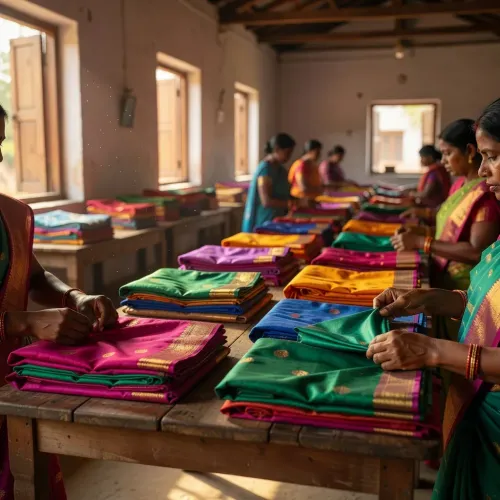
The primary beneficiaries are rural and semi-urban women organised under Indira Mahila Shakti Sanghams across Telangana. Once constructed, the 8,000 buildings are intended to serve as meeting halls, training centres, and coordination points for thrift, credit, and micro-enterprise activities run by these groups. The scale — one building per panchayat or ward — signals an intent to embed the programme at the grassroots level.
Broader stakeholders include rural livelihood missions and state finance departments, which will need to align construction budgets and timelines. The initiative also carries political weight: visible infrastructure projects linked to women's welfare have historically served as durable electoral assets for state governments across South India.
What's Next
The key milestones to watch are fund allocation in the upcoming Telangana state budget, the pace of construction across all 8,000 sites, and the integration of the new centres with ongoing rural livelihood and financial-inclusion missions. Whether the buildings are completed within the current government's term will determine how firmly the initiative translates from a foundation-laying announcement into on-the-ground impact for women's self-help groups statewide.
Point of View
000 buildings is a high-visibility governance signal, designed to demonstrate scale and speed on women's welfare ahead of the Congress government's mid-term mark. By naming the centres after Indira Gandhi and tying them to an existing SHG federation, the administration is consciously drawing a lineage from the Congress party's historical welfare brand. The move fits a well-established South Indian pattern of converting SHG networks — built over decades — into electoral infrastructure through targeted state investment. Whether the construction pipeline matches the announcement will be the real test of the initiative's durability.
NationPress
19 Sept 2026
Frequently Asked Questions
What is Indira Stree Shakti Bhavan in Telangana?
Indira Stree Shakti Bhavan is a planned network of 8,000 community centres across Telangana, announced by CM Revanth Reddy on 25 May 2026, designed to serve as operational hubs for women's self-help groups under the Indira Mahila Shakti Sangham.
What is Indira Mahila Shakti Sangham?
Indira Mahila Shakti Sangham is a state-level federation of women's self-help groups in Telangana focused on collective empowerment, thrift, credit access, and micro-enterprise activities.
How many Indira Stree Shakti Bhavans will be built in Telangana?
The Telangana government announced foundation stones for 8,000 Indira Stree Shakti Bhavans, with CM Revanth Reddy conducting a virtual ceremony from the Secretariat on 25 May 2026.
What welfare schemes has the Revanth Reddy government launched for women?
Since taking office in December 2023, the Revanth Reddy-led Congress government has introduced free RTC bus travel for women and the Indira Mahila Shakti Sangham programme, and has now announced 8,000 dedicated community centres for women's self-help groups.
What is the history of women's self-help groups in Telangana?
Women's self-help groups in the Telugu-speaking states date to the 1990s, scaled nationally through Andhra Pradesh's Velugu and Indira Kranthi Patham programmes from 2000 onwards. Telangana inherited and expanded this network after its formation as a separate state in 2014.