CM Revanth Reddy Lays Foundation for 8,000 SHG Buildings, Launches Saree for 1 Cr Women
Synopsis
Chief Minister A. Revanth Reddy on 25 May 2026 virtually laid foundation stones for 8,000 Mahila Grama Sangham buildings across Telangana and launched a new saree design for 1 crore women, combining SHG infrastructure creation with a large-scale direct-benefit programme at the State Secretariat.
Key Takeaways
Revanth Reddy participated virtually in the foundation stone laying for 8,000 SHG Village Organisation Mahila Grama Sangham buildings on 25 May 2026 .
A new saree design was launched for 1 crore women of Telangana at the same event.
The event was held at the Telangana State Secretariat, Hyderabad and broadcast live.
Telangana's SHG network is managed by SERP and supported by the central National Rural Livelihoods Mission (NRLM) .
The construction of 8,000 buildings continues a long-standing Southern Indian model of providing physical infrastructure to women's SHG federations.
State budget allocations and tendering timelines for the building programme will be closely watched in coming months.
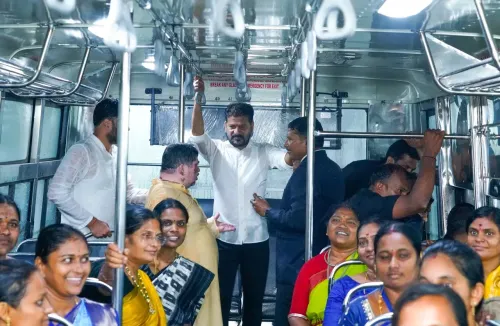
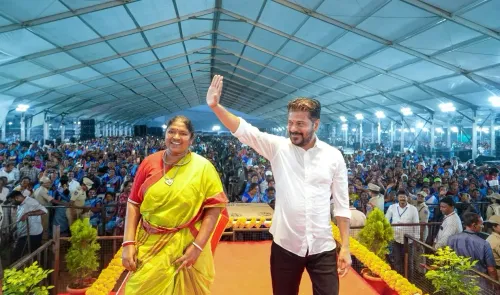
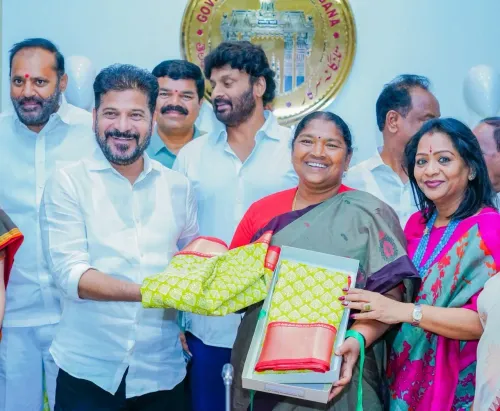
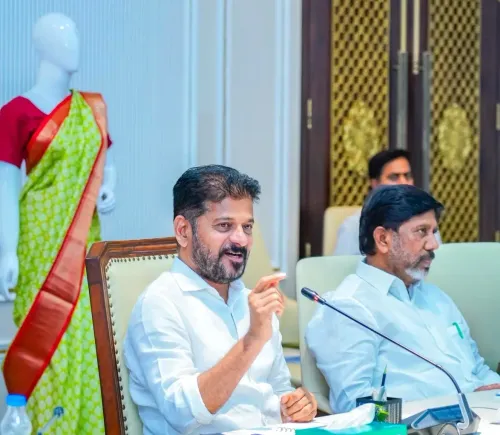
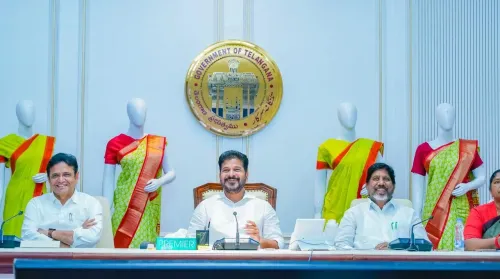
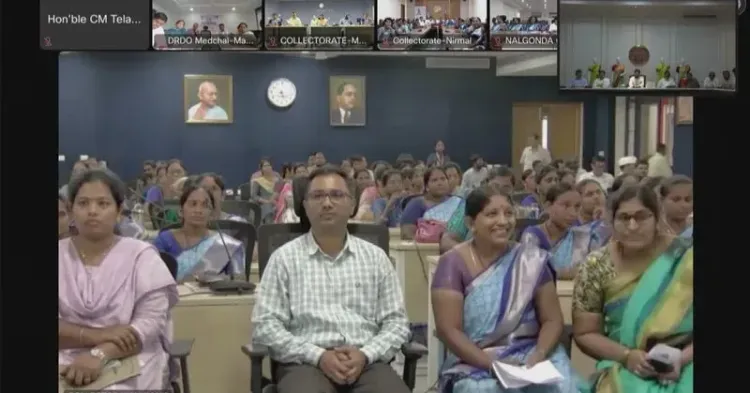
The Chief Minister's Office of Telangana announced on Monday, 25 May 2026 that Chief Minister A. Revanth Reddy participated in a virtual foundation stone laying ceremony for 8,000 Self Help Group (SHG) Village Organisation Mahila Grama Sangham buildings and simultaneously launched a new saree design for 1 crore women of Telangana, held at the Telangana State Secretariat, Hyderabad.
Context
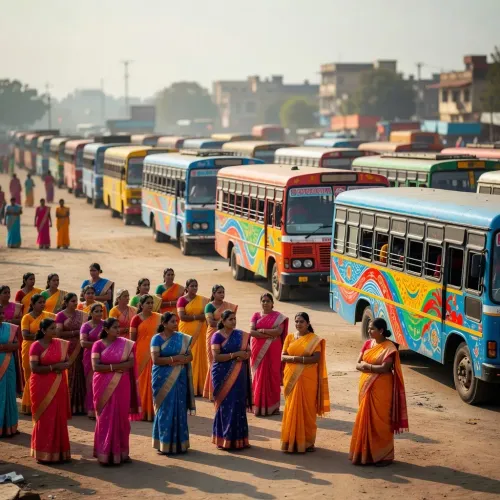
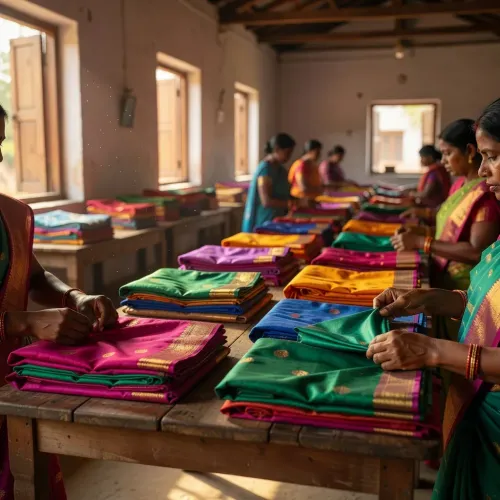
The event, broadcast live, saw CM Revanth Reddy lay virtual foundation stones for dedicated infrastructure for Mahila Grama Sanghams — village-level federations of women's Self Help Groups that coordinate credit, livelihoods and social activities across rural Telangana. Alongside the infrastructure drive, the Chief Minister unveiled a new saree design intended for distribution to 1 crore women across the state, combining asset creation with a direct-benefit programme in a single event.
Policy Backdrop
Telangana's SHG ecosystem traces its roots to the undivided Andhra Pradesh government's Velugu and Indira Kranthi Patham programmes launched in the early 2000s, which built one of the country's densest networks of women's self-help federations. The Society for Elimination of Rural Poverty (SERP), the state's nodal agency, has since managed this infrastructure, drawing additional central support through the National Rural Livelihoods Mission (NRLM) rolled out nationally in 2011. Constructing dedicated Mahila Grama Sangham buildings is an extension of this long-standing model, giving village-level federations permanent meeting and operational spaces that had previously depended on rented or shared premises.
Southern Indian states have consistently used SHG federations as delivery mechanisms for credit, skill training and social security. Periodic governments have supplemented these networks with physical infrastructure or direct distribution programmes — a pattern the current initiative continues under the Indian National Congress government that came to power in December 2023.
Stakeholders and Impact
The primary beneficiaries are women enrolled in SHGs across rural Telangana, whose village organisations stand to gain permanent, purpose-built spaces for meetings, record-keeping and community programmes. Dedicated buildings are expected to strengthen institutional capacity of Mahila Grama Sanghams, reducing dependence on informal arrangements. The saree distribution component, targeting 1 crore women, represents one of the largest single-cohort direct-benefit gestures by the state government since it assumed office.
SERP and state livelihood mission officials are the key implementing agencies, and the scale of the construction programme — 8,000 buildings — will require substantial budget allocation and tendering processes in the months ahead. Rural women members of SHGs, particularly in districts with high federation density, stand to see the earliest tangible impact.
What's Next
Attention will now turn to state budget allocations and tendering timelines for constructing the 8,000 Mahila Grama Sangham buildings, as well as the logistics of distributing the new saree design to 1 crore women across Telangana's districts. Any integration with existing NRLM funding streams or the state's livelihood mission architecture will shape both the pace and the financial sustainability of the programme. If executed at the announced scale, the initiative would mark one of the largest single-event SHG infrastructure commitments in the state's history, setting a benchmark for women's institutional development in the region.
Point of View
Particularly for women constituents. For the Congress government in Telangana, which came to power in December 2023 on a platform of welfare guarantees, this event reinforces its positioning as a champion of women's economic empowerment ahead of future electoral cycles. The sheer scale of the commitment, 8,000 buildings and 1 crore beneficiaries, will be judged ultimately on implementation speed and budget follow-through rather than the ceremony itself. Analysts will watch whether SERP and state agencies can absorb and execute a programme of this magnitude within a credible timeline.
NationPress
15 Oct 2026
Frequently Asked Questions
What is the Mahila Grama Sangham building programme announced by CM Revanth Reddy?
CM Revanth Reddy on 25 May 2026 laid virtual foundation stones for 8,000 Mahila Grama Sangham buildings — dedicated spaces for village-level SHG federations across Telangana to conduct meetings, manage records and run community programmes.
Who are the beneficiaries of the new saree distribution in Telangana?
The new saree design launched by CM Revanth Reddy is intended for 1 crore women across Telangana, making it one of the state government's largest single-cohort direct-benefit gestures.
What is a Mahila Grama Sangham in Telangana?
A Mahila Grama Sangham is a village-level federation of Self Help Groups (SHGs) in Telangana that coordinates credit, livelihoods, and social activities for women, managed through the state agency SERP.
What is SERP and what role does it play in Telangana's SHG programme?
SERP, the Society for Elimination of Rural Poverty, is Telangana's nodal state agency for managing SHG programmes and rural development, and is the key implementing body for the Mahila Grama Sangham building initiative.
How does Telangana's SHG infrastructure programme relate to the national NRLM?
Telangana's SHG network draws design support and central funding from the National Rural Livelihoods Mission (NRLM), launched nationally in 2011, which complements state-level programmes managed by SERP.