Awami League slams BNP over Bangladesh police accountability crisis
Synopsis
Bangladesh's Awami League has escalated its challenge to the Tarique Rahman-led BNP government, citing a luxury drug den raided at a senior police officer's Dhaka property and a pattern of custodial deaths, extortion, and 'crossfire' rhetoric — arguing that eight months in, the government is failing the fundamental test of police accountability.
Key Takeaways
The Awami League accused the BNP government of Tarique Rahman of failing to address a systemic police accountability crisis in Bangladesh .
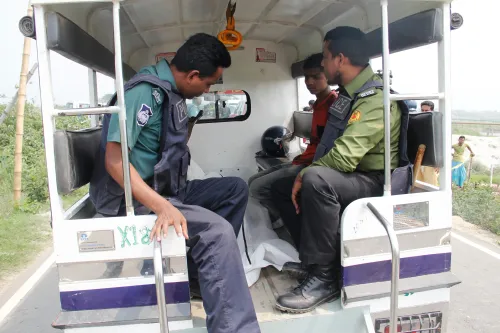
A raid by Dhaka Metropolitan Police's Detective Branch on a triplex in Purbachal, Dhaka led to the arrest of 85 people at an alleged drug den linked to Additional DIG Abdullah Al Zahir .
DIG Zahir was removed from his post following public outrage over his alleged links to narcotics operations.
The party cited custodial deaths, extortion, suspected narcotics diversion, selective arrests, and the return of 'crossfire' narratives as interconnected evidence of systemic failure.
The Awami League called for independent investigations and visible accountability, warning that democratic progress is at risk without police reform.
Bangladesh's Awami League has raised serious concerns over a deepening pattern of police misconduct in the country, citing allegations ranging from extortion and narcotics theft to deaths in custody and the normalisation of 'crossfire' narratives under the Bangladesh Nationalist Party (BNP) government led by Prime Minister Tarique Rahman. The opposition party warned on 3 November that the ruling administration can no longer treat these as isolated incidents.
A Pattern of Alleged Misconduct
The Awami League argued that the accumulation of allegations points to a systemic breakdown rather than individual lapses. In its statement, the party posed a pointed question: 'When those entrusted with enforcing the law are repeatedly accused of breaking it, who protects ordinary citizens?' It cited custodial abuse, extortion, suspected narcotics diversion, selective arrests, and the revival of extrajudicial language as interconnected warning signs that demand urgent government response.
The party was careful to clarify that its indictment was not of every officer in uniform. The core issue, it argued, is whether Tarique Rahman's administration will insist on independent investigation and visible accountability — or whether political authority will continue to shield abuse. According to the Awami League, eight months into the current administration, 'the evidence suggests that test is being failed.'
The Purbachal Raid and Senior Police Complicity
At the centre of the Awami League's charges is a high-profile raid by the Detective Branch (DB) of Dhaka Metropolitan Police on a luxury triplex in Dhaka's Purbachal area. The property was reportedly owned by Additional DIG Abdullah Al Zahir, a senior official in the Police Headquarters' Repair and Maintenance Department. According to the party, the raid led to the arrest of 85 people who were operating a high-end drug den allegedly running under the protection of a top police officer.
DIG Zahir was subsequently removed from his post following public outrage, but the Awami League said the episode laid bare how deeply embedded high-ranking officers can be in organised crime networks. 'When a senior police official provides shelter to narcotics operations, it isn't just an isolated mistake,' the party said in its statement. 'It shows how criminal networks can operate inside the state itself, using the power of the uniform to shield illegal operations.'
Questions Over Custodial Safety and Drug Theft
The Awami League formally questioned what concrete measures the BNP government would take to ensure custodial safety, prevent torture and fabricated charges, and conduct transparent, evidence-based investigations into allegations of drug theft by police personnel. The party argued that selective arrests and the return of extrajudicial terminology — particularly the 'crossfire' framing long associated with extrajudicial killings — signal a regression in rule-of-law standards.
This is not the first time Bangladesh's law-enforcement institutions have come under scrutiny for custodial deaths and alleged narcotics links. Critics have long argued that accountability mechanisms within the Bangladesh Police are structurally weak, allowing misconduct to persist across political administrations.
Implications for Democratic Progress
The opposition's statement carries a broader political subtext: it positions the Awami League as a watchdog on civil liberties even as it itself faces legal and political pressure under the current government. 'Unless the administration takes decisive action to ensure that police follow the law rather than break it, the hope for genuine democratic progress will fall short,' the party cautioned, 'leaving everyday citizens unprotected and without reason to trust law enforcement.'
With Bangladesh navigating a fragile democratic transition, the question of police reform and accountability is likely to remain a flashpoint between the ruling BNP and opposition forces in the months ahead.
Point of View
If it is genuinely returning, is particularly alarming — it was a defining feature of extrajudicial violence in Bangladesh's recent past and suggests institutional memory of impunity is intact. The BNP government faces a credibility test here that transcends partisan point-scoring: if it cannot or will not enforce accountability within the police, its democratic credentials will face sustained challenge from domestic critics and international observers alike.
NationPress
3 Nov 2026
Frequently Asked Questions
What is the Bangladesh police accountability crisis flagged by the Awami League?
The Awami League has highlighted a pattern of alleged police misconduct in Bangladesh under the BNP government, including custodial deaths, extortion, narcotics theft, selective arrests, and the revival of 'crossfire' narratives associated with extrajudicial killings. The party argues these are systemic failures, not isolated incidents, and demands independent investigations.
What happened in the Dhaka Purbachal police raid?
The Detective Branch of Dhaka Metropolitan Police raided a luxury triplex in Purbachal, Dhaka, reportedly owned by Additional DIG Abdullah Al Zahir, a senior Police Headquarters official. The raid led to the arrest of 85 people allegedly operating a high-end drug den under the protection of the senior officer. DIG Zahir was subsequently removed from his post.
Who is Tarique Rahman and what is his government's role in this controversy?
Tarique Rahman is the Prime Minister of Bangladesh leading the Bangladesh Nationalist Party (BNP) government. The Awami League alleges that his administration, eight months in, has failed to enforce police accountability, allowing misconduct to persist and political authority to shield abuse.
Why does the Awami League's criticism matter given its own political situation?
The Awami League, currently in opposition and facing legal and political pressure under the BNP government, is positioning itself as a watchdog on civil liberties. While the critique carries a partisan dimension, independent observers note that the underlying allegations — including a senior officer's drug den link — represent genuine governance concerns that go beyond party politics.
What is the significance of the return of 'crossfire' narratives in Bangladesh?
The term 'crossfire' in Bangladesh has historically been used to describe extrajudicial killings carried out by security forces and framed as encounters. Its alleged revival under the current BNP government is seen by critics as a regression in rule-of-law standards, echoing a period of documented human rights abuses.