Will Tarique Rahman Successfully Navigate Bangladesh's Political Landscape?
Synopsis
As Tarique Rahman returns from exile to lead Bangladesh, he faces daunting challenges including mending ties with India and addressing rising political tensions. His emergence as a leader marks a significant shift in the nation's political landscape, raising questions about the future direction of Bangladesh.
Key Takeaways
Tarique Rahman returns to Bangladesh after a long exile.
He faces significant political challenges ahead.
The country is navigating through a history of unrest.
His leadership could reshape ties with India.
The Awami League expresses concerns about forgetting the past.
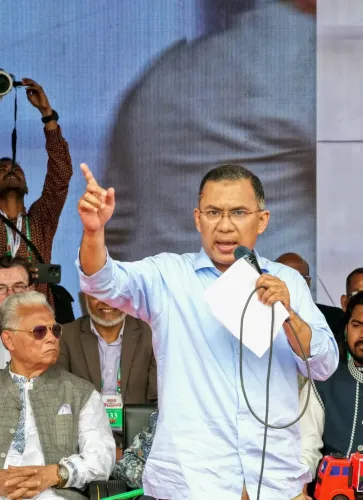
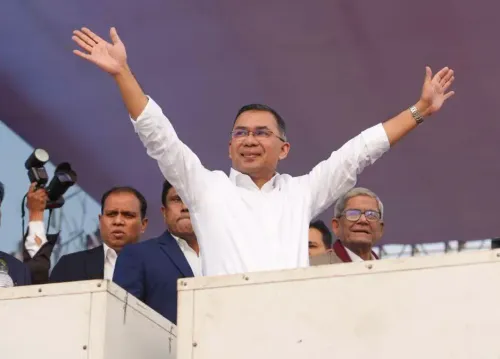
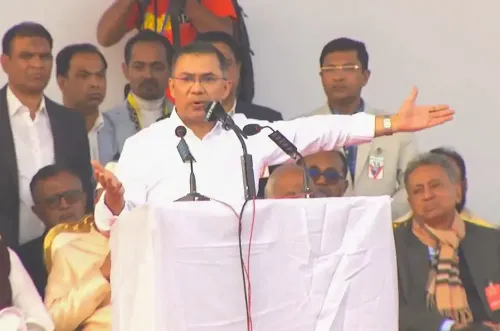
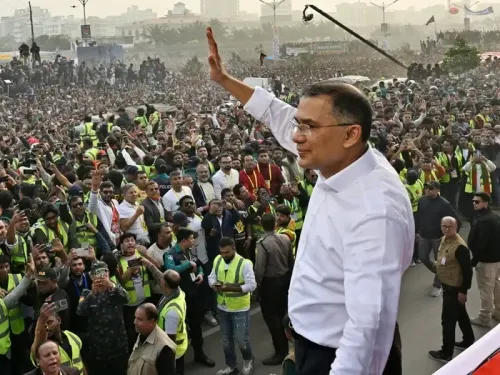
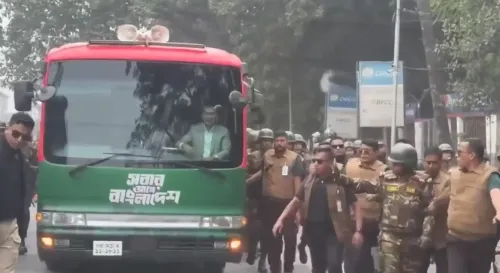
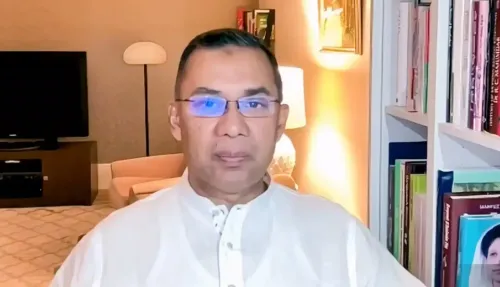
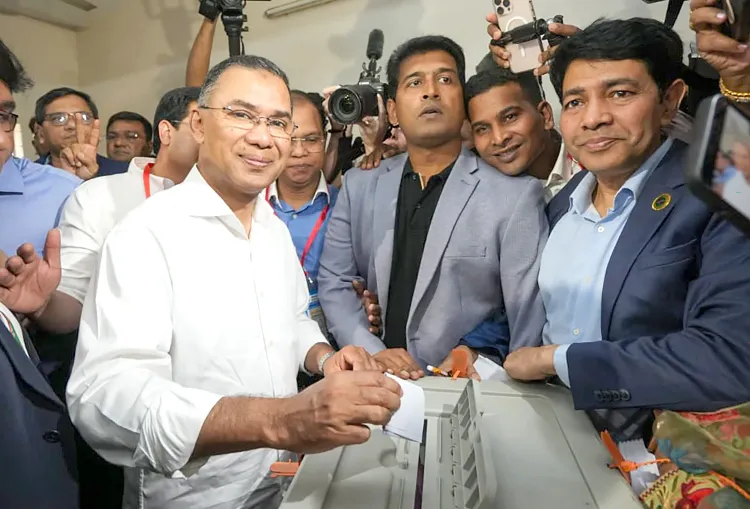
Dhaka, Feb 13 (NationPress) Tarique Rahman, the leader of the Bangladesh Nationalist Party (BNP), is poised to assume the role of Prime Minister of Bangladesh after returning to the country last December following a 17-year self-imposed exile in the UK amid escalating political turmoil.
The 60-year-old politician is the first son of former President Ziaur Rahman and three-time Prime Minister Khaleda Zia.
With the Awami League currently barred from elections due to the suspension of its registration, Tarique Rahman swiftly became a leading candidate for prime minister following the passing of his mother.
Commonly referred to as the 'dark prince', Tarique is noted for his influence between 2001 and 2006, during the BNP and Jamaat-e-Islami coalition while his mother was in office.
He faced allegations from the Sheikh Hasina-led Awami League government regarding corruption and maintaining a parallel power structure during Khaleda's administration.
Recently, the Awami League expressed alarm over a troubling political trend, observing that Tarique is being glorified and positioned as a future leader, which they claim erases a significant part of the nation's history.
“The crimes, corruption, and state capture during the 2001–2006 era are being conveniently forgotten. This collective amnesia is precarious. Tarique Rahman’s actions during that time were not mere footnotes; they represent one of the darkest periods in Bangladesh's institutional history,” the Awami League stated.
Tarique was arrested in 2007 amid the political turmoil of the 1/11 period. After his release in 2008, he went to the UK for medical treatment and remained there until his return to Dhaka on December 25.
Following the July 2024 uprising that culminated in the fall of the democratically elected Awami League government on August 5, several court rulings convicting Tarique in various cases were annulled.
Experts suggest that Rahman, now politically astute, may endeavor to mend relations with India for his country's benefit while remaining vigilant against undue Pakistani influence, learning from the situations in Pakistan-occupied Kashmir (PoK) and Balochistan.
Relations with India had been strained during the BNP's previous rule from 2001 to 2006, primarily over border security issues and accusations of harboring anti-India terrorist factions. Concerns were particularly heightened in 2004 with the discovery of 10 truckloads of weapons at Chattogram’s CUFL jetty.
As Tarique prepares to lead Bangladesh - the first male Prime Minister in nearly 35 years - experts caution that the nation must confront the significant challenges posed by rising unrest and Islamist extremism that characterized the 18-month term of the Muhammad Yunus-led interim government.
Point of View
It is crucial to observe that while Tarique Rahman's return represents a pivotal moment in Bangladesh's political history, it also raises legitimate concerns regarding the nation's past and the potential for future governance. The balance of power, historical accountability, and international relations will be paramount in his forthcoming administration.
NationPress
20 Sept 2026
Frequently Asked Questions
Who is Tarique Rahman?
Tarique Rahman is the chairman of the Bangladesh Nationalist Party (BNP) and is expected to become the next Prime Minister of Bangladesh after returning from a 17-year exile.
What challenges does Tarique Rahman face as he returns to politics?
He faces the challenge of restoring ties with India, addressing rising Islamist extremism, and overcoming the political unrest that has developed during his absence.
Why is Tarique Rahman referred to as the 'dark prince'?
He earned the nickname due to his significant influence during his mother's tenure as Prime Minister and the controversies surrounding his leadership during that period.
How did the Awami League react to Tarique Rahman's return?
The Awami League expressed concerns about the political trend of rehabilitating Tarique, warning against forgetting the corruption and state capture associated with his prior leadership.
What impact did Tarique's long exile have on his political career?
His exile has allowed him to gain a different perspective on politics, and upon his return, he may leverage this experience to navigate Bangladesh's complex political landscape.