Is BNP's Rahman Gaining Influence in Bangladesh Amid Western Strategic Changes?
Synopsis
Amid a significant political shift in Bangladesh, Tarique Rahman, previously viewed as a pariah, is now being considered a possible future Prime Minister. This transformation reflects the changing strategic interests of Western powers in the region, raising questions about international double standards in democracy promotion.
Key Takeaways
Tarique Rahman is now viewed as a potential Prime Minister in Bangladesh.
Western powers are shifting their strategic interests in the region.
The case of Rahman illustrates international double standards in democracy promotion.
The concept of 'instrumental internationalism' is relevant to this shift.
Political narratives can change based on geopolitical priorities.
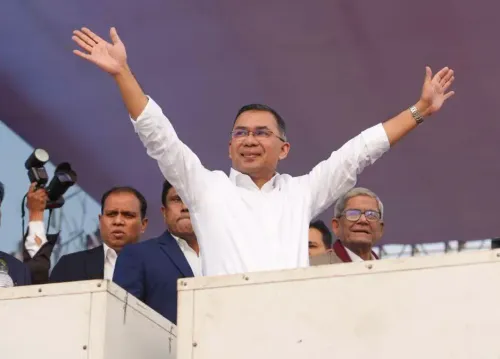
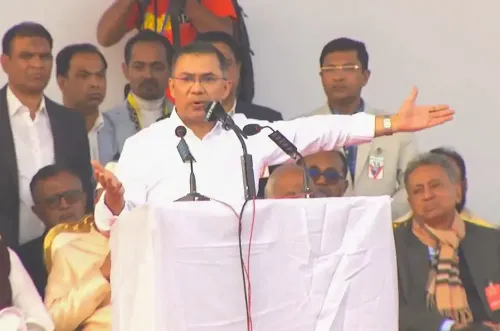
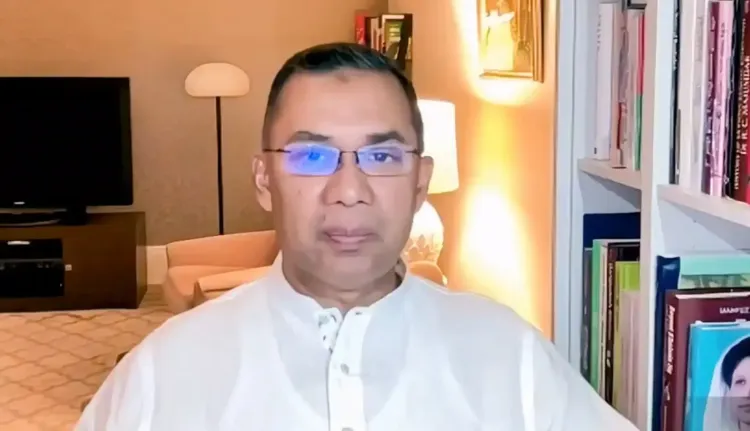
Dhaka, Nov 12 (NationPress) Following the political shift in Bangladesh after the downfall of the Awami League government led by Sheikh Hasina in August 2024, Western nations have reassessed their interests in the nation. Tarique Rahman, the Acting Chairman of the Khaleda Zia-led Bangladesh Nationalist Party (BNP), once perceived as a representative of corrupt governance and violent politics, is now being recognized as a potential political ally and future Prime Minister, according to a report released on Wednesday.
“The evolving political landscape in Bangladesh has reignited discussions about the international community’s role in fragile democracies. For the last twenty years, Western nations and multilateral organizations have taken on the uninvited role of guardians of democratic accountability, rule of law, and anti-corruption in Bangladesh. However, these same institutions now seem to be complicit—whether through passive endorsement or altered diplomatic strategies—in the restoration of political figures they once criticized. The situation concerning Tarique Rahman, the exiled leader of BNP, exemplifies this trend,” a report from the South Asia Centre of the London School of Economics and Political Science elaborated.
It emphasized that the shifting narrative around Rahman underscores a profound contradiction within international actions towards Bangladesh: a gap between normative ideals and political pragmatism.
“Previously, the West defended their engagement with Bangladesh’s politics—whether through aid conditions, governance initiatives, or diplomatic pressures—as efforts to combat corruption and foster democracy. Yet now, these actors seem prepared to reinterpret past narratives of corruption and extremism to align with emerging geopolitical priorities,” the report indicated.
“This trend is neither novel nor exclusive to Bangladesh. It signals a broader logic of what can be termed ‘instrumental internationalism’—a framework that permits global powers to leverage moral rhetoric as a malleable tool for asserting control rather than advocating principled positions. It also enables the West to pivot between regimes to ensure its geopolitical interests, particularly amid shifting international dynamics,” it noted.
The report further stated that over the years, deteriorating democracies have employed inconsistent standards while denouncing human rights abuses and the neglect of the rule of law; some regimes face criticism, while others are overlooked or defended when they align with Western interests.
“The situation surrounding Tarique Rahman exemplifies the West’s double standards. By permitting Rahman’s political engagement without accountability, despite his prior reputation as the ‘Dark Prince of Hawa Bhaban’ (in their own terminology), the cycle of impunity continues unabated,” it concluded.
Point of View
It is crucial to acknowledge the complexities surrounding international influence and the dual standards often at play. The Nation remains committed to reporting on these developments with integrity and providing insights that reflect the nuances of national interest and democratic principles.
NationPress
10 Oct 2026
Frequently Asked Questions
What led to the political shift in Bangladesh?
The political shift in Bangladesh was primarily triggered by the collapse of the Awami League government led by Sheikh Hasina in August 2024, resulting in a realignment of political forces.
Who is Tarique Rahman?
Tarique Rahman is the Acting Chairman of the Bangladesh Nationalist Party (BNP) and has recently emerged as a potential political partner in the current political landscape.
Why are Western powers changing their stance on Rahman?
Western powers are reassessing their interests in Bangladesh, leading them to view Rahman as a viable political partner amidst changing geopolitical dynamics.