What Will Tarique Rahman’s Return Mean for Bangladesh's Political and Diplomatic Landscape?

Synopsis
Tarique Rahman’s return to Bangladesh after 17 years in exile is poised to reshape the political and diplomatic agenda of the Bangladesh Nationalist Party (BNP). His homecoming could invigorate the party and its supporters ahead of the crucial 2026 elections, while also raising questions about political stability and governance.
Key Takeaways
Tarique Rahman returns after 17 years in exile, marking a significant political moment.
A dual-layer security cordon is in place across Dhaka.
His return aims to mobilize the BNP ahead of the 2026 elections .
There are concerns about political stability and governance.
His address at a grand reception is highly anticipated.
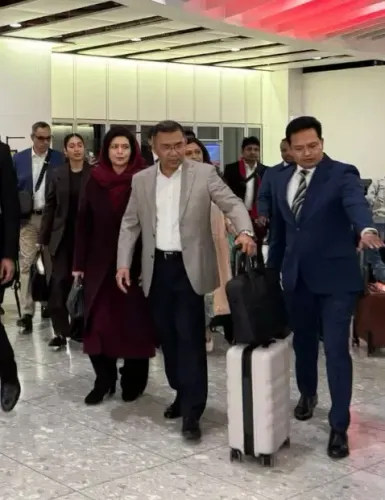
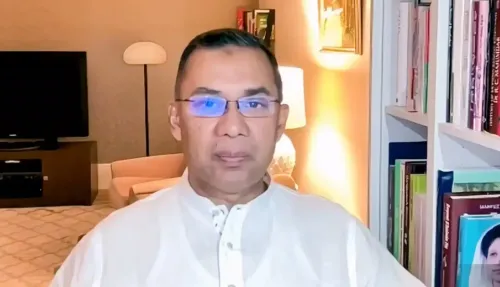
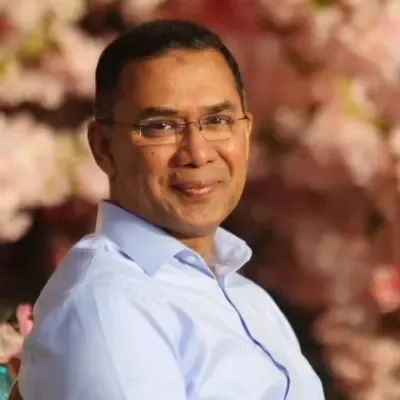
New Delhi, Dec 24 (NationPress) A dual-layer security perimeter has been established across Dhaka in anticipation of the return of Tarique Rahman, the acting chairman of the Bangladesh Nationalist Party (BNP), on December 25, after being in exile for over 17 years, as per reports from Bangladesh.
His homecoming is considered a crucial event for the BNP, as he plans to galvanize and devise the party's electoral strategy in preparation for the upcoming 2026 elections, especially in light of his mother, the party's leader Khaleda Zia, being unwell.
Tarique Rahman, the son of former president Ziaur Rahman and former prime minister Khaleda Zia, has been serving as the BNP's acting chairman since February 2018.
At the age of 60, he rose through the ranks of the party during the 1990s and early 2000s, becoming a significant player in BNP's organizational politics and youth engagement.
He is married to Dr. Zubaida Rahman and has a daughter named Zaima Rahman. Tarique has spent over 17 years in London, leaving Bangladesh amidst various legal challenges and political unrest.
While abroad, he has effectively led the party, directing its strategies and outreach from the UK, despite facing multiple convictions in Bangladesh for corruption and violence, which his supporters argue are politically motivated.
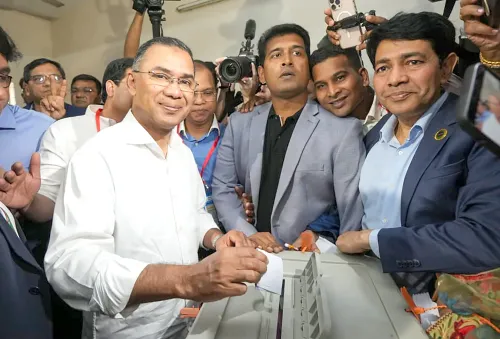
His return, coinciding with the February 2026 general election, has received extensive media coverage, with the BNP arranging a grand welcome to reaffirm its presence on the national stage.
Tarique's heritage provides him with symbolic authority within the BNP, embodying continuity with the Zia family's political legacy and serving as a unifying figure for supporters who have felt lost due to Khaleda Zia's limited public engagement.
His return signifies not only a boost in morale but also a symbolic gesture for the party's daily leadership.
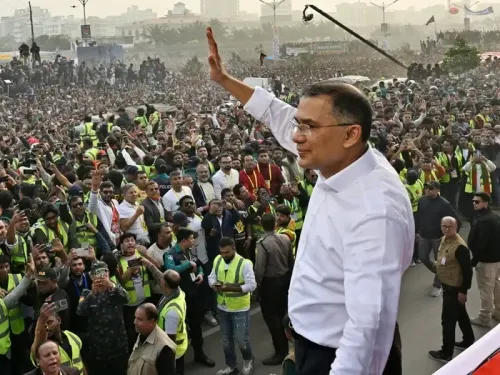
Reports indicate that BNP leaders view his arrival as a spark for mass mobilization, with party organizers anticipating substantial attendance and revitalized grassroots enthusiasm that could lead to electoral progress if maintained.
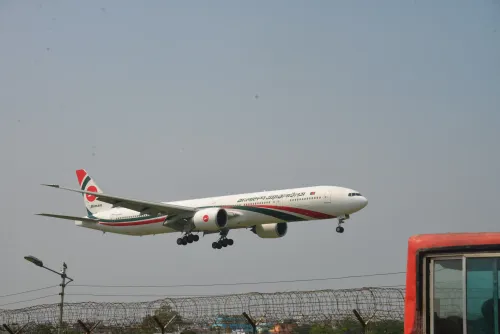
Consequently, security measures have been heightened, with visitors barred from entering the airport on Thursday, where he is expected to arrive around noon, Bangladesh time.
His return, close to a national election, has reportedly reinvigorated supporters and solidified sentiments, but it also risks reopening legal and diplomatic issues, providing grounds for some to challenge the party's governance and legal integrity.
Most of the legal actions against Tarique are believed to have originated from former Prime Minister Sheikh Hasina, who is currently in exile, while her Awami League party remains prohibited from participating in the elections.
Domestically, Tarique's return exacerbates an already polarized political landscape, characterized by the rise of extremism and widespread civil unrest.
On the international front, his presence may attract heightened scrutiny from foreign governments and human rights advocates concerned about political stability and the rule of law.
Given the current volatility, the global community will be observing whether his return heightens tensions or facilitates opportunities for political dialogue.
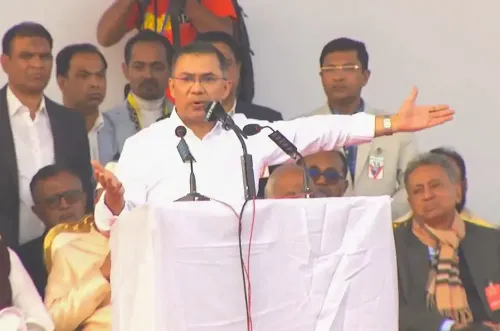
His address at a significant reception organized by the BNP will be closely watched to gauge his immediate political and diplomatic goals.
The anticipated gathering on Thursday is expected to attract approximately two million attendees, with the BNP mobilizing supporters and volunteers to ensure the event proceeds smoothly, marking a crucial moment for both the party and its supporters.
Point of View
We recognize that Tarique Rahman's return to Bangladesh is a complex development. While it may reinvigorate the BNP and its supporters, it also poses risks of increased political tension and scrutiny. Our focus remains on delivering unbiased and comprehensive analysis to inform our audience about the evolving political landscape.
NationPress
19 Sept 2026
Frequently Asked Questions
Why is Tarique Rahman's return significant?
Tarique Rahman's return is significant because it marks his first return to Bangladesh after 17 years in exile. His comeback is expected to reinvigorate the BNP and reshape its strategy ahead of the 2026 elections.
What role has Tarique Rahman played in the BNP?
Tarique Rahman has been the acting chairman of the BNP since February 2018 and has played a central role in the party's organizational politics and youth mobilization.
What are the implications of his return for Bangladesh's political environment?
His return could intensify the already polarized political landscape in Bangladesh, potentially leading to increased tensions and scrutiny from both domestic and international observers.
What security measures are in place for his return?
A dual-layer security perimeter has been established in Dhaka, with heightened security measures at the airport where he is expected to land.
How might his return affect the upcoming elections?
His return may energize BNP supporters and consolidate sentiments, potentially translating into electoral momentum as the party prepares for the 2026 elections.