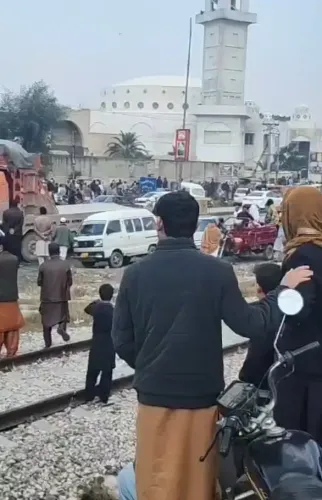
What Happened in Maiduguri? Ten Killed in Mosque Blast
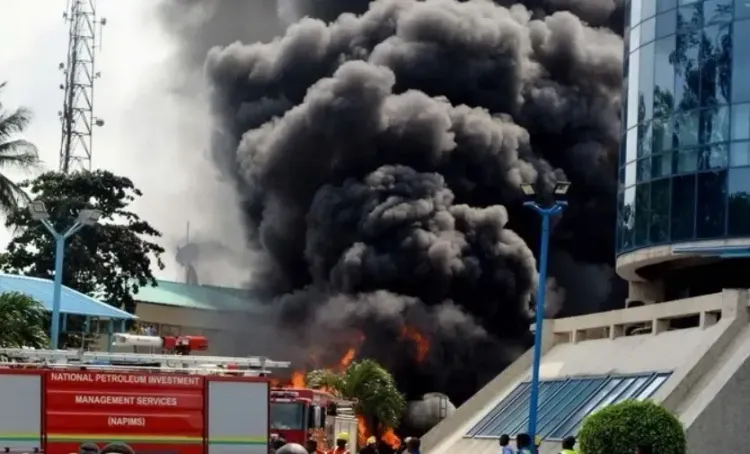
Synopsis
A tragic explosion in Maiduguri, Nigeria, has left at least ten worshippers dead during evening prayers at a mosque. The incident raises fresh fears about militant violence in a region long plagued by insurgency. As authorities investigate, the community grapples with the potential resurgence of terror in their midst.
Key Takeaways
Explosion in Maiduguri during evening prayers.
At least ten worshippers have lost their lives.
Incident raises concerns over militant violence .
Authorities are investigating the cause of the blast.
Maiduguri has seen a decline in major attacks recently.
Borno (Nigeria), Dec 25 (NationPress) A devastating explosion struck a mosque in the northeastern Nigerian city of Maiduguri, the capital of Borno state, during evening prayers, resulting in the tragic death of at least ten worshippers, as reported by local media outlets.
This incident, which occurred on Wednesday evening, has reignited concerns about the resurgence of militant violence in a region plagued by years of insurgency.
As of now, no armed group has claimed responsibility for the explosion.
Militia leader Babakura Kolo referred to the incident as a suspected bombing, noting that officials have indicated that militants have previously targeted mosques and crowded areas in Maiduguri using suicide bombers and improvised explosive devices.
Witnesses reported that the explosion occurred within a packed mosque located in the Gamboru Market area, where Muslims had gathered for evening prayers.
The sudden blast created a scene of panic and confusion, with worshippers desperately seeking safety amid smoke and debris.
Kolo mentioned that initial assessments suggest the explosive device was likely planted inside the mosque and detonated during the prayer service.
However, some witnesses speculated that the blast might have been caused by a suicide bomber, although this has not been confirmed by authorities, according to local media reports.
Maiduguri, the capital of Borno state, has been at the heart of a prolonged insurgency led by jihadist groups such as Boko Haram and its offshoot, the Islamic State West Africa Province.
While the broader region has often witnessed violence, the city itself has not faced a significant attack in recent years, making this incident particularly alarming for residents and security forces.
Boko Haram began its insurgency in Borno state in 2009 with the aim of establishing an Islamic caliphate.
Despite ongoing military operations by Nigerian forces and regional cooperation with neighboring nations, sporadic attacks continue to threaten civilians across northeastern Nigeria.
Nigeria has been battling a jihadist insurgency since 2009, a conflict that has reportedly claimed over 40,000 lives and displaced approximately two million people in the northeast, based on United Nations estimates.
The humanitarian impact has been severe, with communities repeatedly uprooted by violence.
Although the frequency of attacks has decreased compared to the peak of the conflict a decade ago, violence has spilled over into neighboring Niger, Chad, and Cameroon, complicating regional security efforts.
Growing concerns now surround a potential resurgence of violence in parts of northeastern Nigeria, as insurgent groups remain capable of executing deadly attacks despite years of military pressure and counterinsurgency operations.
Point of View
This tragic incident underscores the persistent threat of insurgency in Nigeria's northeastern region. While the frequency of such attacks has decreased, the potential for violence remains a pressing concern. It is vital for authorities to enhance security measures and for the community to remain vigilant in the face of these challenges.
NationPress
13 Oct 2026
Frequently Asked Questions
What caused the explosion in Maiduguri?
The explosion in Maiduguri is suspected to have been caused by a planted explosive device inside the mosque, although some witnesses speculate it could have been a suicide bombing.
How many casualties were reported?
At least ten worshippers were reported killed in the blast during evening prayers.
What is the historical context of insurgency in Borno state?
Borno state has faced a prolonged insurgency since 2009, primarily led by Boko Haram and its offshoots, resulting in significant loss of life and displacement.
What is the response from local authorities?
Local authorities are investigating the incident, but as of now, no group has claimed responsibility for the attack.
What are the implications of this incident for local security?
This incident raises serious concerns about the resurgence of militant violence in Maiduguri, prompting calls for heightened security measures in the region.