Will Delhi's Air Quality Continue to Improve?

Synopsis
Delhi's air quality has shown a notable improvement, with several areas now classified as 'moderate'. This development follows the lifting of restrictions under the Graded Response Action Plan, signaling hope for better air conditions. However, fog warnings persist as the region navigates fluctuating weather patterns. Stay informed on air quality updates!
Key Takeaways
Delhi's air quality has improved to a moderate category in several areas.
Stage IV restrictions of the Graded Response Action Plan were lifted due to sustained improvements.
Fog warnings are still in effect, indicating potential weather challenges.
Officials stress the importance of ongoing preventive measures.
Public awareness and adherence to guidelines are crucial for maintaining air quality.
New Delhi, Dec 25 (NationPress) Delhi’s air quality showed a significant improvement on Thursday morning, following the revocation of restrictions under Stage IV of the Graded Response Action Plan by the Commission for Air Quality Management in Delhi-NCR and nearby regions, due to a consistent enhancement in pollution levels.
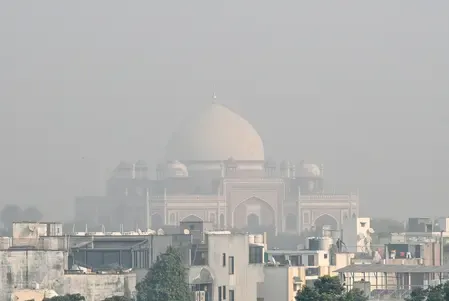
Despite the city’s overall air quality still being categorized as ‘poor’ with an average Air Quality Index (AQI) of 221, various locations within Delhi and the National Capital Region demonstrated better readings, transitioning into the ‘moderate’ category.
This change is a notable development after experiencing ‘very poor’ to ‘severe’ air quality conditions for several weeks across extensive areas of the region.
According to AQI classifications, values ranging from 0 to 50 are deemed ‘good’, 51 to 100 ‘satisfactory’, 101 to 200 ‘moderate’, 201 to 300 ‘poor’, 301 to 400 ‘very poor’, and 401 to 500 ‘severe’.
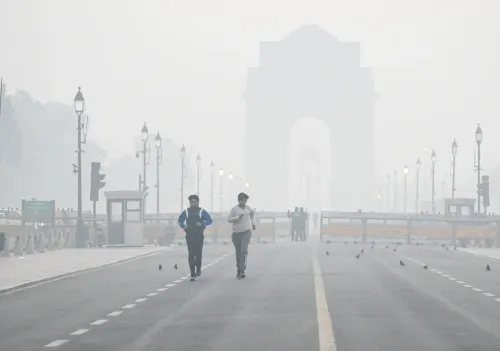
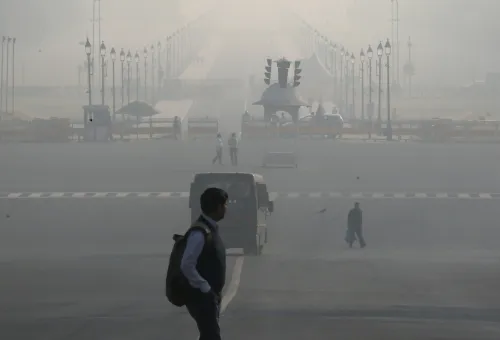
On Thursday morning, the AQI at India Gate and Kartavya Path was recorded at 350, while Akshardham had an AQI of 245. Sir Aurobindo Marg reported an AQI of 159, IGI Airport at 119, and Lodhi Road at 133, reflecting improved air quality in several key areas of the city.
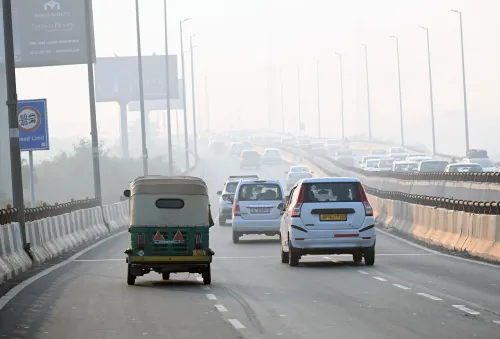
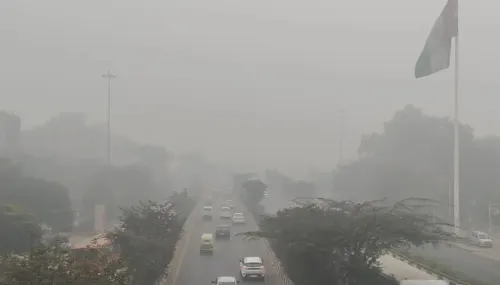
Even with the positive changes in pollution levels, a fog warning is still in effect for Delhi and its neighboring regions during the early hours. The India Meteorological Department has indicated a very high likelihood of dense to very dense fog on Thursday morning in Haryana, Chandigarh, Delhi, Himachal Pradesh, the Jammu region, Punjab, Uttar Pradesh, and Uttarakhand.
The agency has also issued similar warnings for isolated areas in Assam, Meghalaya, Bihar, East Madhya Pradesh, Nagaland, Manipur, Mizoram, Tripura, along with Odisha, West Bengal, and Sikkim, showcasing widespread fog conditions across multiple states.
Stage IV of the Graded Response Action Plan was initiated on December 13 after the AQI in the city fell into the ‘severe’ category, surpassing the 400 mark. Following this, pollution levels predominantly remained in the ‘severe’ or ‘very poor’ categories, with dense fog covering the city for prolonged periods during the day.
However, a drastic improvement was noted on Wednesday, with Delhi’s average AQI declining to 271 from the 412 recorded at 4 p.m. the previous day. This improvement in air quality led to the CAQM lifting the stringent anti-pollution measures under GRAP-IV.
Officials clarified that although Stage IV restrictions have been lifted, all preventive and restrictive measures under Stages III, II, and I of the existing GRAP framework will remain active to avert any further decline in air quality.
Point of View
I acknowledge the recent improvement in Delhi's air quality as a positive development. It reflects the ongoing efforts to combat pollution. However, we must remain vigilant and adhere to preventative measures to ensure sustained progress. The health of our environment and citizens is of paramount importance.
NationPress
2 Oct 2026
Frequently Asked Questions
What is the current Air Quality Index (AQI) in Delhi?
As of Thursday morning, the overall AQI in Delhi is recorded at 221, which falls under the 'poor' category.
What areas in Delhi have improved air quality?
Several locations, including India Gate, Kartavya Path, and Akshardham, have shown improved air quality, falling into the 'moderate' category.
What does the AQI classification mean?
AQI classifications range from 'good' (0-50) to 'severe' (401-500), indicating varying levels of air quality and health impacts.
Are there any warnings issued for Delhi weather?
Yes, a fog warning is in effect for Delhi and nearby regions, with a high probability of dense fog in the mornings.
What actions are being taken to improve air quality?
The Commission for Air Quality Management has lifted certain restrictions while maintaining preventive measures under the Graded Response Action Plan.