Has Delhi's Air Quality Improved to 'Poor' Status?
Synopsis
With a recent drop in the Air Quality Index to a 'poor' status, New Delhi faces ongoing challenges in pollution management. This article explores the current air quality levels, monitoring stations' findings, and potential future actions by authorities to enhance air quality in the capital.
Key Takeaways
Delhi's AQI is currently 292, categorized as 'poor' .
Previous levels reached 'severe' with an AQI of 412 .
Improvement noted across several monitoring stations .
CAQM lifted GRAP Stage-IV restrictions .
Vehicular emissions significantly contribute to pollution .
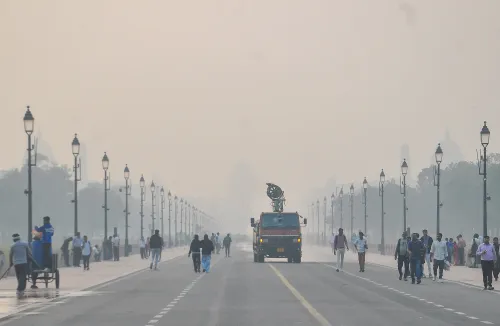
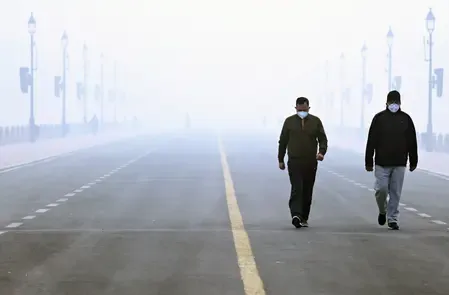
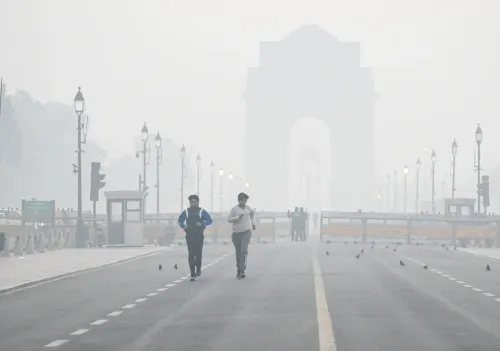
New Delhi, Dec 26 (NationPress) The national capital experienced a slight enhancement in air quality on Friday, with the Air Quality Index (AQI) dropping into the 'poor' category, averaging 292, based on official reports.
This improvement follows a week where Delhi recorded 'severe' air quality levels, peaking at an AQI of 412 on December 23. Over the last two days, a gradual decrease in pollution levels has been noticed throughout various parts of the city.
According to data from the Central Pollution Control Board’s (CPCB) Sameer mobile application, as of 6:05 a.m., three monitoring stations indicated air quality in the 'moderate' category. These included Lodhi Road-IITM with an AQI of 160, Lodhi Road-IMD at 194, and Najafgarh at 188.
Other stations reported AQI levels classified as 'poor'. This includes Aya Nagar (212), CRRI Mathura Road (265), Dr. Karni Singh Shooting Range (290), Dwarka Sector 8 (282), IGI Airport Terminal 3 (238), IIT Delhi (231), Jawaharlal Nehru Stadium (253), and Mandir Marg (222), among others.
Nevertheless, several monitoring stations continued to show 'very poor' air quality. Areas such as Anand Vihar (377), Bawana (363), Jahangirpuri (372), Narela (345), Nehru Nagar (346), Sonia Vihar (353), and Vivek Vihar (361) noted some of the highest pollution readings in the city.
Given the recent air quality advancements, the Commission for Air Quality Management (CAQM) revoked the Graded Response Action Plan (GRAP) Stage-IV restrictions across the Delhi-National Capital Region (NCR) on December 24. Officials indicated that if the positive trend continues, further relaxations in pollution control measures might be taken in the upcoming days.
Air quality in the adjoining NCR regions presented a mixed picture. In Haryana, Bahadurgarh recorded an AQI of 301, categorizing it as 'very poor', while Gurugram's overall AQI was 270, falling within the 'poor' range. One of Gurugram’s four monitoring stations, located in Sector 51, reported 'very poor' air quality with an AQI of 375. Dharuhera also noted 'poor' air quality with an AQI of 279.
In Uttar Pradesh, Ghaziabad logged an overall AQI of 344, with all four monitoring stations indicating 'very poor' air quality. Greater Noida recorded an overall AQI of 362, with Knowledge Park-V showing an AQI of 386, and Knowledge Park-III at 337. Noida's overall AQI also stayed in the 'very poor' category at 334.
Delhi's strategy to permit only Bharat Stage (BS) 6 vehicles to enter the national capital has effectively barred around 1.2 million older vehicles registered outside from entering the city.
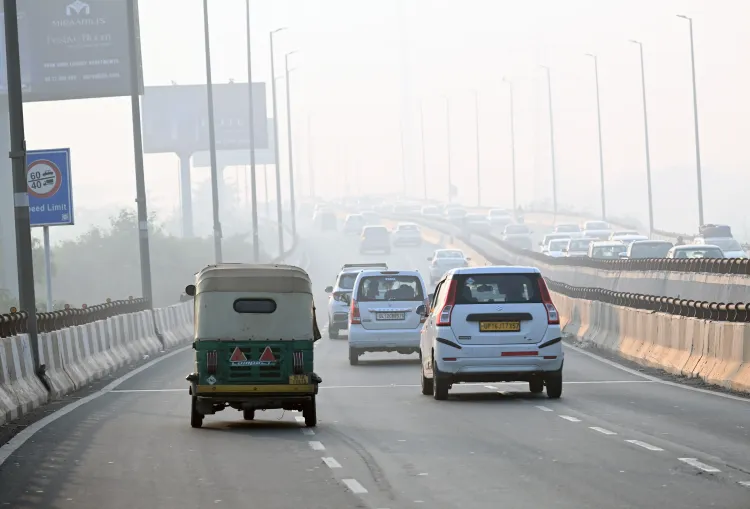
Vehicular emissions are a significant factor contributing to Delhi's hazardous air, particularly during winter months when colder weather traps smog near the ground. Experts estimate that vehicles contribute up to 40% of particulate pollution in the NCR, especially in heavily trafficked corridors. By restricting higher-emitting vehicles, authorities aim to alleviate the pollution burden and protect public health.
Point of View
I emphasize the importance of monitoring air quality in our nation. The recent improvements in Delhi's air quality are a promising sign. However, persistent pollution levels remind us that more vigilant efforts are needed. The health of our citizens must remain a priority, and we must hold authorities accountable for sustainable environmental policies.
NationPress
21 Sept 2026
Frequently Asked Questions
What is the current AQI level in Delhi?
As of December 26, the Air Quality Index (AQI) in Delhi is averaging 292, classified as 'poor'.
What measures are being taken to improve air quality?
The Commission for Air Quality Management has lifted certain restrictions and is considering further relaxations if the improving trend continues.
How do vehicular emissions affect air quality?
Vehicular emissions are a major source of pollution in Delhi, contributing up to 40% of particulate matter, especially in high-traffic areas.
What are the health implications of poor air quality?
Poor air quality can lead to respiratory issues and other health problems, making it crucial to address pollution levels effectively.
What can residents do to protect themselves from pollution?
Residents are advised to limit outdoor activities, use air purifiers, and stay informed about air quality levels.