Did Nepal's PM Sushila Karki Meet with Major Political Leaders?
Synopsis
In a landmark meeting, Nepal's interim Prime Minister Sushila Karki engaged with key political leaders to address pressing electoral concerns. As tensions rise over the upcoming March elections, leaders emphasize the need for a conducive atmosphere to ensure free and fair voting.
Key Takeaways
Prime Minister Sushila Karki held her first direct meeting with major political leaders.
Discussion centered around the upcoming parliamentary elections set for March 5, 2024.
Leaders expressed concerns about the electoral environment and law-and-order issues.
Commitment from all parties to participate in the elections was noted.
Prime Minister assured that the government would ensure a fair election process.
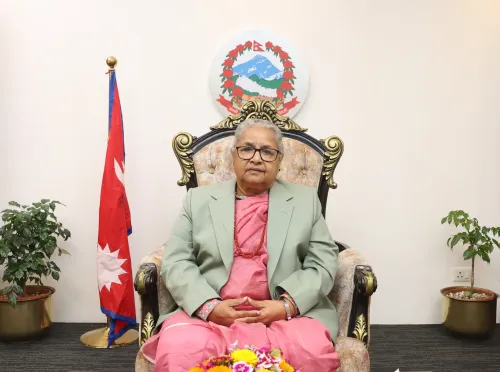
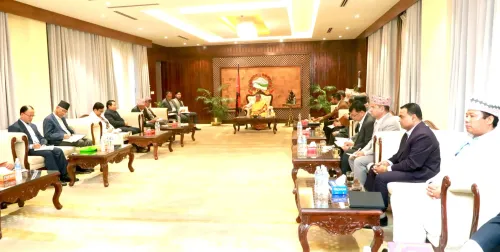
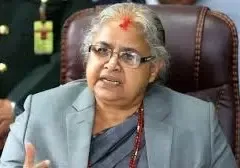
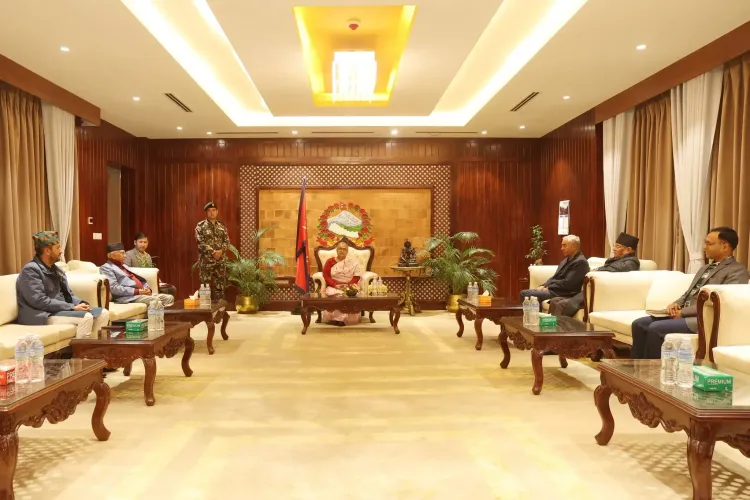
Kathmandu, Dec 27 (NationPress) In a significant political development, Nepal's interim Prime Minister Sushila Karki convened her first direct meeting with the country's leading political party heads on Saturday to deliberate on the parliamentary elections set for March 5 of the upcoming year.
Among those in attendance were Nepali Congress President Sher Bahadur Deuba, Communist Party of Nepal (Unified Marxist–Leninist) [CPN (UML)] Chairperson KP Sharma Oli, and Nepali Communist Party Coordinator Pushpa Kamal Dahal, who gathered at the Prime Minister’s official residence for discussions.
This marked the first occasion Prime Minister Karki engaged in a direct conversation with these leaders, despite their previous meeting under the facilitation of President Ram Chandra Paudel earlier this week. All three attendees are former prime ministers.
The meeting took place against a backdrop of escalating political tension, as major parties, particularly the CPN (UML) and Nepali Congress, have voiced concerns over the electoral climate, citing issues related to law and order, along with leaders filing writ petitions at the Supreme Court for the restoration of the dissolved House of Representatives.
Post-meeting, former Prime Minister Deuba informed reporters that all political entities are prepared to participate in the elections set for March. However, he cautioned, “A conducive environment for the polls has not yet been prepared,” emphasizing the need for improvements.
The government spokesperson and Minister for Communication and Information Technology Jagadish Kharel stated that the leaders expressed their readiness to move forward with the polls. He noted that even former Prime Minister Oli, whose party has been advocating for the restoration of the dissolved lower house, indicated a willingness to participate, urging the establishment of a favorable environment.
“The Prime Minister assured the leaders that the government will ensure a suitable electoral environment by improving security and other conditions,” Kharel added.
Kharel had also met separately with these leaders the day prior to the joint meeting.
Among the parties, the CPN (UML) has raised doubts about the government’s commitment to conducting timely elections, criticizing the current administration and alleging constitutional violations in its formation.
The Nepali Congress has formally resolved to partake in the elections through its Central Working Committee while stressing the necessity for a conducive electoral atmosphere.
The newly formed Nepali Communist Party, resulting from the merger of the former CPN (Maoist Centre) and CPN (Unified Socialist), is advocating for the elections to proceed as planned.
According to the Prime Minister’s Secretariat, Prime Minister Karki welcomed the commitment from political leaders to engage in the elections, asserting, “The government will ensure an environment for free and fair elections.”
Point of View
This meeting signifies a crucial step in Nepal's political stability as the interim government navigates challenges ahead of the elections. The engagement between Prime Minister Karki and major party leaders reflects a commitment to dialogue and collaboration, essential for fostering a conducive electoral environment.
NationPress
23 Sept 2026
Frequently Asked Questions
What is the purpose of the meeting held by PM Sushila Karki?
The meeting was convened to discuss the upcoming parliamentary elections scheduled for March 5, 2024, and to address concerns regarding the electoral environment.
Who attended the meeting with PM Karki?
Key leaders in attendance included Nepali Congress President Sher Bahadur Deuba, CPN (UML) Chairperson KP Sharma Oli, and Nepali Communist Party Coordinator Pushpa Kamal Dahal.
What concerns were raised during the meeting?
Concerns were primarily about the law-and-order situation and doubts regarding the government's commitment to holding timely elections.
What did former Prime Minister Deuba say after the meeting?
Deuba mentioned that while all parties are prepared to participate in the elections, a conducive environment has not yet been established.
How does the government plan to ensure fair elections?
Prime Minister Karki assured the leaders that the government would work to create a suitable environment by addressing security and other conditions.