Are US lawmakers divided over the capture of Venezuelan President Maduro?
Synopsis
Partisan divisions in the US deepen as lawmakers react to the military operation that captured Venezuelan President Maduro. Republicans support Trump’s action while Democrats warn of constitutional risks and potential conflicts. This development raises significant questions about the future of US-Venezuela relations and the legality of military interventions.
Key Takeaways
Partisan divisions in US Congress are evident over the operation to capture Maduro.
Republicans support the military action while Democrats raise constitutional concerns.
The legality of the operation is heavily disputed.
Implications for US foreign policy and international relations are significant.
Maduro faces serious allegations of drug trafficking and terrorism.
Washington, Jan 3, (NationPress) The US military operation that resulted in the capture of Venezuelan President Nicolás Maduro has intensified partisan rifts on Capitol Hill. Republicans are uniting in support of President Donald Trump, while Democrats are raising alarms about the action's constitutionality and the potential for dragging the United States into another conflict.
Leading Democrats have expressed concerns that Congress was sidelined, questioning both the legality and long-term implications of this operation, even as they affirm that Maduro is not recognized as Venezuela’s legitimate leader.
Representative Jim Himes from Connecticut, the senior Democrat on the House Intelligence Committee, asserted that any use of military force should have required congressional authorization. He claimed that congressional committees were informed only after the operation had occurred.
The administration defended its actions by citing President Trump's authority under Article II of the Constitution and the perceived threat from Maduro’s regime.
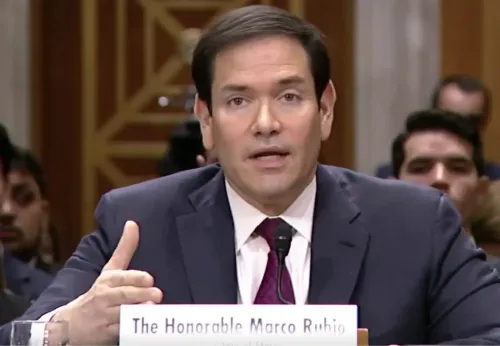
Senator Andy Kim of New Jersey accused high-ranking officials of deceiving lawmakers, stating, “Secretaries Rubio and Hegseth assured every Senator weeks ago that this was not about regime change. I didn’t believe them then, and it’s clear they misled Congress,” Kim posted on X.
“This operation does not reflect strength and is not a wise foreign policy,” he cautioned, suggesting it “endangers Americans in Venezuela and the surrounding region” and sends “a troubling signal” worldwide. He warned this could “further tarnish our reputation.”
Senator Ruben Gallego of Arizona labeled the operation as “the second unjustified war in my lifetime,” stating online, “This conflict is illegal.” He further remarked, “Regardless of the outcome, initiating this war in Venezuela is wrong.”
Representative Jim McGovern of Massachusetts criticized the strike as being executed “without congressional authorization,” deeming it “unjustified” and “illegal.” Fellow Massachusetts Democrat Jake Auchincloss emphasized that US troops “deserve a commander in chief who acts lawfully and strategically,” noting the president had “no authority to target Venezuela.”
Conversely, Republicans defended both the operation and the lack of prior notification to Congress. Senator Tom Cotton of Arkansas, chair of the Senate Intelligence Committee, acknowledged that congressional leaders were not informed ahead of time, but claimed that was appropriate. “This likely prevented leaks during the four-day wait for favorable weather,” Cotton stated on Fox News.
“Congress is not informed when the FBI makes an arrest of a drug trafficker or cybercriminal within the U.S., nor should they be alerted when the executive branch conducts arrests on indicted individuals,” Cotton explained. “Congress does not need to be notified every time the executive branch carries out an arrest.”
Cotton highlighted that the FBI was involved in the operation to apprehend Maduro and his wife, who are facing drug trafficking and terrorism charges in the United States.
The chairman of the House Foreign Affairs Committee, Brian Mast, referred to Maduro’s capture as “another victory for President Trump in safeguarding our homeland and addressing issues in our backyard.” “Drug lords and terrorists will no longer operate with impunity in our hemisphere,” Mast asserted.
Senator Lindsey Graham also vocally supported the operation, stating, “If you can’t be pleased that our military, under President Trump’s leadership, successfully captured and brought to justice a corrupt narcoterrorist dictator responsible for American bloodshed, then your disdain for President Trump blinds you to the achievement of making America safer.” In another post, he expressed, “An evil narcoterrorist dictator has been defeated, paving the way for freedom for the brilliant, industrious people of Venezuela.”
Senate Republican leader John Thune described the capture as “a crucial first step in bringing him to justice for the drug crimes he has been indicted for in the United States,” praising it as “decisive action” by Trump.
Maduro had previously been indicted in 2020 on narco-terrorism charges, with US prosecutors alleging he collaborated with Colombian guerrilla groups to smuggle cocaine into the United States.
Point of View
It is essential to approach the situation with a focus on legality and the potential ramifications for both the US and Venezuela. While partisan divides are evident, the overarching concern remains the impact on diplomatic relations and the rule of law.
NationPress
2 Oct 2026
Frequently Asked Questions
What was the operation involving Nicolás Maduro about?
The operation aimed to capture Nicolás Maduro, the Venezuelan President, who is facing drug trafficking and terrorism charges in the United States.
Why are lawmakers divided over this operation?
Lawmakers are split along party lines, with Republicans supporting the military action as a necessary step, while Democrats criticize it as unconstitutional and warn of potential conflicts.
What are the implications of this operation for US foreign policy?
This operation raises critical questions about the legality of military interventions and the US's approach to handling foreign leaders deemed threats.
How did the administration justify the operation?
The administration cited President Trump's authority under the Constitution and the perceived threat from Maduro’s government as justifications for the military action.
What do critics of the operation argue?
Critics argue that the operation bypassed congressional authority, is illegal, and could endanger Americans both in Venezuela and globally.