Are US Leaders in Disagreement Over Venezuela's Situation?
Synopsis
The clash over U.S. actions in Venezuela sees Democrats warning against reckless regime change while Republicans defend the legality of the operation. As tensions rise, what does this mean for U.S. foreign policy and its implications for Venezuela's future?
Key Takeaways
U.S. actions in Venezuela have sparked a political clash in Washington.
Democrats warn of potential reckless regime change.
Republicans defend the legality of the operation based on presidential authority.
Nicolás Maduro's arrest is seen as a significant move for accountability.
The future of Venezuela should be determined by its own people, according to critics.
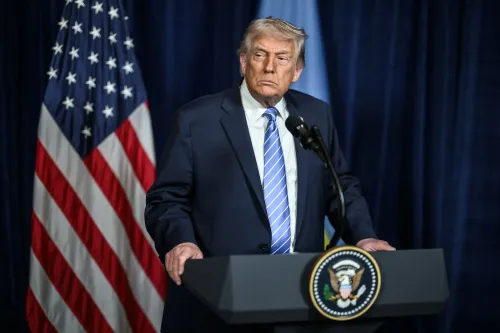
Washington, Jan 6 (NationPress) The actions taken by the Trump administration concerning Venezuela have ignited a fierce debate in Washington. While Democrats have expressed concerns over reckless regime change, Republicans maintain that the operation was lawful, limited, and warranted.
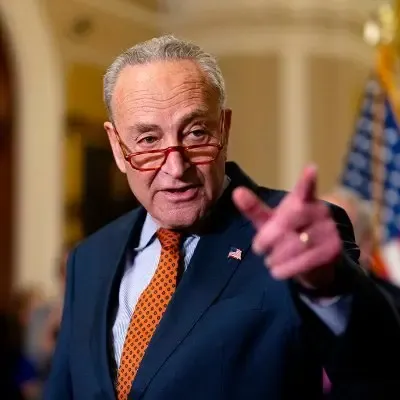
Senior officials from the administration provided updates to congressional leaders regarding military developments in Venezuela. Senate Democratic Leader Chuck Schumer stated that the classified briefing left him with more questions than answers.
“Although this briefing was comprehensive and lengthy, it raised significantly more questions than it resolved,” Schumer remarked. He criticized the administration's strategy for the U.S. involvement in Venezuela as ambiguous and based on unrealistic expectations.
Schumer noted that he received no guarantees that similar actions would not be replicated in other nations. “When the United States engages in regime change and nation-building, it invariably harms the U.S.,” he asserted. “I departed the briefing with the impression that this would occur once more.”
House Democratic Leader Hakeem Jeffries previously dismissed the administration’s assertion that the operation was a law enforcement initiative. “This was not a law enforcement action,” Jeffries contended. “They are misleading the American public by stating that. It was an unprecedented military operation.”
Jeffries acknowledged that Venezuelan leader Nicolás Maduro was “a bad actor” and “a dictator,” yet insisted that the future of Venezuela should be determined by its people. He cautioned against “another unjustified foreign conflict.”
Republicans countered these claims by highlighting presidential authority and national security. House Speaker Mike Johnson insisted that the United States was not engaged in war.
“We are not at war. There are no U.S. armed forces in Venezuela, nor are we occupying the country,” Johnson clarified. He emphasized that the Constitution grants Congress the power to declare war, while also providing the president with extensive authority as commander-in-chief.
Johnson pointed out that the War Powers Act does not necessitate prior congressional approval. He stated that Congress was informed within hours, arguing that advance notice could have resulted in leaks and endangered U.S. personnel.
“Congress retains full oversight authority,” Johnson reaffirmed, insisting that the administration was operating within legal boundaries.
He also defended the operation, claiming that Maduro was implicated in drug trafficking and violence that jeopardized American lives. Johnson noted that Maduro had been indicted in U.S. courts, asserting that his arrest exemplified “what accountability looks like.”
Other Republicans echoed this sentiment. Representative Brian Mast stated that U.S. military and law enforcement capabilities were unparalleled. “Only the United States can achieve this,” Mast proclaimed, labeling the operation an embodiment of “peace through strength.”
Democrats continued to express skepticism. Senator Edward J. Markey, in a letter to President Trump, characterized the actions in Venezuela as “unlawful, unjustified, and unwise.” He criticized Trump’s declarations about the U.S. “running” Venezuela and its oil resources.
Markey expressed that such remarks raised “serious concerns” regarding legality and motivation. He argued that the operation appeared to be driven by oil interests rather than democracy or security, urging the administration to cease hostilities and seek congressional approval.
Speaking from Florida, Senator Rick Scott commended what he termed the Trump administration’s “decisive actions” in apprehending Maduro.
“I want to express my gratitude to President Trump, Secretary Rubio, and Secretary Hegseth for their remarkable achievement in finally arresting Nicolás Maduro, ensuring he faces justice here in the United States,” Scott remarked, calling it “a clear demonstration of Trump’s peace through strength strategy in action.”
Scott described Maduro as “a malevolent drug trafficker and cartel leader,” asserting that the operation has brought Venezuela “closer than ever to peace and freedom.” He credited the administration with cutting off Maduro’s resources, reversing previous policies, designating violent cartels as foreign terrorist organizations, and initiating targeted strikes.
Point of View
I recognize the gravity of the situation in Venezuela and the differing perspectives surrounding U.S. intervention. The discourse reflects broader concerns regarding sovereignty, the implications of military actions, and the need for accountability in foreign policy decisions. Our commitment is to provide balanced reporting that emphasizes the complexities of international relations.
NationPress
19 Sept 2026
Frequently Asked Questions
What triggered the clash over Venezuela in Washington?
The Trump administration's actions in Venezuela ignited disagreements among U.S. leaders, with Democrats warning against reckless regime change and Republicans asserting the operation's legality.
What are the main concerns raised by Democrats?
Democrats, including Chuck Schumer, voiced concerns that the administration's plans were unclear and that regime change could harm U.S. interests.
How do Republicans justify the military operation?
Republicans argue that the operation falls under presidential authority for national security and emphasize that the U.S. is not at war in Venezuela.
What is the significance of Maduro's arrest?
The arrest of Nicolás Maduro is viewed by some as a step toward accountability for drug trafficking and violence that affects the U.S.
What are the implications of U.S. intervention in Venezuela?
Intervention raises complex issues regarding sovereignty, the potential for further conflict, and the motivations behind U.S. actions.