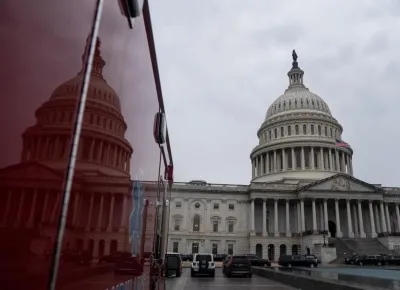
Is the US Congress Divided Over Trump's International Authority?
Synopsis
The US Congress is at a crossroads over President Trump's military and economic strategies in Venezuela, with fierce debates erupting between Democrats and Republicans. As lawmakers grapple with the implications, the future of US foreign policy hangs in the balance. Will Congress assert its authority or allow the executive branch to dictate terms?
Key Takeaways
Congress is divided over Trump's military and economic strategies.
Democrats criticize the administration for bypassing their authority.
Republicans praise Trump's decisive leadership in Venezuela.
Concerns about potential prolonged military engagement are prevalent.
Legislative measures are being proposed to limit US involvement.
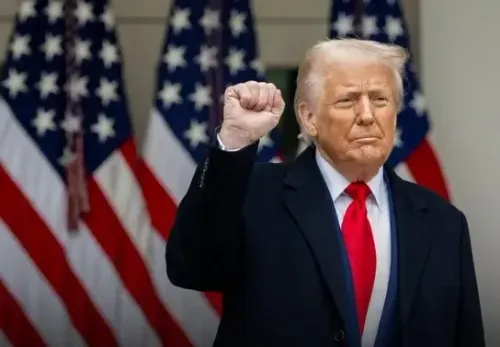
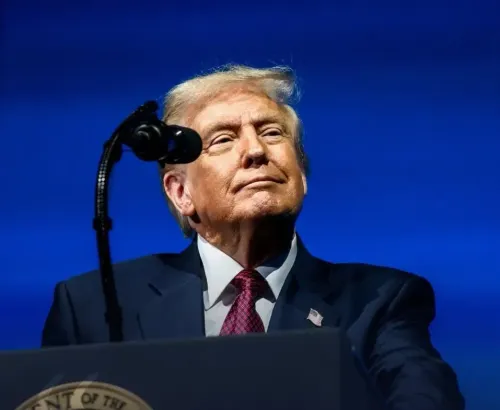
Washington, Jan 8 (NationPress) The US Congress exhibits a deep divide regarding President Donald Trump's increasing military and economic authority on the global stage. Lawmakers from both parties are sharply contrasting in their interpretations of the administration's maneuvers in Venezuela and its overall foreign policy direction.
Top Democratic leaders on Wednesday (local time) criticized the Trump Administration for allegedly circumventing Congress and altering justifications, raising concerns about the potential for another prolonged military engagement abroad.
Conversely, members of the ruling Republican party have lauded what they perceive as decisive leadership and a necessary enforcement of US laws and sanctions.
In a significant military action, the US removed Venezuelan leader Nicolas Maduro and took steps to manage oil exports, igniting renewed discussions over war powers, constitutional authority, and America’s global standing.
Senate Democratic Leader Chuck Schumer voiced concerns following a classified briefing for all senators. "Once again, no answers," Schumer stated on the Senate floor. "We left the room with far more questions than replies, and it is not just senators who require clarity — it is the American public."
Schumer also questioned the administration's changing narratives.
"What is occurring in Venezuela, and why is this president dedicating all his time and resources to ventures abroad?" he queried. "What is the duration of US involvement? How many troops will be deployed? What will be the financial cost?"
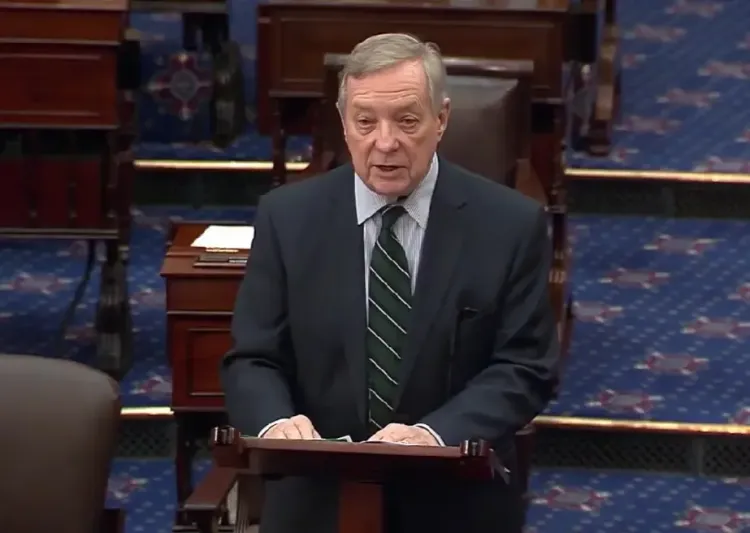
Senate Democratic Whip Dick Durbin remarked that ousting Maduro does not absolve the administration of its responsibility to clarify future actions. "Maduro is a harmful figure," Durbin noted. "I’m glad he is no longer in power. However, if you remove a nation's leader, what follows? What is our obligation?"
Durbin cautioned that historical US interventions serve as warning signs. "We have frequently stumbled into situations that appeared straightforward but became intricate," he stated, referencing prolonged conflicts in the Middle East that have cost both American taxpayer dollars and lives.
Other Democrats were even more direct. Senator Brian Schatz remarked that the similarities to Iraq are "alarmingly apparent."
"The Justice Department can frame this in terms of narcoterrorism charges," Schatz remarked, "but Trump is clear about the primary objective: it is about the oil."
In the House, Representative Gregory Meeks, the leading Democrat on the House Foreign Affairs Committee, asserted that the administration owes Congress a "clear and honest account of its genuine goals in Venezuela, which have evolved from combating drugs to regime change to controlling a nation and its oil resources."
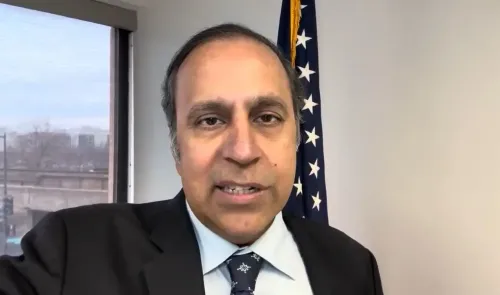
Representative Raja Krishnamoorthi announced intentions to propose legislation that would prohibit any US occupation or governance of Venezuela. "Congress has not sanctioned the United States to occupy or administer Venezuela — militarily, economically, or administratively," Krishnamoorthi explained. "The NOVA Act halts this power grab immediately."
A coalition of Democratic veterans, led by Rep. Seth Moulton, cautioned that unilateral actions risk repeating past errors. "We cannot afford to inadvertently enter into another unconstitutional and endless conflict," Moulton warned. "The American public should not be misled by any administration."
Republicans countered that such criticisms overlook years of bipartisan agreement that Maduro must face accountability. Senator John Cornyn commended what he described as "decisive and courageous leadership."
"What was displayed by the US military was nothing short of spectacular," Cornyn said. "Only the United States could have executed such an operation and brought a figure as despicable as Nicolas Maduro to justice."
Senator John Barrasso, the Senate Majority Whip, labeled the action "one of the most audacious law enforcement operations in decades."
"Maduro is an outlaw," Barrasso declared. "If you poison and kill the American populace, you will be held responsible." He added, "America, Venezuela, and the world are safer because of this action."
Barrasso accused Democrats of hypocrisy. "For years, Democrats supported holding Maduro accountable," he stated. "Now that President Trump has finally acted, they say, 'How dare he?'
Senator Eric Schmitt framed the operation as part of a larger strategic transition. "This is the Monroe Doctrine in action," Schmitt asserted. "We care deeply about developments in our hemisphere. We will not permit a petty dictator to poison our nation with drugs and host our adversaries."
House Majority Leader Steve Scalise also accused Democrats of obstruction. "President Trump finally takes action against Maduro," Scalise stated, "and Democrats wake up each day solely to oppose whatever Donald Trump does, regardless of the issue."
As the discourse escalates, legislators from both parties concur on one aspect: Congress will have a pivotal role in defining the extent to which the administration can proceed. War powers resolutions, funding limitations, and public hearings are already in the works.
Currently, the divide remains pronounced. Democrats caution against unchecked executive authority and escalating intervention. Republicans view the president as enforcing the law and restoring US strength.
"This is a moment when the American people merit transparency." The ability of Congress to compel that clarity — or whether the White House forges ahead — will dictate the next chapter of US international engagement," Schumer concluded.
Point of View
It is vital to recognize the significant implications of Congress's division over Trump's foreign policy. This moment highlights the tension between executive authority and legislative oversight, ultimately shaping America's role on the global stage. NationPress remains committed to providing insightful analysis as developments unfold.
NationPress
26 Sept 2026
Frequently Asked Questions
What actions has President Trump taken in Venezuela?
President Trump has initiated military operations that resulted in the ousting of Venezuelan leader Nicolas Maduro and has sought to control oil exports, prompting significant debate over US foreign policy.
How are lawmakers reacting to Trump's foreign policy?
Lawmakers are sharply divided, with Democrats criticizing the administration for bypassing Congress, while Republicans praise Trump's decisive leadership in dealing with Maduro.
What concerns have been raised about US intervention in Venezuela?
Democrats have warned that unchecked executive power could lead to another prolonged military engagement, drawing parallels to past interventions that have resulted in complex situations.
What are the Republicans' main arguments in favor of Trump's actions?
Republicans argue that Trump's actions reflect a long-overdue enforcement of US law and sanctions, emphasizing the need to hold Maduro accountable for his actions.
What measures are being proposed by Congress regarding US involvement in Venezuela?
Some lawmakers have announced plans to introduce legislation that would prohibit any US occupation or administration of Venezuela, asserting that such actions require Congressional approval.