Should Canada Take Action Against Khalistani Extremists to Prevent Future Referendums?

Synopsis
A recent report reveals that extremist Khalistani groups are exploiting Canada to push their agenda, potentially straining relations with India. With over 53,000 Canadian Sikhs participating in a controversial referendum, the need for action from Ottawa is more urgent than ever. Will Canada step up to address this pressing issue?
Key Takeaways
Khalistani groups are using Canada as a base for their agenda.
Over 53,000 Sikhs voted in a controversial Khalistan Referendum .
Canadian authorities need to address the rising extremism without punishing the entire Sikh community.
Political leaders are urged to demand greater accountability from diaspora communities.
Canada must maintain its foreign policy interests while ensuring national security.
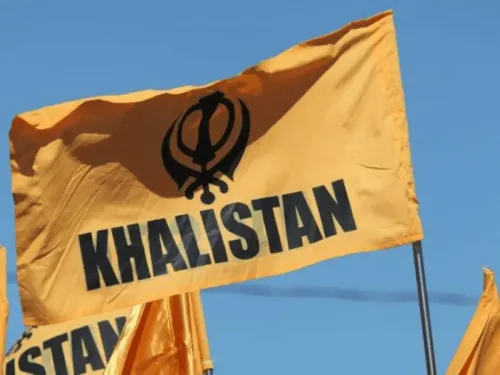
Ottawa, Jan 3 (NationPress) Extremist Khalistani factions are utilizing Canada as a platform to promote their agenda and stir tensions with India, a development that Ottawa must address. Many nations would not permit such extremist diaspora groups to operate from within their borders, thus Canada should take proactive measures to curb this trend, a report indicated on Saturday.
As reported by the Canada-based news outlet Western Standard, the referendum organized by the terror group Sikhs for Justice in November 2025 in Ottawa coincided with a meeting between Canadian Prime Minister Mark Carney and Prime Minister Narendra Modi during the G20 summit in Johannesburg, where discussions centered on trade relations — potentially jeopardizing Canada's foreign policy interests.
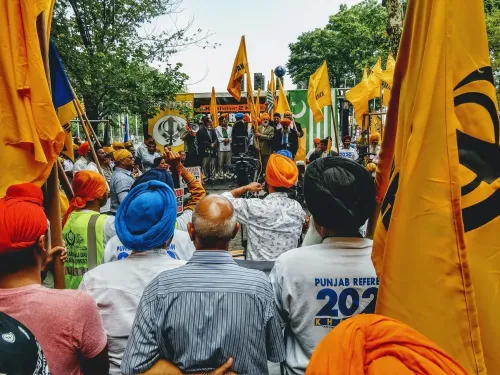
“Canada must act decisively to prevent any future referendums, particularly the ones organized by Sikhs for Justice, a pro-Khalistani faction, which have been occurring largely unnoticed by most Canadians. Recently, over 53,000 Canadian Sikhs from Ontario, Alberta, British Columbia, and Quebec participated in the latest phase of the Khalistan Referendum in Ottawa, with lines extending nearly two kilometers,” the report highlighted.
“Canada is home to one of the largest Sikh diasporas outside India, featuring a vibrant and diverse community. Canadian Sikhs make significant contributions to various sectors of society, including politics, business, arts, and community life. However, a small yet vocal segment openly supports the Khalistani agenda, seeking an independent Sikh state. This stance has resulted in rising tensions with India, which perceives such activities as a threat to its sovereignty and frequently critiques Canada for failing to address extremism,” it continued.
The report emphasizes that Canadian security agencies need to take action against Sikh extremist elements while ensuring that the broader Sikh community is not subjected to collective punishment.
“Sikhs already face significant prejudice and discrimination due to their unique religious attire — turbans and ceremonial daggers — and should not endure accusations of ‘dual loyalty.’ Similar stereotypes have historically affected Jewish Canadians, and no community should be burdened with such stigma. Instead, Sikh organizations ought to collaborate with Canadian authorities to distance themselves from extremists,” it stated.
The report calls for Canada to demand more of its citizens, suggesting that new citizens should renounce old animosities and prejudices or risk losing their citizenship.
“In the meantime, politicians and security agencies must hold diaspora communities accountable and prevent any groups from organizing activities that could compromise national security and foreign policy. This strategy should apply not only to Sikh extremists but to any group that attempts to use Canada as a stage for promoting foreign conflicts or undermining Canadian interests,” it emphasized.
Point of View
It is essential to recognize the delicate balance between cultural representation and national security. While the Sikh community contributes immensely to Canadian society, we must remain vigilant against any extremist elements that threaten our national interests. A unified approach that respects diversity while ensuring security is paramount.
NationPress
30 Sept 2026
Frequently Asked Questions
What is the Khalistan Referendum?
The Khalistan Referendum is a campaign initiated by the pro-Khalistani group Sikhs for Justice that seeks to establish an independent Sikh state called Khalistan, primarily in India.
Why are Khalistani groups a concern for Canada?
Khalistani groups are seen as a threat to Canada-India relations and national security, as their activities may promote extremism and tensions between the two countries.
What actions are being suggested for the Canadian government?
The report suggests that the Canadian government should take decisive action against extremist groups, ensuring that the broader Sikh community is not unfairly targeted.