Has Delhi’s air quality slipped back into the ‘very poor’ category?
Synopsis
On December 2, air quality in Delhi has plummeted back into the ‘very poor’ category after a brief respite. With pollution levels rising significantly, residents express mounting frustration over health risks, urging government action. This article delves into the alarming statistics and conditions affecting the national capital's air quality.
Key Takeaways
Delhi’s air quality has deteriorated back to ‘very poor’.
AQI readings indicate severe pollution levels.
Residents are increasingly concerned about their health.
Government action is urgently needed to mitigate air quality issues.
Winter conditions are exacerbating the pollution situation.
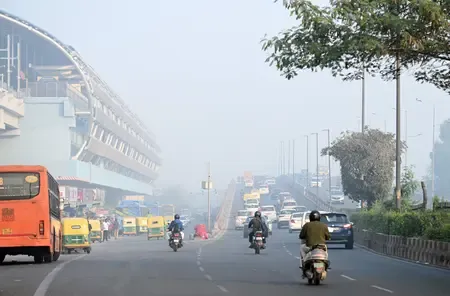
New Delhi, Dec 2 (NationPress) After a brief period of relief, Delhi's air quality has unfortunately deteriorated once more on Tuesday, sliding back into the ‘very poor’ category after experiencing two days in the ‘poor’ range. As of 6 a.m., the city's Air Quality Index (AQI) was recorded at 331, according to the Central Pollution Control Board (CPCB), indicating a renewed surge in pollution levels throughout the national capital.
Multiple monitoring stations reported even higher levels of particulate matter. Bawana registered an AQI of 387, Anand Vihar 381, Wazirpur 362, Burari 361, and RK Puram 356, all firmly categorized as ‘very poor’.
IGI Airport was one of the few areas with relatively lower pollution levels; however, its AQI of 269 still categorized it in the ‘poor’ zone.
According to CPCB standards, an AQI reading of 0–50 is considered ‘good’, 51–100 as satisfactory, 101–200 as moderate, 201–300 as poor, 301–400 as very poor, and 401–500 as severe.
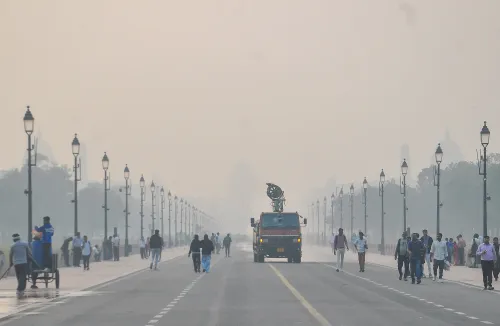
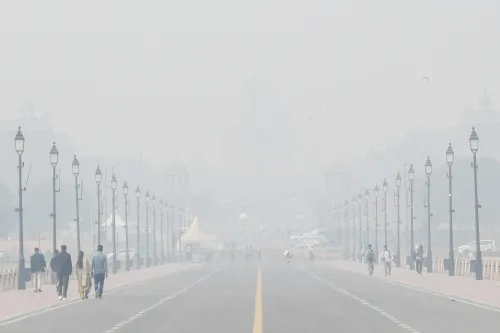
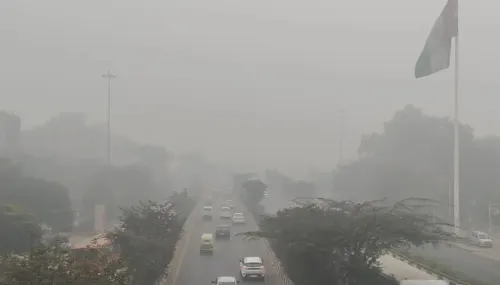
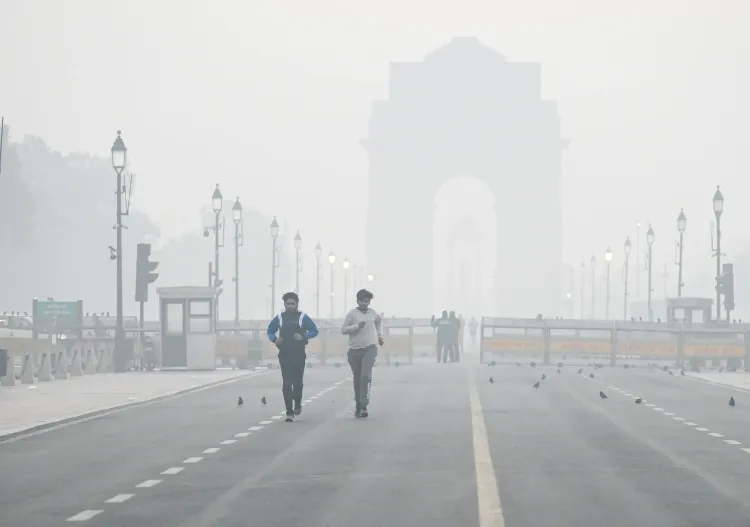
A discernible blanket of fog and smog enveloped notable areas on Tuesday morning. At India Gate–Kartavya Path, the AQI was around 370, placing it squarely in the ‘very poor’ category.
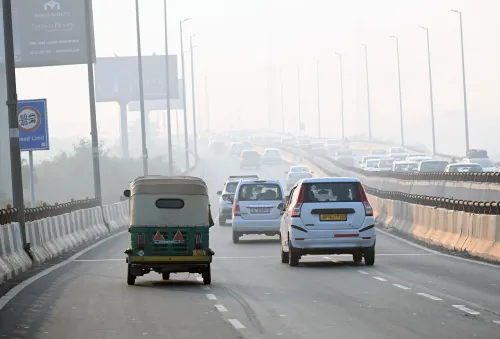
Conditions were similarly alarming at MB Road in Tughlakabad, where the AQI reached 302, raising concerns among both residents and officials.
Frustration among residents regarding the declining air quality is mounting. One resident remarked, “The pollution has become incredibly hazardous for both children and the elderly. Previously, we would step out at 5 a.m., but now we have to wait until 7 a.m. Our eyes sting, and we are continuously coughing. The government needs to implement stricter measures… Water sprinkling is inadequate, and vehicles are still operating. More frequent sprinkling is urgently required.”
Earlier in the week, Delhi had experienced a slight but temporary improvement. On Sunday and Monday, the city recorded AQIs of 279 and 298, respectively.
Meanwhile, winter conditions are settling in. The India Meteorological Department (IMD) predicted a maximum temperature of around 26 degrees Celsius and a minimum of about 7 degrees Celsius for Tuesday, reflecting a consistent drop in temperatures alongside the worsening air quality.
Point of View
It's vital to highlight the ongoing air quality crisis in Delhi. The surge in pollution levels represents a significant public health concern, particularly for vulnerable populations. While temporary improvements were noted earlier in the week, this latest decline demands urgent attention from policymakers and strong mitigation measures to safeguard the community's well-being.
NationPress
30 Sept 2026
Frequently Asked Questions
What is the current AQI in Delhi?
As of 6 a.m. on December 2, Delhi's AQI stands at 331.
What does an AQI of 331 indicate?
An AQI of 331 falls within the 'very poor' category, indicating unhealthy air quality.
How are residents reacting to the air quality situation?
Residents express growing frustration and concern for their health, urging the government to take stronger action.
What are the implications of poor air quality?
Poor air quality can lead to serious health issues, particularly for children and the elderly.
What measures can be taken to improve air quality?
Increased water sprinkling and stricter regulations on vehicular emissions are among the suggested measures.