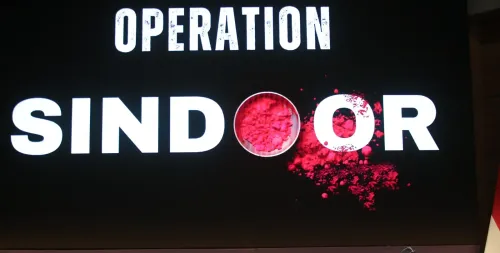
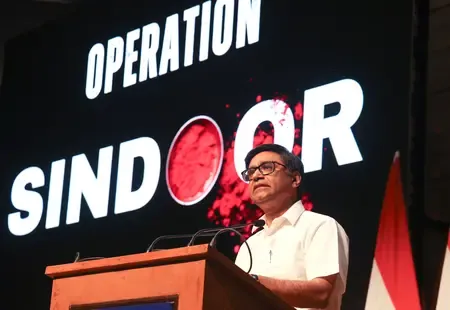
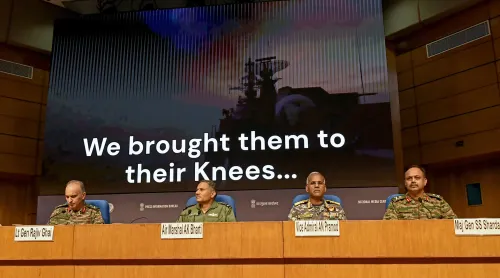
Operation Sindoor reshapes India's military doctrine from reactive to proactive
Synopsis
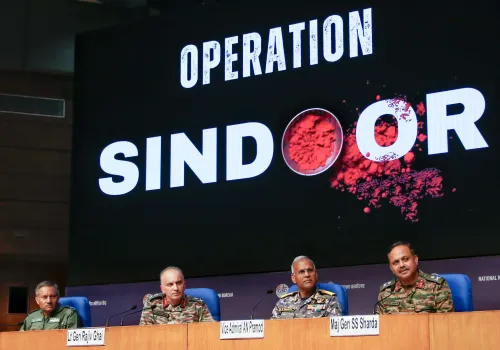
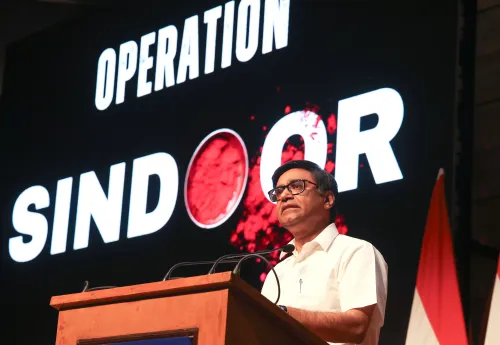
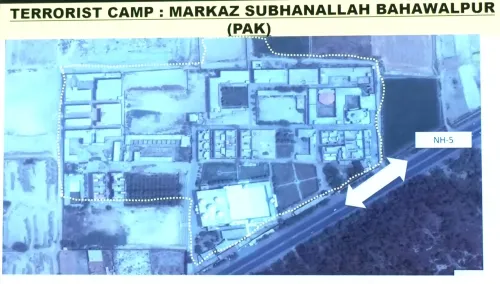
Operation Sindoor didn't just strike terror camps — it rewrote India's military rulebook. An Observer Research Foundation analysis argues India has moved from reactive deterrence to a proactive 'Cold Strike' doctrine, backed by new combat formations, drone squadrons, and accelerated weapons acquisitions. The transformation signals a fundamentally altered threshold for military action against cross-border terrorism.
Key Takeaways
Operation Sindoor is described as an "inflection point" in India's defence policy, triggered by the April 2025 Pahalgam terror attack by Lashkar-e-Taiba .
India's military thinking has shifted from the "Cold Start Doctrine" to an emerging "Cold Strike" doctrine focused on controlled pre-emption and proactive shaping of adversary moves.
New combat formations — Rudra Brigades (plains warfare) and Bhairav commando units (high-altitude operations) — have been created post-operation.
Armoured regiments are being equipped with "Shaurya Squadrons" for drone-based surveillance, precision strikes, and electronic warfare.
The November 2025 Trishul Exercise demonstrated integrated tri-service, multi-domain operations under a "kill-web" architecture.
Analysts caution the transformation remains incomplete without deeper organisational reforms and faster institutional adaptation.
India's military doctrine and strategic posture have undergone a significant transformation following Operation Sindoor, with defence analysts arguing that the operation marked a decisive shift from reactive deterrence to a more assertive, proactive military strategy against cross-border terrorism and hostile state sponsors. The shift, detailed in an analysis published by Eurasia Review based on a paper by the Observer Research Foundation (ORF), positions the operation as an "inflection point" in India's defence policy.
The Pahalgam Trigger and Strategic Context
The catalyst was the April 2025 Pahalgam terror attack, attributed to the Pakistan-based Lashkar-e-Taiba (LeT). According to the analysis authored by Kartik Bommakanti and Rahul Rawat, the Indian military not only imposed substantial costs on Pakistan during the operation but also denied Islamabad any meaningful military gains in return. Analysts described the episode as evidence of India's growing willingness to take calculated risks in directly confronting terrorism and its alleged state sponsors.
From Cold Start to Cold Strike
The ORF paper notes that India's military thinking has evolved beyond the earlier "Cold Start Doctrine" — largely designed as a rapid retaliatory response to a terrorist strike or conventional attack. In its place, an emerging "Cold Strike" doctrine focuses on controlled pre-emption and proactive shaping of adversary moves through the swift application of military power. The new framework emphasises faster mobilisation, compressed operational timelines, and integrated tri-service warfare.
The November 2025 "Trishul Exercise" demonstrated this evolution in practice, showcasing synchronised multi-domain operations involving the Army, Navy, and Air Force. Analysts noted the exercise illustrated India's growing capability to conduct integrated "sensor-shooter-decision" missions under tight time constraints — an operational architecture described as a "kill-web" essential for Cold Strike readiness.
New Combat Formations: Rudra Brigades and Bhairav Units
Among the most significant organisational changes following Operation Sindoor has been the creation of specialised combat formations. The "Rudra Brigades" are intended for rapid offensive contingencies against Pakistan in plains terrain, while the "Bhairav" commando units are designed for mountainous operations along both the Pakistan and China fronts. According to the report, the Bhairav units would act as force multipliers in high-altitude combat zones and free elite special forces for more strategic missions.
Accelerated Acquisitions and Drone Integration
The Indian armed forces have reportedly accelerated acquisitions of advanced military systems following the operation. These include upgrades to T-90 tank engines, airborne early warning and control systems, electronic warfare platforms, surface-to-air missiles, loitering munitions, long-range guided rocket ammunition for the Pinaka systems, drone detection platforms, and upgraded missile defence capabilities.
Armoured regiments are reportedly being equipped with "Shaurya Squadrons" — drone units intended for surveillance, precision strikes, electronic warfare, and logistics support. Though still in developmental stages, analysts believe these units reflect lessons drawn from recent conflicts worldwide where unmanned systems have become critical force multipliers.
Doctrinal Papers and the Road Ahead
In 2025, the Indian military released multiple doctrinal papers, including the Joint Doctrine for Multi-Domain Operations and doctrines relating to cyberspace, airborne, heliborne, and amphibious operations. These documents aim to improve interoperability among the three services and build mission-centric readiness.
The analysis concluded that while Operation Sindoor marked a substantial doctrinal evolution — including what some experts termed a "new normal" in India's response to cross-border terrorism and a reduced reliance on strategic restraint — the transformation would remain incomplete without deeper organisational reforms, greater jointness, and faster institutional adaptation to future warfare challenges.
Point of View
Strategic restraint was India's default, partly to manage international optics and partly due to genuine escalation anxiety. Operation Sindoor appears to have recalibrated both. The creation of Rudra Brigades and Bhairav units suggests institutional commitment, not just rhetorical posturing. Yet the ORF paper's own caveat is the most important line in the analysis: the transformation remains incomplete without deeper jointness. India has a long history of announcing doctrinal evolution that outpaces organisational reality — the test of Cold Strike will be whether the military's command structures, procurement cycles, and inter-service culture can actually keep pace with the doctrine's ambitions.
NationPress
24 Sept 2026
Frequently Asked Questions
What is the 'Cold Strike' doctrine that emerged after Operation Sindoor?
The 'Cold Strike' doctrine is India's emerging military strategy focused on controlled pre-emption and proactive shaping of adversary moves through the swift application of military power, replacing the earlier 'Cold Start Doctrine' which was primarily a reactive retaliatory framework. It emphasises faster mobilisation, compressed operational timelines, and integrated tri-service warfare.
What were the Rudra Brigades and Bhairav units created for?
The Rudra Brigades are specialised combat formations created for rapid offensive contingencies against Pakistan in plains terrain, while the Bhairav commando units are designed for mountainous operations along both the Pakistan and China fronts. Both formations were established as part of India's organisational reforms following Operation Sindoor.
What triggered Operation Sindoor and India's doctrinal shift?
The immediate trigger was the April 2025 Pahalgam terror attack, attributed to the Pakistan-based Lashkar-e-Taiba. According to the Observer Research Foundation analysis, India's response through Operation Sindoor imposed substantial costs on Pakistan while denying Islamabad any meaningful military gains, establishing what analysts describe as a 'new normal' in India's counter-terrorism posture.
What is the Trishul Exercise and why does it matter?
The Trishul Exercise, conducted in November 2025, demonstrated synchronised multi-domain operations involving India's Army, Navy, and Air Force. Analysts say it showcased India's growing capability to conduct integrated 'sensor-shooter-decision' missions under tight time constraints, reflecting the 'kill-web' operational architecture central to Cold Strike readiness.
Is India's military transformation complete after Operation Sindoor?
According to the Observer Research Foundation analysis, the transformation remains incomplete. Analysts argue that deeper organisational reforms, greater jointness among the three services, and faster institutional adaptation to future warfare challenges are still needed before the doctrinal shift can be considered fully realised.