Operation Sindoor: How India's anti-terror doctrine shifted one year on
Synopsis
A year after India launched precision strikes on nine terror camps inside Pakistan and Pakistan-occupied Kashmir, a new analytical report argues Operation Sindoor did more than retaliate — it institutionalised a new deterrence doctrine under which nuclear blackmail no longer constrains India's military response to state-sponsored terrorism.
Key Takeaways
Operation Sindoor was launched on 6–7 May 2025 in response to the 22 April 2025 Pahalgam terror attack that killed 26 people .
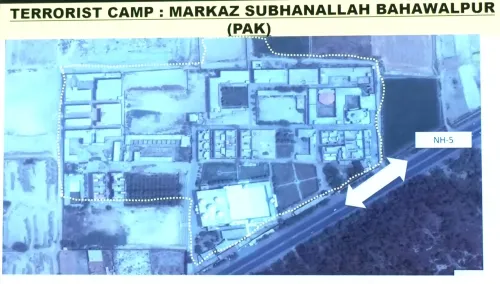
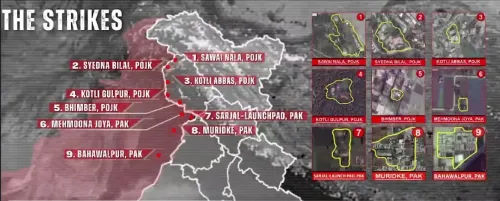
Indian forces struck nine high-value terror camps in Pakistan and Pakistan-occupied Kashmir, eliminating more than 100 terrorists according to a Defence Ministry documentary.
A report by analyst A.
Jathindra in the Sri Lankan Guardian describes the operation as India's most significant military campaign since the 1971 war .
PM Narendra Modi declared a "new normal": India will no longer distinguish between terrorists and those who support them, and will not tolerate nuclear blackmail.
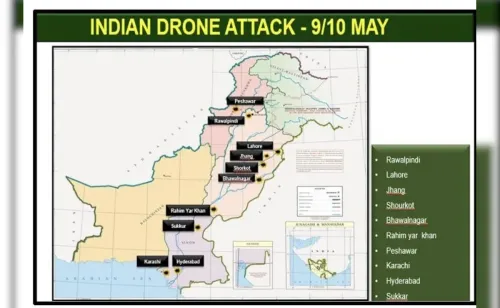
American military analyst John Spencer and Austrian aerial warfare analyst Tom Cooper assessed that India emerged "strategically on top," having neutralised Pakistani retaliatory drone, missile, and rocket attacks.
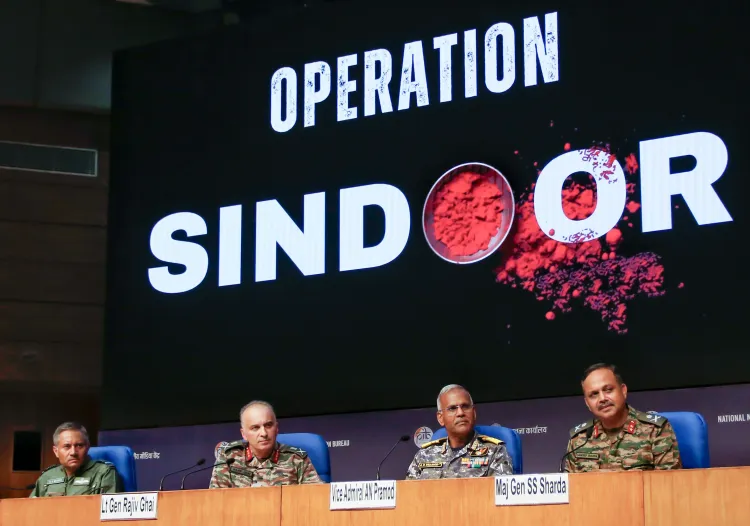
Deputy Chief of Army Staff Lt Gen Rajiv Ghai described the mission as "not an end but the beginning of India's sustained campaign against terrorism."
One year after Operation Sindoor, the Indian military campaign launched on 6–7 May 2025 continues to be assessed as a defining turning point in India's evolving security doctrine, signalling a fundamental shift in New Delhi's approach to terrorism and national security, according to a report published in the Sri Lankan Guardian.
Background: What Triggered Operation Sindoor
The immediate trigger was the 22 April 2025 terror attack in Pahalgam's Baisaran Valley in Jammu and Kashmir, carried out by The Resistance Front (TRF) — described in the report as a proxy outfit of the Pakistan-based terror group Lashkar-e-Taiba, allegedly backed by the Pakistan Army and Inter-Services Intelligence (ISI). The massacre killed 26 people, including 25 tourists and one local pony ride operator who reportedly tried to shield tourists from the attackers. Several victims were newly married; many were shot at close range in front of their families. Witnesses said the attackers singled out victims based on religion, forcing them to recite the Islamic kalima to identify non-Muslims.
The report, titled
Point of View
The prevailing assumption was that Pakistan's nuclear arsenal functioned as an effective ceiling on Indian military responses to sub-conventional provocations. If New Delhi has genuinely recalibrated that calculus, the strategic implications extend far beyond the subcontinent. Yet the report draws heavily on government-produced material, including a Defence Ministry documentary, and quotes analysts broadly sympathetic to India's position. Independent verification of casualty figures and the precise damage inflicted on Pakistani air defences remains limited. The doctrine may be new; the evidence base for its full success is still being assembled.
NationPress
23 Sept 2026
Frequently Asked Questions
What was Operation Sindoor?
Operation Sindoor was a military campaign launched by Indian armed forces on 6–7 May 2025, targeting nine high-value terror camps in Pakistan and Pakistan-occupied Kashmir in retaliation for the 22 April 2025 Pahalgam terror attack. The operation was described by officials as a focused, measured, and non-escalatory strike against terror infrastructure.
What triggered the Pahalgam terror attack that led to Operation Sindoor?
The 22 April 2025 attack in Pahalgam's Baisaran Valley, Jammu and Kashmir, was carried out by The Resistance Front (TRF), described as a proxy of Lashkar-e-Taiba allegedly backed by Pakistan's army and ISI. Twenty-six people were killed, including 25 tourists, after attackers reportedly singled out victims based on religion.
What doctrinal shift does the report attribute to Operation Sindoor?
According to the Sri Lankan Guardian report by analyst A. Jathindra, Operation Sindoor signalled that India will no longer be constrained by fears of nuclear escalation when responding to major terror attacks. PM Modi declared that India would not tolerate nuclear blackmail and would treat terrorists and their state backers as equal enemies.
How did India's air defence perform during Pakistan's retaliatory strikes?
According to American military analyst John Spencer, cited in the report, Pakistan's retaliatory drone swarms, missile launches, and rocket attacks were effectively neutralised by India's indigenous Integrated Air Command, Control and Communication System (IACCCS), known as Akashteer. Spencer assessed that India emerged strategically on top.
How significant is Operation Sindoor compared to past Indian military actions?
The report describes Operation Sindoor as India's most significant military campaign since the 1971 war. It characterised the operation as reflecting a new strategic doctrine based on short-range, calibrated offensives designed to inflict substantial damage while maintaining battlefield dominance.