What is Tarique Rahman’s Vision for Bangladesh?
Synopsis
Tarique Rahman unveils a plan for Bangladesh, stirring political aspirations ahead of the crucial February elections. His speech connects historical struggles to current democratic demands, setting the stage for a potential shift in leadership.
Key Takeaways
Tarique Rahman has returned to Bangladesh after a 17-year absence.
His speech emphasizes peace, security, and unity for the nation.
The BNP aims to reclaim leadership ahead of the February elections.
The historical legacy of his parents influences his political narrative.
Concerns about democratic rights and political exclusion are prominent in his discourse.
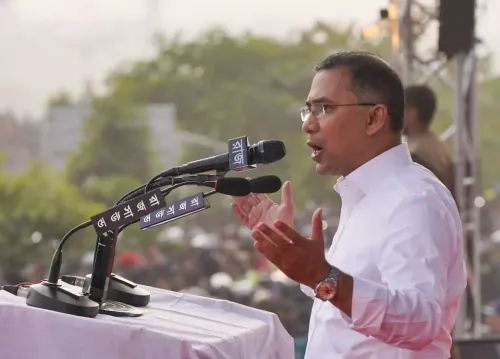
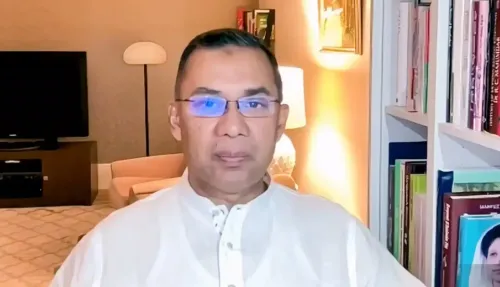
New Delhi, Dec 25 (NationPress) On Thursday, December 25, in Dhaka, Bangladesh Nationalist Party (BNP) Acting Chairman Tarique Rahman revealed that he has a plan for his compatriots, although he refrained from sharing specific details.
The 60-year-old BNP leader hails from a family with significant political history. His father, Ziaur Rahman, served as the sixth President of Bangladesh from 1977 until his assassination in 1981, while his mother was the nation's first female Prime Minister, holding office from 1991-1996 and again from 2001 to 2006.
Given this background and his return just ahead of Bangladesh's crucial February general election, his message was inherently political. Despite not portraying himself as a potential future prime minister, he often referenced his family’s political legacy.
His return after a 17-year absence signals the BNP's ambition to regain leadership and galvanize popular support. He spoke of a vision for a nation characterized by peace, security, and unity, emphasizing that the current instability poses serious threats to law and order.
“I have a plan for the people of my country; for my country,” he stated in English amid a predominantly Bengali speech, which may reflect his extended time in the United Kingdom.
The specifics of his plan remain unclear, and only time will tell if it will be comprehensive, encompassing critics and opponents. The BNP's main rival, the Awami League, is currently excluded from the 2026 elections, with its leader, Sheikh Hasina, taking refuge in India.
Rahman, having experienced exile himself, reiterated claims of oppression and political marginalization under the Hasina regime in his speech, while omitting details regarding his political opponent, who is facing a death sentence.
He asserted, “The people of Bangladesh want to reclaim their right to speak and their democratic rights,” a sentiment potentially linked to the recent prohibition on Awami League leaders from contesting elections.
While advocating for a society that includes citizens of all faiths, he did not directly address the violent incidents or adequately express condolences for the victims.
He paid tribute to Osman Hadi and underscored the necessity of “regaining economic rights,” highlighting the economic concerns of ordinary citizens and connecting economic justice to the sacrifices made during the 1971 Liberation War and beyond.
Rahman’s address positions the BNP as the leading alternative force ahead of the February elections, resonating with the democratic aspirations of many who feel disenfranchised.
By referencing pivotal moments in Bangladesh’s history, including the 1971 Liberation War and the 1990s mass movements, he seeks to align himself with the country’s democratic struggles.
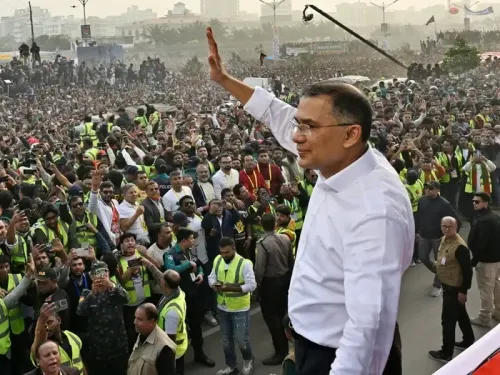
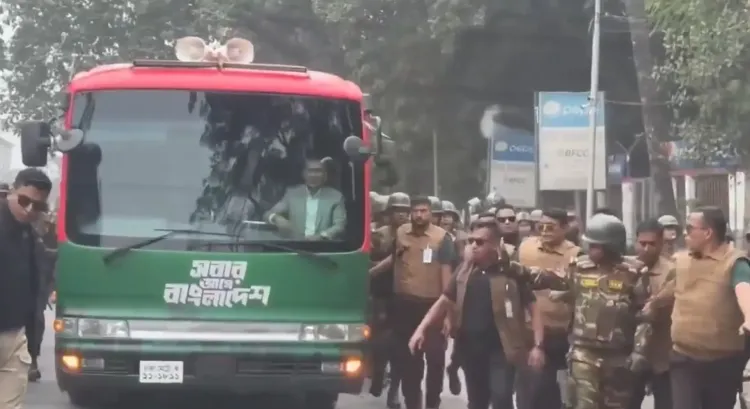
It remains to be seen whether the substantial crowd that gathered along Dhaka’s streets and those listening elsewhere perceive him as the leader they desire.
Ultimately, time will unveil the details of the plan he has returned with from Britain to foster a new hope and a fresh start for his nation during these challenging times.
Point of View
It is crucial to maintain an unbiased perspective while reporting on Tarique Rahman's vision for Bangladesh. This narrative greatly impacts the political dynamics of our nation. The BNP's aspirations for leadership and the emphasis on democratic rights reflect a significant moment in Bangladesh's history. It is essential to observe how these developments unfold in the lead-up to the elections.
NationPress
19 Sept 2026
Frequently Asked Questions
What is Tarique Rahman's plan for Bangladesh?
Tarique Rahman has expressed intentions to create a vision for Bangladesh that focuses on peace, security, and unity, although specific details of his plan are yet to be revealed.
Who are Tarique Rahman's parents?
Tarique Rahman's father, Ziaur Rahman, was the sixth President of Bangladesh, and his mother served as the country's first female Prime Minister.
What challenges does Bangladesh face ahead of the elections?
Bangladesh is currently experiencing political instability, including the exclusion of the Awami League from the upcoming elections and ongoing concerns about democratic rights.
How long has Tarique Rahman been in exile?
Tarique Rahman returned to Bangladesh after a 17-year period of exile in the United Kingdom.
What historical events did Tarique Rahman reference?
Rahman referenced the 1971 Liberation War and the 1990s mass movements as part of his speech to connect current political aspirations with historical struggles.