How is the Yemeni government supporting Saudi efforts to ease tensions in the south?
Synopsis
In a significant move, Yemen's internationally-recognized government has expressed support for Saudi Arabia's initiative to reduce tensions in the southern provinces. This comes amid ongoing military activities by the Southern Transitional Council (STC), which threaten to destabilize the fragile anti-Houthi alliance. The situation remains critical as both local and international parties seek solutions.
Key Takeaways
The Yemeni government supports Saudi efforts to reduce tensions.
The Southern Transitional Council is increasing its military presence.
Saudi Arabia's involvement remains crucial to the peace process.
Ongoing conflict has roots in political and economic marginalization.
Dialogue among all factions is essential for stability.
Aden, Dec 25 (NationPress) Yemen's government, recognized internationally, expressed its support on Thursday for Saudi Arabia's initiative aimed at calming rising tensions in the southern regions of the country, where military movements by the Southern Transitional Council (STC) are putting pressure on the anti-Houthi coalition.
In a statement published by the state-run Saba news agency, the Yemeni administration appreciated what it termed a clear, balanced, and responsible position taken by Saudi Arabia regarding the recent events in Hadramout and Al-Mahrah provinces.
The government cautioned that any military or security measures enacted outside of state authority, or without collaboration with the Presidential Leadership Council (PLC), the government, or local authorities, represent an "unacceptable source of tension" and place additional strain on the war-torn nation.
Earlier on Thursday, Saudi Arabia's Foreign Ministry remarked that the recent troop deployments by the STC within the two southern provinces of Yemen marked an "unjustified escalation" that jeopardizes Yemeni interests and complicates the efforts of the Saudi-led coalition.
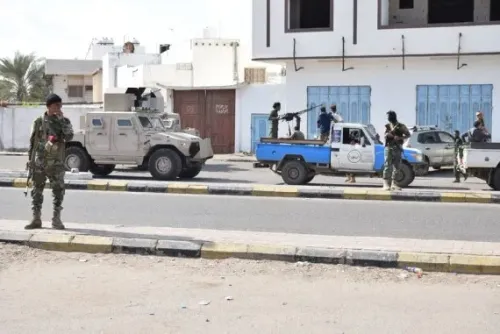
In response, Riyadh announced that a joint Saudi-Emirati military team had arrived in Aden to coordinate with the STC on the withdrawal of its troops from the area in an orderly and timely manner, while also transferring military camps to government-aligned or local forces.
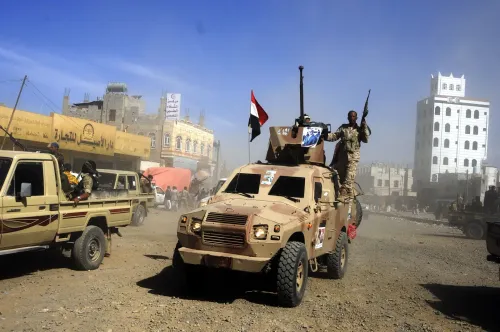
The situation intensified on December 3 when STC forces seized control of Hadramout following confrontations with pro-government units, accusing them of maintaining connections with the Muslim Brotherhood. Furthermore, the STC expressed dissatisfaction with the PLC for not initiating a serious campaign against the Houthi group.
Following this, STC forces expanded their presence into Al-Mahrah with minimal resistance and have since recruited local forces in both provinces despite calls for de-escalation from the Yemeni government and Saudi Arabia, as reported by Xinhua.
Moreover, the STC has recently commenced a significant military operation in the southern province of Abyan.
Earlier this week, the STC secured the allegiance of over a dozen ministers within the central government. Meanwhile, eight southern provinces under STC control have expressed increasing support for the STC's calls for separation.
As the STC's military footprint grows in several key provinces, Saudi Arabia has halted the issuance of permits for vessels to enter the STC-controlled port of Aden.
Since 2014, Yemen has been engulfed in conflict, initiated when Houthi forces captured Sanaa and significant portions of the north. This prompted a Saudi-led coalition to intervene in 2015 to back the internationally-recognized government.
Established in 2017, the STC advocates for self-determination and eventual independence for southern Yemen. Despite joining the Saudi-led coalition and integrating into the PLC in 2022, the group persists in its pursuit of southern sovereignty, leading to ongoing disputes over power-sharing and resource management.
The STC has accused previous Yemeni administrations of politically and economically sidelining the south, a claim Yemeni authorities have consistently denied, emphasizing the necessity of territorial unity.
Point of View
It's crucial to emphasize the importance of stability in Yemen. The Yemeni government's backing of Saudi efforts to ease tensions is a positive step towards restoring peace. However, the ongoing military maneuvers by the STC illustrate the complexities of the situation. The focus must remain on dialogue and collaboration among all parties for the benefit of the Yemeni people.
NationPress
18 Sept 2026
Frequently Asked Questions
What is the role of Saudi Arabia in Yemen's conflict?
Saudi Arabia plays a significant role as a leader of the coalition backing Yemen's internationally-recognized government against the Houthi forces.
What are the Southern Transitional Council's objectives?
The Southern Transitional Council aims for self-determination and independence for southern Yemen, seeking greater political and economic autonomy.
What triggered the recent escalations in Yemen's southern provinces?
Recent escalations were triggered by military movements and troop deployments by the STC, leading to clashes with pro-government forces.
How has the Yemeni government responded to the STC's actions?
The Yemeni government has expressed concern over the STC's military actions, warning that they undermine state authority and create additional tensions.
What is the significance of the joint Saudi-Emirati delegation in Aden?
The joint Saudi-Emirati delegation aims to coordinate with the STC for an orderly withdrawal of its forces to restore stability in the region.