Why is China Opposing the Pentagon Report That Claims Military Intentions?
Synopsis
On December 25, China vehemently criticized a Pentagon report for misrepresenting its defense policies and attempting to incite discord with India. This response highlights the ongoing complexities in Sino-Indian relations amidst rising military tensions and diplomatic efforts.
Key Takeaways
China opposes the Pentagon report for misrepresenting its defense policies.
US-India ties are seen as a concern by China.
Military modernization efforts in China are ongoing.
The border situation between China and India remains stable.
Diplomatic engagements have increased, but mistrust persists.
Beijing, Dec 25 (NationPress) On Thursday, China expressed its strong opposition to a report from the Pentagon that it claims misrepresents Beijing's defense strategies and seeks to create divisions between China and other nations, particularly India, to rationalize its own pursuit of military dominance.
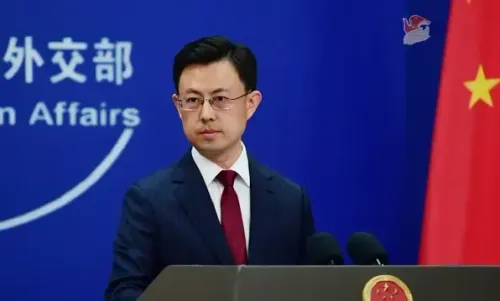
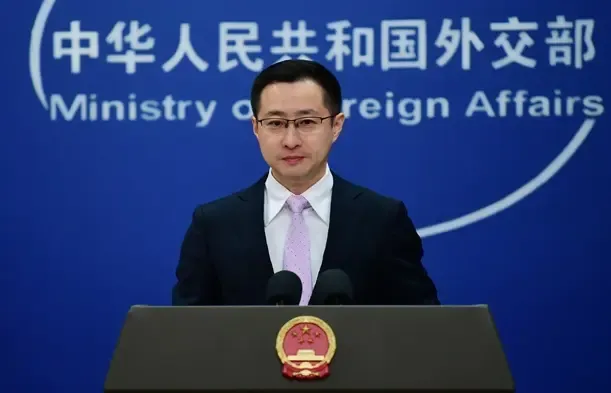
Lin Jian, the spokesperson for the Chinese Foreign Ministry, stated during a daily press briefing, "The Pentagon's report misrepresents China's defense strategy, breeds discord among nations, and serves as a pretext for the United States to uphold its military superiority. China categorically rejects this report." This statement was made in response to a US report suggesting that China may aim to leverage the easing of tensions along the border with India to hinder the strengthening of US-India relations.
The spokesperson emphasized that Beijing approaches its relationship with New Delhi from a strategic and long-term viewpoint.
"China assesses and manages its ties with India from a strategic perspective and with a long-term vision. We are committed to enhancing communication, building mutual trust, fostering cooperation, and effectively addressing differences with India to promote a robust and stable bilateral relationship.
"The boundary issue is a bilateral concern between China and India, and the current border situation is generally stable with effective communication channels. China opposes any unfounded and irresponsible statements from relevant countries," he added.
A recent report from the US Defense Department indicates that China is continuing preparations for a potential military confrontation with India along the Line of Actual Control, even as both nations work towards diplomatic efforts to stabilize their relationship.
The report points to China's Western Theatre Command as responsible for operations concerning India and notes that this command is trained and structured to handle high-altitude conflict and border contingencies.
In 2024, Chinese military forces conducted live-fire drills and mobility exercises in mountainous regions, tailored for combat in high-altitude and low-oxygen environments, according to the report.
The Pentagon's assessment highlights that China considers its territorial claims as "core interests," which the nation deems non-negotiable. This framework explicitly includes India's Arunachal Pradesh.
While India and China reached an agreement in October 2024 to disengage from remaining standoff points along the LAC, the report advocates caution, indicating that the reduction in tensions does not signify a shift in China's long-term military posture.
The report suggests that Chinese leaders are likely motivated to reduce border friction to deter a deeper strategic alignment between India and the United States, while simultaneously viewing US-India defense collaboration with apprehension.
China remains cautious about the expansion of US partnerships in the Indo-Pacific, regarding these ties as constraints on its strategic autonomy, including along its land borders.
China's broader military modernization efforts are also pertinent to India. The People's Liberation Army (PLA) is enhancing its missile capabilities, air power, cyber units, and space-based surveillance, allowing it to operate across multiple theaters concurrently.
The report observes that China has bolstered its capacity to swiftly mobilize forces and sustain operations along its western frontier, with logistics, joint command structures, and rapid mobilization being key focus areas.
Despite an increase in diplomatic engagement between New Delhi and Beijing, the report underscores that deep-seated mistrust persists. Both nations continue to view each other with skepticism, particularly concerning security matters.
Ultimately, the report concludes that China's military actions along the India border reflect a readiness for potential conflict rather than reassurance. Even amidst ongoing discussions and disengagement agreements, the PLA persists in training for scenarios that could lead to renewed confrontations.
Point of View
It is crucial to approach this sensitive topic with a balanced perspective. The ongoing tensions and military preparations between China and India warrant close observation, especially as both nations navigate their diplomatic relationships. Our commitment is to provide insightful analysis while fostering understanding of these complex geopolitical issues.
NationPress
21 Oct 2026
Frequently Asked Questions
What does the Pentagon report say about China's military intentions?
The Pentagon report suggests that China is preparing for potential military confrontations with India along the Line of Actual Control, despite ongoing diplomatic efforts.
How does China view its relationship with India?
China approaches its relationship with India from a strategic and long-term perspective, emphasizing communication and cooperation.
What are China's core interests according to the report?
The report identifies China's territorial claims as core interests that Beijing considers non-negotiable, including claims over Arunachal Pradesh.
Why is China concerned about US-India relations?
China perceives the growing defense cooperation between the US and India as a threat to its strategic autonomy and regional influence.
What are the implications of China's military modernization for India?
China's military modernization efforts, including enhancements to missile forces and cyber units, could impact regional security dynamics and India's defense posture.