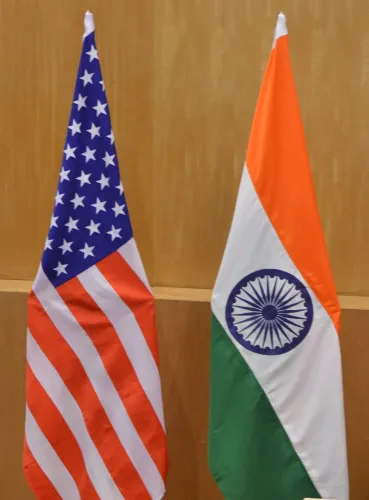
Is India Exhibiting the Strongest Resistance Against China's Coercion?
Synopsis
In a recent hearing, US experts highlighted India's robust response to China's aggression in the Indo-Pacific, emphasizing the importance of the US-India partnership to counteract Beijing's military and economic maneuvers. As tensions rise, collaboration between these nations becomes essential for regional stability.
Key Takeaways
India is exhibiting the strongest resistance to China's aggression.
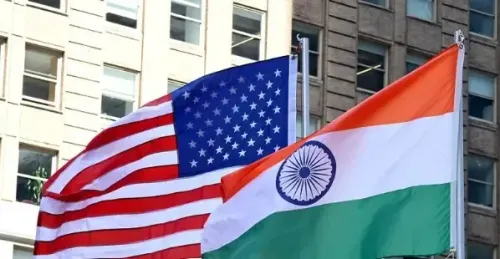
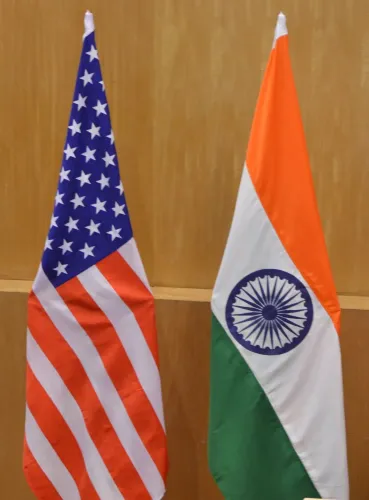
The US-India partnership is crucial for countering Beijing's influence.
India's strategic location enhances its role in maintaining a free Indo-Pacific.
Geopolitical tensions are expected to persist, necessitating ongoing collaboration.
Defense cooperation includes joint military exercises and intelligence sharing.
Washington, Dec 11 (NationPress) India has exhibited the strongest resistance to China's escalating aggression in the Indo-Pacific region, prominent American analysts on South Asia informed lawmakers.
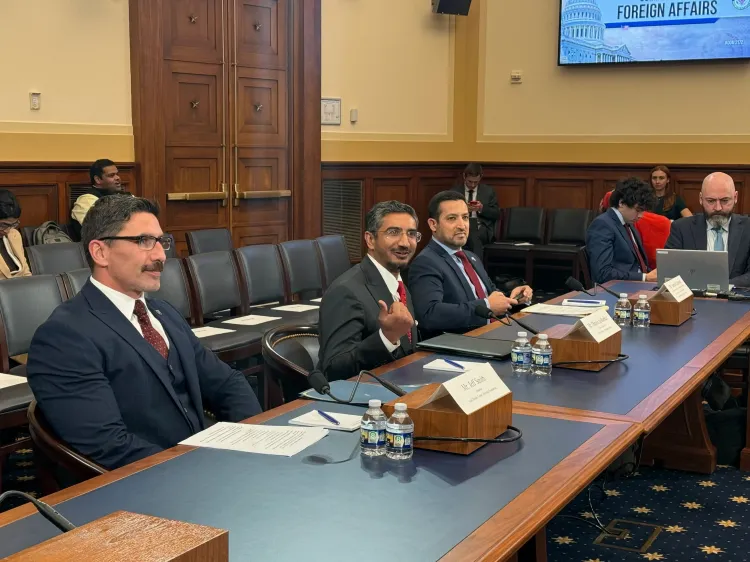
During a significant hearing of the House Foreign Affairs Subcommittee on South and Central Asia, focusing on the US–India strategic collaboration on Wednesday (local time), these experts highlighted the increasing bipartisan concern in Washington regarding Beijing's ambitions to dominate the region militarily, economically, and digitally.
Jeff Smith from the Heritage Foundation stated that India has been proactive in countering Chinese coercion at its borders, describing New Delhi's actions as some of the most effective among China's neighboring countries. He noted that, unlike the US, India was able to ban TikTok almost instantly and has also prohibited numerous Chinese apps and imposed strict limitations on Chinese investments that pose potential security threats.
Committee Chairman Bill Huizenga cautioned that China's string of pearls ideology represents an overt effort to encircle and dominate the Indian Ocean. He asserted that this expansion is no longer merely theoretical and emphasized that India's strategic location and bolstering naval capabilities are vital for ensuring a free and open Indo-Pacific.
Dhruva Jaishankar from ORF America reminded members of Congress about the border clashes in 2020, highlighting that China's mobilization led to confrontations where 20 Indian soldiers lost their lives. He stated that Beijing's expanding military presence—from nuclear advancements to new unmanned systems—combined with its network of overseas ports, could potentially secure critical maritime chokepoints.
Smith urged the US to bolster New Delhi's capabilities, enhance intelligence-sharing, and support India's maritime strategies from the Andaman and Nicobar Islands to the Western Pacific. He reiterated, “India has shown the strongest resistance.” “India's geographical positioning between China and the US is of great significance,” he added.
Experts also indicated that Beijing's conduct is prompting India and the US to strengthen their ties despite recent trade disputes. Smith remarked, “This remains a low-cost, high-benefit partnership for the United States.”
The testimonies reflected an uncommon agreement: China's military pressure is expected to persist, and the US–India partnership is emerging as one of Washington's most critical strategies to counteract it.
Huizenga noted that in recent years, China has expanded and modernized its nuclear capabilities, undertaken a major naval buildup, and introduced new unmanned and cyber systems.
In 2020, significant mobilization by the PLA led to conflicts resulting in the deaths of 20 Indian military personnel. China has developed a network of potentially dual-use ports across the Indo-Pacific, which may be utilized to secure vital chokepoints.
Consequently, the Indian Navy has intensified its patrols and contributed to maritime burden-sharing in the Indian Ocean and Pacific, Huizenga noted.
Sameer Lalwani from the German Marshall Fund emphasized that collaboration with India aids the United States in maintaining its long-term technological superiority and winning the strategic competition against China. Defense cooperation, vital for counterbalancing China's military strength, encompasses joint military exercises, intelligence sharing, logistics agreements, and defense co-development.
Point of View
It is important to recognize the strategic dynamics at play between India and China. The insights shared by US experts highlight India's commitment to safeguarding its sovereignty while fostering deeper ties with the United States. This evolving partnership is crucial not only for regional stability but also for global security in the face of rising authoritarianism.
NationPress
21 Oct 2026
Frequently Asked Questions
What is the significance of India's resistance to China?
India's resistance is crucial for maintaining a balance of power in the Indo-Pacific and ensuring regional security against China's expanding influence.
How has India responded to Chinese aggression?
India has implemented bans on Chinese apps and imposed strict restrictions on investments to protect national security.
What role does the US-India partnership play?
The partnership serves as a key strategy for the US to counter China's military and economic ambitions in the region.
What recent events have heightened tensions between India and China?
The 2020 border clashes that resulted in casualties among Indian military personnel have significantly escalated tensions.
What are the implications of China's military expansion?
China's military expansion poses a threat to regional stability and necessitates stronger defense cooperation among its neighbors, particularly with the US.