What Happened in the Helicopter Crash on Mount Kilimanjaro?
Synopsis
A devastating helicopter crash on Mount Kilimanjaro has claimed five lives, including tourists and local guides. As investigations begin, we explore the implications for Tanzania's tourism and the safety regulations that may arise from this tragedy.
Key Takeaways
Five individuals lost their lives in a helicopter crash during a rescue mission on Mount Kilimanjaro.
The Civil Aviation Authority of Tanzania has initiated an investigation .
Victims include two tourists from the Czech Republic and local guides.
Tanzania plans to introduce cable transport systems to enhance tourism.
The crash emphasizes the need for improved safety regulations in adventure tourism.
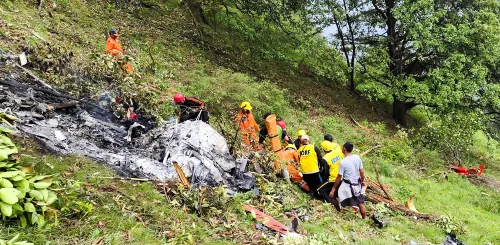
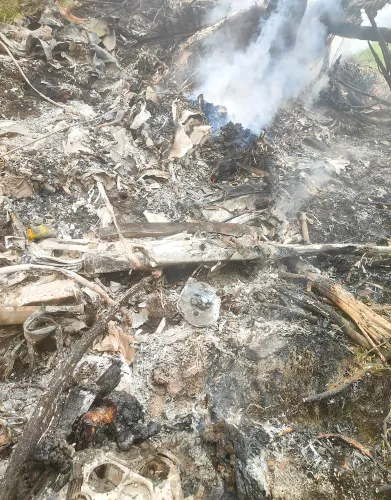
Dar Es Salaam, Dec 25 (NationPress) The Civil Aviation Authority of Tanzania (TCAA) confirmed on Thursday that a tragic helicopter crash occurred at the Barafu Camp on Mount Kilimanjaro, the tallest mountain in Africa, resulting in the deaths of five individuals on Wednesday.
In an official statement, the TCAA expressed profound sorrow, stating, "We regret to inform that all five individuals aboard have tragically lost their lives due to this incident." The victims have been identified as two tourists from the Czech Republic, a pilot from Zimbabwe, a medical doctor from Tanzania, and a Tanzanian mountain guide, according to reports from Xinhua news agency.
The regional police commander for Kilimanjaro, Simon Maigwa, disclosed that the helicopter, an Airbus H125 owned by a Tanzanian firm, was engaged in a rescue operation to evacuate the Czech tourists who were facing health issues when it crashed on Wednesday afternoon.
The TCAA has initiated an official inquiry to determine the details and causes surrounding the crash.
Located in northern Tanzania, Mount Kilimanjaro is a prominent attraction for climbers and tourists globally.
Earlier this year, Tanzanian authorities announced plans to implement regulations for cable transportation systems to enhance the nation’s tourism and transport infrastructure.
Habibu Suluo, the Director General of the Land Transport Regulatory Authority (LATRA), stated that eight regions including Dar es Salaam, Arusha, Tanga, Coast, Morogoro, Mbeya, Kilimanjaro, and Iringa have been earmarked for cable transport operations.
"The introduction of cable transport will significantly assist tourists in reaching attractions in mountainous terrains swiftly," he remarked during a press conference in Dar es Salaam back in April.
Suluo also noted that LATRA, which oversees rail and road transport, has been assigned the responsibility of regulating cable transport as well.
He clarified that the proposed cable systems will be implemented on Mount Kilimanjaro, in the mountainous regions of Mbeya and Iringa, and in heavily trafficked areas such as Arusha and Dar es Salaam, emphasizing that these innovations are meant to complement, not replace, the roles of porters who assist climbers.
Point of View
It's imperative to approach this tragedy with sensitivity, acknowledging the loss of lives while emphasizing the importance of safety in adventure tourism. The incident highlights the need for stringent regulations to protect both tourists and local guides in high-risk environments.
NationPress
24 Sept 2026
Frequently Asked Questions
What caused the helicopter crash on Mount Kilimanjaro?
An official investigation is underway to determine the circumstances and cause of the crash.
Who were the victims of the helicopter crash?
The victims included two Czech tourists, a Zimbabwean pilot, a Tanzanian doctor, and a Tanzanian mountain guide.
What is being done to improve safety in Tanzania's tourism sector?
Tanzanian authorities are preparing regulations for cable transport systems to enhance safety and accessibility in mountainous areas.
Where did the helicopter crash occur?
The crash occurred at the Barafu Camp on Mount Kilimanjaro.
What is the significance of Mount Kilimanjaro in tourism?
Mount Kilimanjaro is a major attraction for climbers and tourists from all over the world, renowned for its breathtaking views and challenging climbs.