Chhatra League members detained at funeral of student wing chief in Dhaka
Synopsis
Even a funeral became a flashpoint in Bangladesh's deepening political crisis — five Chhatra League members were detained and allegedly assaulted by BNP activists at the mosque where their student wing's general secretary was being laid to rest. The incident has drawn sharp condemnation from Awami League leaders, who say it signals a dangerous merger of police power and ruling-party intimidation.
Key Takeaways
Five Chhatra League leaders and activists were detained near Taqwa Mosque , Dhanmondi , Dhaka , on Sunday .
The detentions occurred during funeral prayers for Mahfuzul Haider Chowdhury Roton , general secretary of Chhatra League , who died of cancer at Apollo Hospital, Kolkata .
BNP activists allegedly assaulted the detained individuals before handing them over to Dhanmondi police .
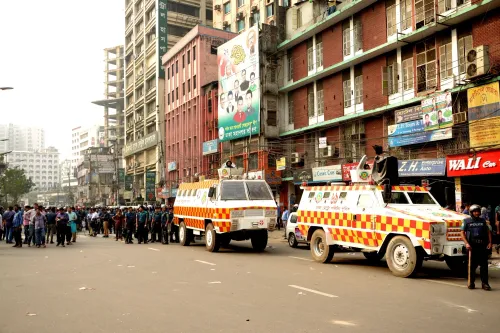
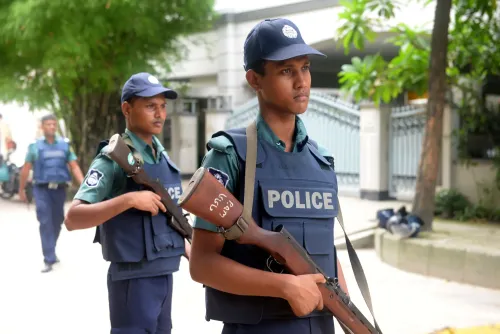
Police presence was deployed around the mosque and nearby Dhanmondi Eidgah ground ahead of the funeral.
Former Bangladesh Minister Mohammad Ali Arafat condemned the incident, alleging 'disturbing collaboration between law enforcement and ruling party activists.'
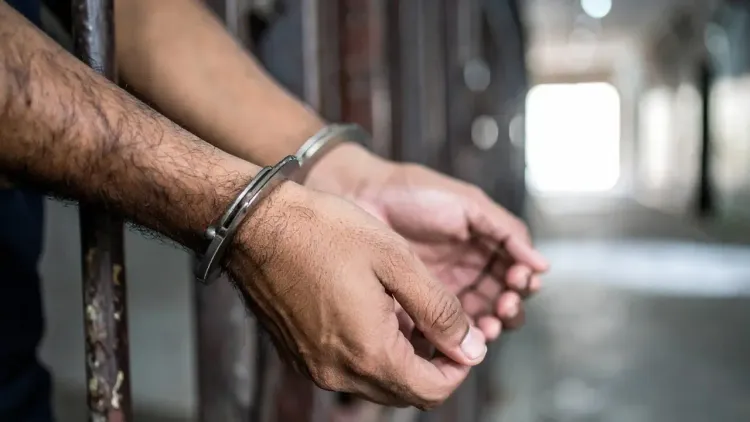
Five leaders and activists of Awami League's student wing, Chhatra League, were detained near Taqwa Mosque in Dhaka's Dhanmondi area on Sunday during a gathering for the funeral prayers of the student body's general secretary, Mahfuzul Haider Chowdhury Roton, according to local media reports. The detentions come amid a wider crackdown on Awami League members across Bangladesh.
What Happened at the Mosque
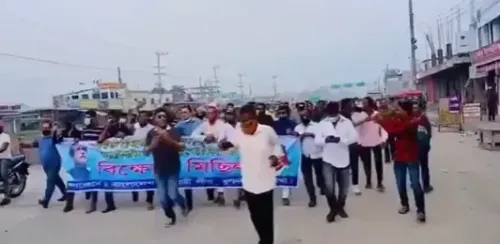
According to leading Bangladeshi newspaper The Business Standard, citing locals, BNP leaders and activists detained the five individuals behind the mosque on Sunday afternoon, assaulted them, and subsequently handed them over to Dhanmondi police. Dhanmondi Police Station Officer-in-Charge Muhammad Imdadul Islam Tayeb confirmed the incident, stating the detained individuals belonged to Chhatra League and were taken into custody while staging a procession behind the mosque.
Following reports that Roton's funeral would be held in front of Dhanmondi Takwa Mosque, several Chhatra League leaders and activists gathered in the adjoining area. Law enforcement personnel were reportedly deployed around the mosque and the nearby Dhanmondi Eidgah ground, according to Times of Bangladesh.
Who Was Roton
Roton, who had been battling cancer for an extended period, died while undergoing treatment at Apollo Hospital in Kolkata, India, on Saturday. His body arrived in Dhaka on Sunday. As general secretary of Chhatra League — historically one of the most influential student political organisations in Bangladesh — Roton's death drew a significant number of supporters and mourners to the mosque area.
Awami League's Sharp Condemnation
Former Bangladesh Minister and Awami League leader Mohammad Ali Arafat on Monday strongly condemned the detentions, slamming the state of politics under the BNP government led by Prime Minister Tarique Rahman. Arafat posted on X that 'Police, alongside activists of BNP-affiliated organisations, disrupted the funeral proceedings and incited mob violence against ordinary people who had gathered to pay their last respects. Mourners were attacked and beaten, while some were handed over to the police.'
In a follow-up, Arafat alleged a 'disturbing collaboration between law enforcement and ruling party activists,' adding: 'Funeral prayers are a fundamental religious observance, yet the police obstructed these rites while activists of Tarique Rahman's BNP resorted to intimidation and violence against mourners.'
Broader Rights Concerns
Raising alarm over governance in Bangladesh, Arafat questioned what kind of government denies citizens the right to mourn their dead in peace. He stated: 'Obstructing funeral prayers and subjecting mourners to violence and police action are deeply alarming violations of fundamental rights. Such incidents raise serious questions about religious freedom, civil liberties, the rule of law and the state of democracy in Bangladesh.' This incident is the latest in a series of reported confrontations between Awami League members and authorities or BNP activists since the political transition in Bangladesh, pointing to a deepening polarisation in the country's political landscape. How Bangladesh's interim and ruling structures respond to such incidents is likely to remain a flashpoint in the weeks ahead.
Point of View
Or encouragement, of such confrontations risks setting a precedent where even grief becomes a political act requiring state permission. Awami League's vocal condemnation via social media rather than street protest suggests the party is tactically constrained, fighting from the margins. The deeper question Bangladesh's civil society must ask is whether the rule-of-law rhetoric that powered the last political transition is now selectively applied — and whether the international community watching Dhaka will treat this incident as an isolated flashpoint or a structural warning sign.
NationPress
12 Oct 2026
Frequently Asked Questions
Why were Chhatra League members detained in Dhaka on Sunday?
Five Chhatra League leaders and activists were detained near Taqwa Mosque in Dhaka's Dhanmondi area while gathering for the funeral prayers of their general secretary, Mahfuzul Haider Chowdhury Roton. According to reports, BNP activists assaulted them and handed them over to Dhanmondi police.
Who was Mahfuzul Haider Chowdhury Roton?
Roton was the general secretary of Chhatra League, the student wing of Awami League, one of Bangladesh's most historically prominent student political bodies. He had been battling cancer for a long time and died during treatment at Apollo Hospital in Kolkata, India, on Saturday, with his body returned to Dhaka on Sunday.
What did Awami League say about the detentions?
Former Bangladesh Minister and Awami League leader Mohammad Ali Arafat condemned the incident on Monday, alleging that police and BNP-affiliated activists jointly disrupted funeral proceedings and assaulted mourners. He described it as a 'disturbing collaboration between law enforcement and ruling party activists' and raised concerns about religious freedom and civil liberties.
Is this part of a larger crackdown on Awami League in Bangladesh?
Reports indicate the detentions are part of an escalating crackdown on Awami League members and affiliates in Bangladesh. The confrontation at Roton's funeral is the latest in a series of reported incidents since the political transition in the country, pointing to rising tensions between Awami League and the BNP-led government.
What rights concerns has the incident raised?
Awami League leader Mohammad Ali Arafat stated the obstruction of funeral prayers and violence against mourners raised 'serious questions about religious freedom, civil liberties, the rule of law and the state of democracy in Bangladesh.' Critics argue it sets a troubling precedent for political assembly and freedom of religion under the current government.