CM Samrat Choudhary shares Rajnath Singh's 'Jai Jawan Jai Kisan' tribute
Synopsis
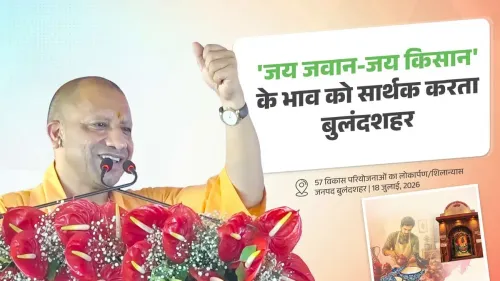
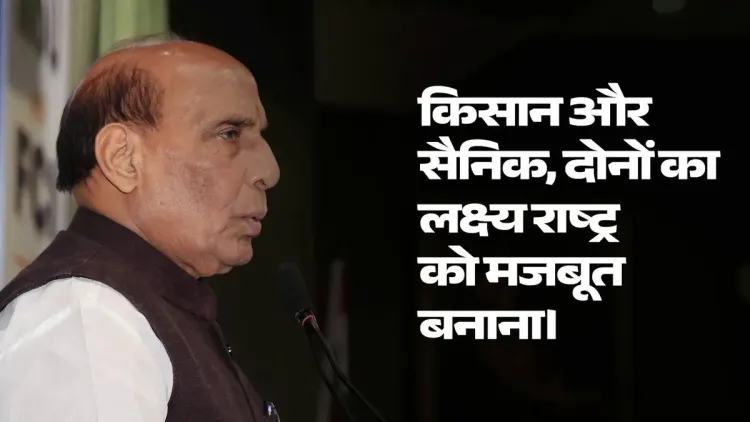
Bihar Chief Minister Samrat Choudhary amplified Defence Minister Rajnath Singh's tribute framing farmers and soldiers as two expressions of the same national mission, invoking the enduring 'Jai Jawan Jai Kisan' spirit coined by Lal Bahadur Shastri in 1965.
Key Takeaways
Bihar CM Samrat Choudhary shared a quote by Defence Minister Rajnath Singh on October 12, 2026 , drawing a parallel between farmers and soldiers.
The message argues that while farmers and soldiers operate in different domains, their shared goal is 'to make the nation strong.' The post explicitly invokes Jai Jawan Jai Kisan , the slogan first popularised by PM Lal Bahadur Shastri in 1965 .
Bihar holds particular relevance to this message as one of India's largest agrarian states with a strong tradition of military service.
The attribution to a senior Cabinet minister frames the sentiment as a statement of political conviction rather than ceremonial rhetoric.
On a Monday evening, Bihar Chief Minister Samrat Choudhary amplified a powerful message from Defence Minister Rajnath Singh — one that draws a direct line between the farmer tilling the soil and the soldier defending it, arguing that both are engaged in the same singular mission: strengthening the nation.
The quoted remarks, attributed to Defence Minister Rajnath Singh, frame farmers and soldiers not as separate constituencies but as two expressions of the same national resolve. 'On one side are our farmers who grow grain in the fields. On the other are our soldiers who protect that very land,' the message reads. 'Farmers fill the country's stomach; soldiers guard its borders. Their fields of work differ, but their purpose is one — to make the nation strong.'
The 'Jai Jawan Jai Kisan' lineage reactivated
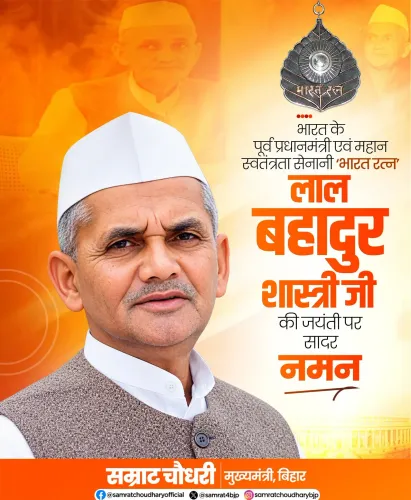
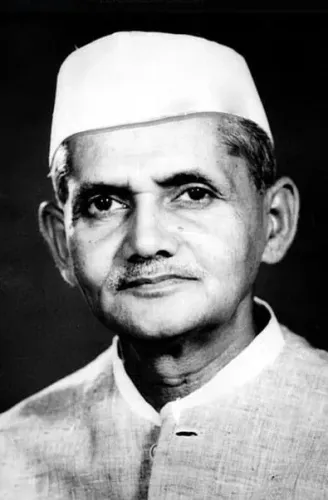
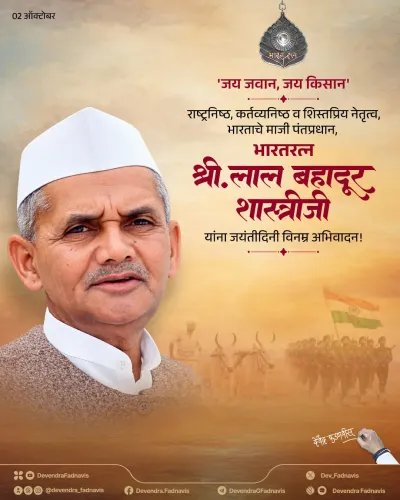
The slogan Jai Jawan Jai Kisan — 'Hail the Soldier, Hail the Farmer' — was first coined by former Prime Minister Lal Bahadur Shastri in 1965, during a period of simultaneous war with Pakistan and severe food scarcity. It became one of independent India's most enduring rallying cries, encapsulating the idea that national security and food security are inseparable pillars. The message shared by CM Choudhary invokes that same spirit, framing contemporary India as actively giving 'concrete form' to this sentiment.
By sharing this on October 12, 2026, CM Choudhary — a senior BJP leader and Chief Minister of Bihar, a state where both agriculture and military recruitment carry deep social weight — signals that this dual salute to farmer and soldier remains a live political and emotional touchstone, not merely a historical slogan.
Bihar's stake in both the field and the frontier
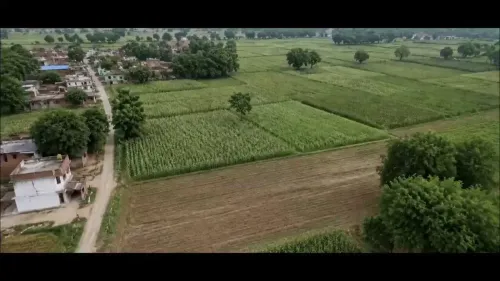
Bihar is among India's largest agrarian states, with a significant share of its workforce employed in farming. The state also has a long tradition of military service, contributing substantially to the Indian Army across generations. A message that honours both identities simultaneously carries particular resonance here — speaking directly to rural households that may have a son in uniform and another behind a plough.
The decision to quote Rajnath Singh — one of the most senior figures in the BJP and a minister with deep credibility on defence matters — also lends institutional weight to what could otherwise read as ceremonial sentiment. This is framed as policy conviction, not just poetry.
Two pillars. One purpose. The old slogan has a new audience — and Bihar's Chief Minister is making sure they hear it.
Point of View
CM Choudhary performs a deliberate act of political alignment — tethering Bihar's identity to the BJP's national narrative of dual honour for agrarian and defence constituencies. The invocation of 'Jai Jawan Jai Kisan' is rarely neutral; it typically surfaces ahead of elections or during moments when the ruling coalition wants to consolidate its support among farmers and defence families simultaneously. In a state like Bihar, where both voter blocs are electorally significant, the timing and choice of quote are unlikely to be accidental.
NationPress
12 Oct 2026
Frequently Asked Questions
What did Bihar CM Samrat Choudhary post about farmers and soldiers?
CM Samrat Choudhary shared a message by Defence Minister Rajnath Singh arguing that farmers and soldiers — though working in different spheres — share the same ultimate purpose of strengthening the nation, invoking the 'Jai Jawan Jai Kisan' spirit.
What does 'Jai Jawan Jai Kisan' mean and who coined it?
'Jai Jawan Jai Kisan' means 'Hail the Soldier, Hail the Farmer' and was first coined by Prime Minister Lal Bahadur Shastri in 1965 during a period of simultaneous war and food crisis, becoming one of India's most enduring national slogans.
Why is Rajnath Singh's farmer-soldier message significant for Bihar?
Bihar is one of India's largest agrarian states and has a strong tradition of military service, meaning a message honouring both farmers and soldiers resonates directly with a large section of its population.
Who is Samrat Choudhary?
Samrat Choudhary is the Chief Minister of Bihar and a senior leader of the Bharatiya Janata Party (BJP).
What is the connection between Rajnath Singh and this post?
The post shared by CM Samrat Choudhary directly quotes Defence Minister Rajnath Singh, lending the message the institutional authority of one of India's most senior Cabinet members.