Awami League slams BNP over attack on Hindu family in Bhola district
Synopsis
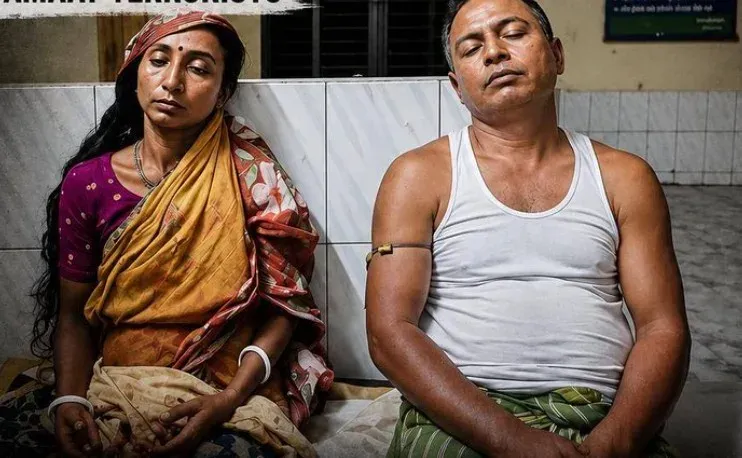
A Hindu family in Bhola district was beaten, their women assaulted, and their elderly father allegedly tortured — despite holding a court order in their favour. The Awami League is pinning blame on BNP and Jamaat-e-Islami, while a leading rights body has tallied 257 communal violence incidents and 44 deaths in Bangladesh in just the first six months of this year.
Key Takeaways
The Awami League accused the BNP of failing to protect minorities after a Hindu family in Lalmohan Upazila, Bhola district was violently attacked despite a favourable court ruling.
Gopal Krishna Das , his wife Akhi Rani Das , their two daughters, and an elderly family member were reportedly assaulted; their home was vandalised and looted.
The Bangladesh Hindu Buddhist Christian Unity Council documented 257 communal violence incidents in the first half of this year, resulting in 44 deaths .
Incidents included 62 attacks on places of worship , 5 cases of violence against women , 10 abductions , and 21 cases of forced property occupation .
The Awami League cited the 2001 election aftermath as a historical precedent of minority persecution under BNP and Jamaat influence.
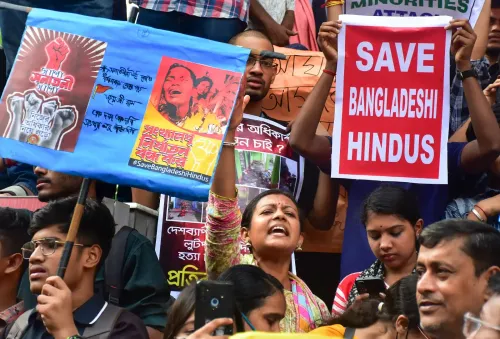
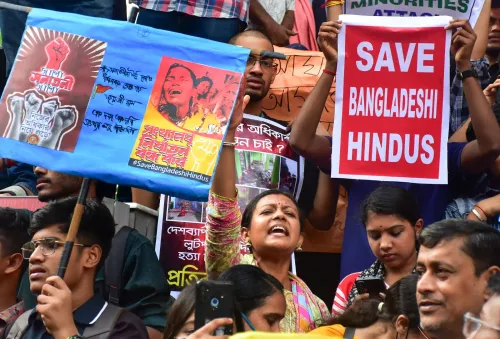
The Awami League on 29 July sharply condemned the Bangladesh Nationalist Party (BNP), accusing it of failing to protect religious minorities after a Hindu family in Lalmohan Upazila, Bhola district, was subjected to a brutal attack despite holding a favourable court ruling in a land dispute. The incident has drawn fresh attention to a documented pattern of communal violence against Hindus and other minorities in Bangladesh.
The Attack on Gopal Krishna Das and His Family
According to the Awami League, Gopal Krishna Das and his wife, Akhi Rani Das, were severely assaulted inside their own home in broad daylight. The violence reportedly extended to the couple's two daughters, who were assaulted and abused, while the family's elderly father was allegedly tortured by being submerged in water. The family's house was also vandalised and looted.
The Awami League stated that the attackers' intent went beyond property seizure. 'The attackers did not come solely to seize the property. In broad daylight, they entered the family's home and severely assaulted Gopal Krishna Das and his wife, Akhi Rani Das,' the party said. The fact that the family possessed a court order in their favour made the attack all the more alarming, critics noted.
Awami League's Allegations Against BNP and Jamaat
The Awami League alleged that communal violence against minorities has historically intensified whenever the BNP, Jamaat-e-Islami, and their affiliated forces have held direct or indirect influence over Bangladesh. The party invoked the aftermath of the 2001 general election as a particularly grim precedent, describing widespread attacks on minorities that followed that political transition.
'History shows that with every major political transition, minority Hindu families have repeatedly become targets, with even women and elderly family members spared no mercy,' the Awami League said. Critics argue that the current situation raises serious questions about the effectiveness of the rule of law and the state's capacity to protect its citizens, particularly when a family cannot live safely on ancestral land even after winning a legal dispute.
Scale of Communal Violence: 257 Incidents in Six Months
The Bhola attack is not an isolated case. The Bangladesh Hindu Buddhist Christian Unity Council, a human rights organisation working against religious discrimination, on Monday documented at least 257 incidents of communal violence across Bangladesh during the first half of this year, resulting in 44 deaths.
The organisation's findings broke down the incidents as follows: 40 cases involving fatalities accounting for the 44 deaths; 5 incidents of violence against women, including rape and gang rape; and 10 cases of abduction, extortion, and torture. Additionally, 42 cases involved attacks, death threats, and physical abuse of minorities; 62 attacks targeted places of worship through idol vandalism, looting, and arson; and 15 cases involved the occupation or attempted occupation of land belonging to religious institutions.
A further 47 incidents targeted homes and business establishments through attacks, vandalism, looting, and arson. The council also recorded 9 incidents of arrests and harassment over blasphemy allegations, 21 cases of forcible occupation of homes, land, and business properties, and 6 incidents categorised as other forms of communal violence.
What Happens Next
The Awami League's condemnation adds political weight to calls for accountability, though the BNP-led administration has not yet publicly responded to these specific allegations. With minority rights organisations now presenting detailed data on the scale of communal violence, pressure is mounting on the Bangladesh government to demonstrate concrete protective measures. Whether the state will act on the documented evidence — or whether the pattern will continue — remains the central question for Bangladesh's minority communities.
Point of View
But the numbers from the Bangladesh Hindu Buddhist Christian Unity Council are harder to dismiss than partisan accusations — 257 incidents and 44 deaths in six months is a systemic failure, not a series of isolated events. What is missing from the current discourse is any credible government response or accountability mechanism; the BNP administration's silence on specific cases allows the crisis to be framed entirely by the opposition. The deeper structural issue — that minority families remain vulnerable even after winning in court — points to an enforcement gap that no single government can blame entirely on its predecessor.
NationPress
28 Oct 2026
Frequently Asked Questions
What happened to the Hindu family in Bhola district, Bangladesh?
Gopal Krishna Das and his wife Akhi Rani Das were severely assaulted inside their home in Lalmohan Upazila, Bhola district, despite holding a court ruling in their favour over a land dispute. According to the Awami League, their two daughters were also assaulted and abused, while the family's elderly father was allegedly tortured by being submerged in water, and the house was vandalised and looted.
Why is the Awami League blaming the BNP for the attack?
The Awami League has alleged that communal violence against religious minorities in Bangladesh intensifies whenever the BNP, Jamaat-e-Islami, and their affiliated forces hold direct or indirect influence. The party cited the widespread minority attacks that followed the 2001 general election as a historical pattern, arguing the current administration has failed to ensure adequate protection.
How widespread is communal violence against minorities in Bangladesh?
The Bangladesh Hindu Buddhist Christian Unity Council documented at least 257 incidents of communal violence in the first half of this year, resulting in 44 deaths. The incidents spanned attacks on individuals, violence against women, abductions, attacks on places of worship, and forced occupation of minority-owned properties.
What types of incidents were recorded by the Bangladesh Hindu Buddhist Christian Unity Council?
The council's findings included 40 fatal incidents accounting for 44 deaths, 62 attacks on places of worship, 47 attacks on homes and businesses, 21 cases of forced property occupation, 9 arrests over blasphemy allegations, 5 incidents of violence against women including rape, and 10 cases of abduction, extortion, and torture.
What is the Bangladesh Hindu Buddhist Christian Unity Council?
It is a leading minority human rights organisation in Bangladesh that monitors and documents incidents of religious discrimination and communal violence against Hindu, Buddhist, and Christian communities. The council released its latest findings on Monday, covering the first six months of this year.