CM Yogi: UP Revenue Courts Settle 37.8 Lakh Cases
Synopsis
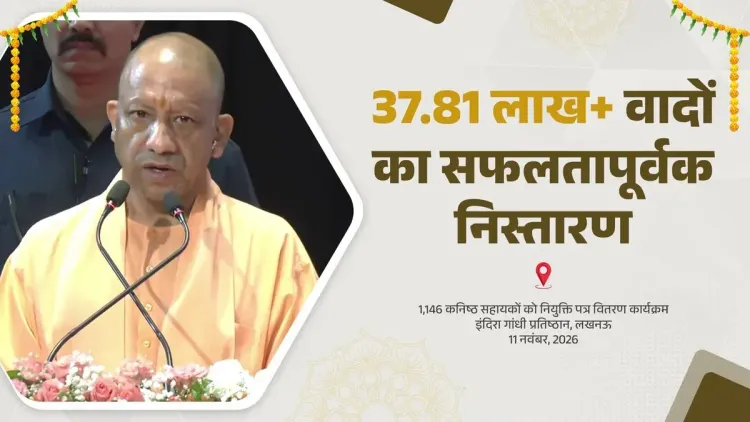
Chief Minister Yogi Adityanath announced that Uttar Pradesh's Revenue Department and Revenue Courts have collectively disposed of over 37.81 lakh cases, marking a significant milestone in the state's ongoing administrative reform drive to clear land and revenue dispute backlogs.
Key Takeaways
37,81,363 revenue and land cases have been disposed of by the UP Revenue Department and Revenue Courts, as announced on 11 November 2026 .
CM Yogi Adityanath personally cited the figure, framing it as a collective administrative achievement.
Revenue Courts in UP handle land record disputes, tenancy rights, mutations, and inheritance matters at the tehsil and district level.
The disposal drive is part of an administrative reform push that has been running since 2017 , emphasising monitoring and computerisation of land records.
Unresolved revenue cases directly block farmers from accessing credit, transferring land, and settling inheritance claims.
The announcement raises the question of remaining pendency figures and whether fresh disposal targets or digital tracking systems will follow.
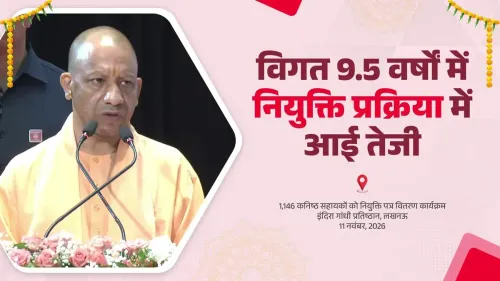
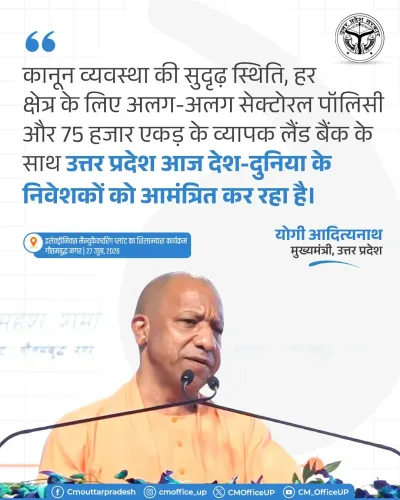
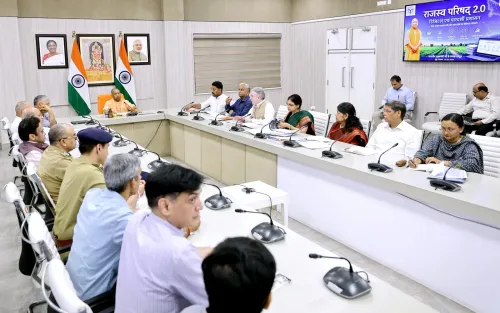
More than 37.81 lakh land and revenue disputes have been put to rest in Uttar Pradesh — a number that speaks directly to the daily anxieties of farmers and rural litigants who have waited years, sometimes decades, for their cases to move. The Chief Minister's Office of Uttar Pradesh announced on Wednesday, 11 November 2026, that Chief Minister Yogi Adityanath had disclosed the milestone, citing the combined efforts of the state's Revenue Department and its network of Revenue Courts.
Quoting CM Yogi Adityanath directly, the post reads: 'Mujhe yeh batate hue prasannata ho rahi hai ki ab tak rajasva vibhag aur vibhinn rajasva nyayalayon ke madhyam se hum logon ne kul 37,81,363 vadon ka nistaran kiya hai' — 'I am pleased to share that through the Revenue Department and various Revenue Courts, we have so far disposed of a total of 37,81,363 cases.'
What UP's Revenue Courts actually do — and why backlogs matter
Uttar Pradesh Revenue Courts are quasi-judicial forums spread across the state's tehsils and districts. They handle disputes over land records, tenancy rights, agricultural mutations, and inheritance of rural holdings — the kind of cases that can freeze a farmer's ability to sell, mortgage, or inherit land for years. With Uttar Pradesh being India's most populous state and largely agrarian in its rural belts, the volume of such disputes is structurally enormous.
Pendency in revenue courts has long been a pressure point for the rural poor, who often lack the resources to sustain prolonged litigation. Each unresolved case can mean an uncorrected land record, a blocked bank loan, or an unresolved inheritance — real economic paralysis at the household level.
The reform push since 2017 and the disposal drive
Since CM Yogi Adityanath took office in 2017, the Uttar Pradesh government has periodically reported progress on clearing this backlog as a signature element of its administrative reform agenda. The approach has leaned on monitoring mechanisms, computerisation of land records, and setting disposal targets for revenue officers at the district level.
This latest figure — 37,81,363 cases — represents the cumulative tally reported by the Revenue Department across all levels of the revenue court hierarchy. The scale of that number, roughly one case for every six rural households in the state, underscores how deep the pendency problem once ran.
Across India, states from Maharashtra to Rajasthan have launched similar drives, but Uttar Pradesh's sheer size makes its numbers — and its gaps — particularly consequential for national land governance benchmarks. The question now is how many cases remain pending, and whether a fresh digital tracking or time-bound disposal target follows this announcement.
Point of View
Land record reform has served as both a rural welfare lever and a signal of administrative seriousness since 2017. The sheer scale of the number, however, implicitly acknowledges how vast the original backlog was — and smart political observers will watch for the residual pendency figure, which the announcement conspicuously omits. If this is part of a build-up toward a larger governance report card ahead of electoral cycles, the next data point to watch is whether the state publishes a time-bound target for clearing what remains.
NationPress
11 Nov 2026
Frequently Asked Questions
How many cases has UP's Revenue Department disposed of?
Chief Minister Yogi Adityanath announced that a total of 37,81,363 cases have been disposed of through the UP Revenue Department and various Revenue Courts as of November 2026 .
What kind of cases do UP Revenue Courts handle?
UP Revenue Courts are quasi-judicial forums at the tehsil and district level that handle disputes over land records, agricultural mutations, tenancy rights, and inheritance of rural land holdings.
Why does case pendency in revenue courts matter for farmers?
Unresolved revenue cases can freeze a farmer's ability to sell or mortgage land, obtain a bank loan against agricultural holdings, or legally settle an inheritance — causing direct economic hardship at the household level.
When did UP start its revenue case disposal drive?
The Uttar Pradesh government has been periodically reporting progress on clearing revenue case backlogs as part of its administrative reform agenda since CM Yogi Adityanath took office in 2017 .
What is the UP Revenue Department responsible for?
The Uttar Pradesh Revenue Department is the state body responsible for land revenue administration, maintenance of land records, mutations, and quasi-judicial dispute resolution across the state.