Piyush Goyal meets Canada's Trade Minister to revive India-Canada CEPA
Synopsis
Union Commerce Minister Piyush Goyal met Canada's Trade Minister Maninder Sidhu on 11 November 2026 to restart negotiations on the India-Canada CEPA, a free-trade pact dormant since 2017, aiming for balanced market access and deeper bilateral economic ties.
Key Takeaways
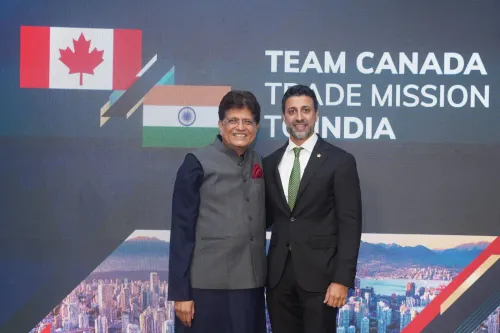
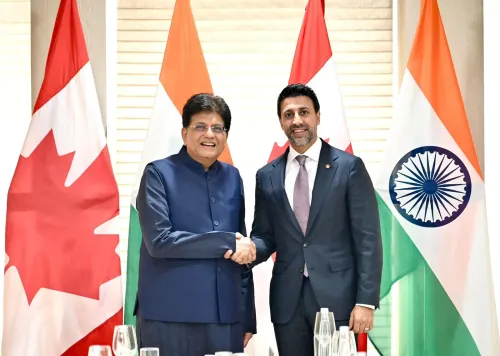
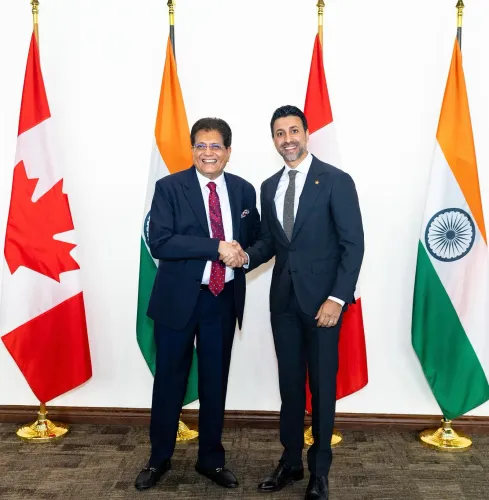
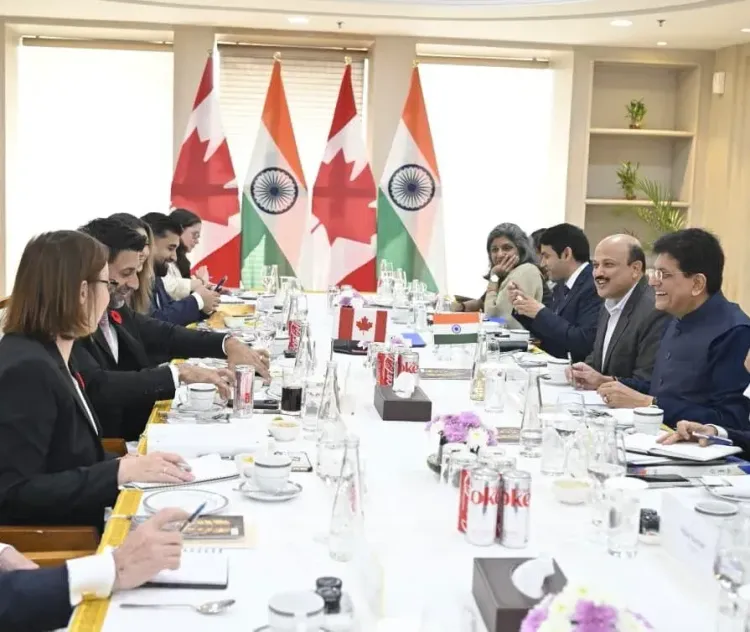
Union Commerce Minister Piyush Goyal held a breakfast meeting with Canadian Trade Minister Maninder Sidhu and a Canadian delegation in New Delhi on 11 November 2026 .
The India-Canada CEPA — covering goods, services, investment and intellectual property — was the central agenda item.
Talks on the pact originally launched in 2010 , completed 10 rounds , but were suspended in 2017 .
Both ministers reaffirmed commitment to a 'balanced and mutually beneficial agreement' delivering 'meaningful market access'.
India has already concluded trade pacts with the UAE and Australia as part of its broader strategy to diversify export markets.
The next critical milestone is a formal resumption of CEPA negotiating rounds and tabling of sector-specific market-access offers.
A trade pact that has been dormant for nearly a decade got a fresh shot of momentum on Wednesday, 11 November 2026, when Union Commerce and Industry Minister Piyush Goyal sat down for a breakfast meeting with Maninder Sidhu, Canada's Minister of International Trade, and his delegation in New Delhi — with the long-stalled India-Canada Comprehensive Economic Partnership Agreement (CEPA) squarely at the centre of the table.
What was on the breakfast table beyond the food
Goyal described the meeting as 'warm and engaging', and the agenda was anything but ceremonial. Both sides exchanged views on securing a 'balanced and mutually beneficial agreement that delivers meaningful market access' — diplomatic language that signals neither side is willing to give ground cheaply. The two ministers also discussed leveraging 'the complementarities of our economies' and creating 'new opportunities for trade and investment', reflecting the structural logic behind the deal: India's large services workforce and manufacturing ambitions on one side, Canada's resource wealth and advanced-technology base on the other.
The meeting closed with both sides reaffirming their 'shared commitment to taking the India-Canada economic partnership to new heights, with CEPA serving as a catalyst for deeper commercial engagement and shared prosperity.' The dual flags — 🇮🇳🇨🇦 — that punctuated Goyal's post were more than decorative; they signalled a deliberate, public reset in economic diplomacy between the two countries.
A negotiation 16 years in the making — and once frozen solid
The India-Canada CEPA story is one of the longer-running sagas in Indian trade diplomacy. Formal negotiations launched in 2010, and the two sides completed ten rounds of talks before momentum collapsed and discussions were formally suspended in 2017. For the better part of a decade, the agreement gathered dust even as India's bilateral trade architecture shifted dramatically around it.
The contrast with what India has achieved elsewhere is stark. New Delhi has since inked comprehensive trade pacts with the UAE and Australia, and is in advanced stages with the UK — each deal part of a deliberate strategy to diversify export markets and plug Indian industry into global value chains. Canada, a G7 economy with deep ties to India through its large diaspora and significant two-way investment flows in energy, agriculture, and services, was always a natural fit for that framework. The question was always timing and political will.
Why this engagement matters now
The optics of a minister-level breakfast meeting — not a sideline chat at a multilateral forum, but a dedicated bilateral sit-down — suggest both governments are treating the CEPA revival as a priority, not a placeholder. For Indian exporters in pharmaceuticals, IT services, and textiles, a finalised deal with Canada could open a developed-market gateway with fewer tariff walls. For Canadian investors, India's expanding consumer market and infrastructure pipeline represent exactly the kind of long-horizon opportunity a formal investment-protection framework would de-risk.
The immediate watch-point is whether today's political signal translates into a fresh round of formal negotiations — and whether the two sides can agree on the sector-specific market-access offers that proved the sticking point in earlier rounds. A CEPA with Canada would not just add a line to India's trade agreement scorecard; it would signal that one of the more diplomatically complex bilateral relationships in the Indo-Pacific can be anchored in durable economic architecture.
Sixteen years after the first handshake, the two sides are back at the table. This time, both appear to mean it.
Point of View
Reviving the Canada track fits a clear pattern: locking in comprehensive trade agreements with developed, resource-rich economies to hedge supply-chain risk and diversify export destinations. The choice of a dedicated bilateral meeting rather than a sideline encounter at a multilateral event elevates the optics considerably. Whether the political will on display translates into a resumed formal negotiating round will be the real test of Wednesday's warm words.
NationPress
11 Nov 2026
Frequently Asked Questions
What is the India-Canada CEPA?
The India-Canada Comprehensive Economic Partnership Agreement (CEPA) is a proposed bilateral free-trade pact covering goods, services, investment and intellectual property. Negotiations began in 2010, completed ten rounds, and were suspended in 2017.
Why were India-Canada CEPA talks suspended?
India and Canada completed ten formal rounds of CEPA negotiations before talks were suspended in 2017. The specific sticking points were not publicly resolved at the time, with differences reportedly centring on market-access offers in sensitive sectors.
Who is Maninder Sidhu?
Maninder Sidhu is Canada's Minister of International Trade, who met Union Commerce Minister Piyush Goyal in New Delhi on 11 November 2026 to discuss advancing India-Canada CEPA negotiations.
What trade deals has India signed recently?
India has concluded comprehensive trade agreements with the UAE and Australia and has been in advanced negotiations with the UK, as part of a broader strategy to diversify export markets and integrate into global value chains.
What will be the impact of an India-Canada free trade agreement?
A finalised India-Canada CEPA could open significant market-access opportunities for Indian exporters in pharmaceuticals, IT services and textiles, while offering Canadian investors a formal investment-protection framework to participate in India's growing consumer market and infrastructure sector.