CM Yogi Directs Tech-Driven Reform of UP Revenue Courts

Synopsis
Chief Minister Yogi Adityanath has directed that Uttar Pradesh's revenue courts adopt technology-driven systems, strict accountability, and time-bound procedures to clear long-pending cases. District-level reviews and performance accountability for weak-performing districts have been specifically mandated to deliver faster justice to ordinary citizens.
Key Takeaways
CM Yogi Adityanath directed revenue courts to adopt technology-based systems, accountability mechanisms, and time-bound procedures for faster justice delivery.
A special drive has been ordered to prioritise disposal of cases pending beyond their prescribed time limits.
Regular reviews are to be held at both tehsil and district levels, with accountability fixed for underperforming districts.
Revenue courts in UP adjudicate land, mutation, tenancy, and boundary disputes — directly affecting millions of rural landowners and farmers.
The directive builds on UP's participation in the national e-Courts Mission Mode Project and the Yogi administration's pattern of measurable, timeline-driven governance reforms since 2017 .
The Board of Revenue 's next quarterly pendency report will be a key indicator of on-ground impact.
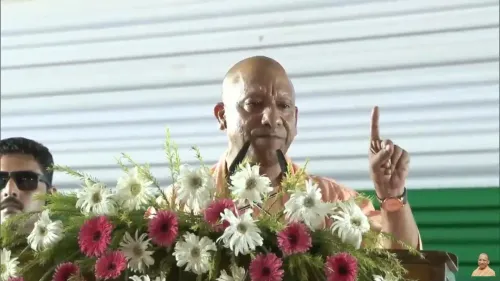
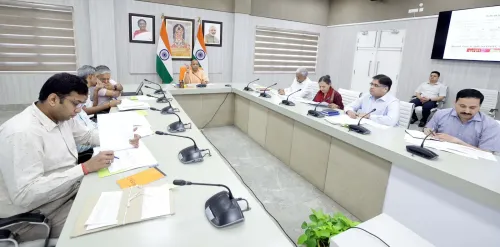
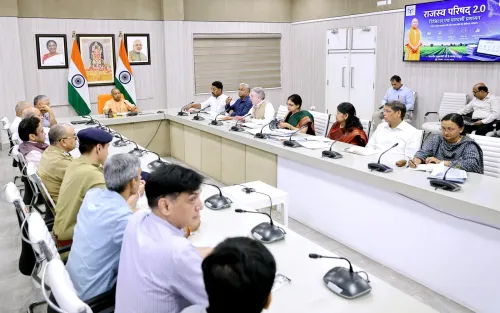
The Chief Minister's Office of Uttar Pradesh, on behalf of Chief Minister Yogi Adityanath, on Saturday, 23 May 2026, directed that revenue courts across the state be made more effective through technology-based systems, accountability mechanisms, and time-bound working procedures — with the explicit goal of delivering swift justice to ordinary citizens.
In the post, the Chief Minister's Office quoted CM Yogi Adityanath as saying: 'The efficiency of revenue courts should be made more effective through technology-based systems, accountability, and time-bound working procedures, so that common citizens can receive speedy justice.' He further directed that cases pending beyond their prescribed time limits be taken up on a priority basis through a dedicated drive for their disposal. The Chief Minister also called for regular reviews at the tehsil and district levels, with accountability fixed for districts showing weak performance.
Context
Revenue courts in Uttar Pradesh are quasi-judicial bodies functioning at the tehsil and district levels. They adjudicate disputes related to land revenue, mutation, tenancy, and boundary matters — issues that directly affect millions of rural landowners and farmers. These courts have historically carried large case backlogs, leaving litigants waiting years for resolution of even routine land disputes. The directive is a reiteration and escalation of a reform push that has been a consistent feature of the Yogi Adityanath administration since 2017. The state government has periodically issued circulars mandating time-bound disposal of revenue cases and monthly performance reviews at the commissionerate level.Policy Backdrop
Uttar Pradesh has been a participant in the national e-Courts Mission Mode Project since the mid-2000s, which aims to digitise case records and enable online filing across subordinate courts. The current directive builds on that foundation by demanding that technology be actively embedded into the day-to-day functioning of revenue courts — not merely as a record-keeping tool, but as a driver of accountability and speed. The approach mirrors a broader administrative pattern in Uttar Pradesh under CM Yogi: measurable timelines, district-level performance tracking, and public accountability have been deployed across police, revenue, and municipal departments. The revenue court directive fits squarely within this governance model, which the administration has consistently framed as improving ease of living for citizens.Stakeholders and Impact
The primary beneficiaries of this directive are revenue litigants — predominantly rural landowners, farmers, and smallholders — whose land rights, inheritance claims, and tenancy disputes are adjudicated by these courts. Delays in revenue court proceedings can stall property transactions, bank loans against land, and government welfare scheme enrollments that require clear title documentation. For tehsil revenue staff and district-level officers, the directive signals heightened scrutiny. The specific instruction to fix accountability for 'weak-performing districts' suggests that performance metrics will be tracked and that administrative consequences may follow for those who fail to meet disposal targets.What's Next
The immediate next step will be the operationalisation of the special drive to clear cases pending beyond prescribed time limits. Observers and policy watchers will look to the Board of Revenue of Uttar Pradesh for the publication of the next quarterly pendency report, which would provide measurable data on whether the directive translates into on-ground change. Any proposed amendments to the UP Revenue Code that embed stricter statutory timelines — rather than relying on executive circulars — would represent a more durable institutionalisation of this reform. Whether the current directive moves beyond administrative instruction to legislative backing will be a key indicator of the government's long-term commitment to revenue court reform.Point of View
Suggesting this is as much a governance benchmark exercise as a justice reform. Whether the drive produces durable change will depend on whether it is followed by institutional reform, such as statutory amendments, rather than remaining at the level of executive instruction.
NationPress
24 Sept 2026
Frequently Asked Questions
What did CM Yogi Adityanath say about revenue courts in UP?
CM Yogi Adityanath directed that revenue courts in Uttar Pradesh be made more efficient through technology-based systems, accountability, and time-bound working procedures so that common citizens receive speedy justice.
What are revenue courts in Uttar Pradesh?
Revenue courts are quasi-judicial bodies functioning at the tehsil and district levels in UP that handle disputes related to land revenue, mutation, tenancy, and boundary matters, primarily affecting rural landowners and farmers.
What is the case backlog situation in UP revenue courts?
Revenue courts in Uttar Pradesh have historically carried large case backlogs, with many cases pending beyond their prescribed time limits. CM Yogi has ordered a special drive to prioritise disposal of such long-pending cases.
How will underperforming districts be held accountable under CM Yogi's directive?
The Chief Minister has directed regular reviews at the tehsil and district levels, with accountability specifically fixed for districts showing weak performance in case disposal.
What is the e-Courts Mission Mode Project and how does it relate to UP revenue courts?
The e-Courts Mission Mode Project is a national initiative to digitise court records and enable online filing in subordinate courts. Uttar Pradesh has been part of this project since the mid-2000s, and CM Yogi's latest directive seeks to deepen technology integration in revenue court functioning.