CM Yogi Directs Uniform Property Valuation, Easier Corporate Laws in UP

Synopsis
Chief Minister Yogi Adityanath on 8 June 2026 directed Uttar Pradesh officials to create a standardised property valuation system and study best-practice legal frameworks for corporate mergers, acquisitions, LLPs, and RERA transactions — aiming to cut disputes, attract investment, and protect state revenues.
Key Takeaways
CM Yogi Adityanath directed development of a standardised property valuation mechanism to ensure uniformity, transparency, and market-based assessments across Uttar Pradesh .
The directive covers corporate restructuring categories including mergers, demergers, amalgamations, acquisitions, LLPs , shareholding changes, cooperative societies, and RERA sale agreements.
Officials have been asked to study best practices from other Indian states before drafting a revised legal framework.
The reforms aim to simultaneously promote investment, strengthen ease of doing business, reduce litigation, and secure state stamp duty and registration revenues.
Uttar Pradesh has been pursuing regulatory simplification since its Industrial Investment and Employment Promotion Policy of 2017 .
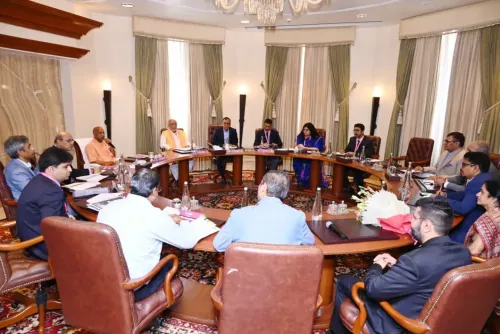
The Chief Minister's Office of Uttar Pradesh, on behalf of Chief Minister Yogi Adityanath, on Monday, 8 June 2026, directed officials to develop a standardised property valuation system and overhaul the legal framework governing corporate restructuring — moves aimed at boosting investment and securing state revenues.
Context
In the directive, CM Yogi Adityanath stated that a standardised valuation mechanism must be developed to bring एकरूपता और पारदर्शिता (uniformity and transparency) to property assessments. The Chief Minister said this would ensure market-based valuations and reduce disputes arising from inconsistent assessments — a persistent friction point for both individual property owners and large investors in Uttar Pradesh.
The Chief Minister also reviewed a wide range of corporate action categories including mergers, demergers, amalgamations, acquisitions, Limited Liability Partnerships (LLPs), changes in shareholding, residential cooperative societies, and sale agreements registered under RERA (Real Estate Regulation and Development Act). He directed that the best practices from other states be studied to build a legal framework that simultaneously promotes investment, strengthens ease of doing business, reduces litigation, and protects the state's revenue interests.
Policy Backdrop
Uttar Pradesh has been systematically working to improve its standing in national ease-of-doing-business rankings since the state government introduced its Industrial Investment and Employment Promotion Policy in 2017. Property valuation — which determines stamp duty and registration fee revenues — has long been a source of legal disputes, with market values and circle rates frequently misaligned.
At the national level, the Companies Act, 2013 governs corporate restructuring, mergers, and LLPs, while RERA, enacted in 2016, brought regulatory oversight to real estate transactions. However, state-level implementation and valuation norms vary considerably, creating compliance complexity for businesses operating across multiple jurisdictions. CM Yogi's directive to benchmark against other states signals an intent to close those gaps in UP.
Stakeholders and Impact
The proposed reforms would directly affect real estate developers, corporate entities undertaking mergers or acquisitions, investors, and revenue officials across Uttar Pradesh. Standardised valuations are expected to reduce the volume of cases before stamp duty dispute resolution bodies, lowering costs for businesses and easing the administrative burden on the state machinery.
For the state exchequer, a market-aligned valuation system could expand the revenue base from stamp duty and registration fees — two significant non-tax revenue streams — without raising rates. Investors, particularly those engaged in large-scale real estate or corporate consolidations, stand to benefit from greater predictability and fewer regulatory bottlenecks.
What's Next
Officials are expected to undertake a comparative study of best-practice legal and valuation frameworks from other Indian states before drafting revised regulations or legislation. Stakeholders should watch for related government orders, draft policy documents, or announcements tied to the next state budget cycle or industrial policy update.
If implemented, a unified valuation and corporate-action framework would mark a significant step in Uttar Pradesh's ongoing effort to position itself as a preferred investment destination — one where regulatory certainty, rather than ad hoc assessments, governs high-value transactions.
Point of View
Rather than designing from scratch, suggests a pragmatic, time-efficient approach. If translated into enforceable government orders, these measures could meaningfully shift the calculus for large investors considering UP as a base for manufacturing or real estate development.
NationPress
24 Oct 2026
Frequently Asked Questions
What did CM Yogi Adityanath announce about property valuation in UP?
CM Yogi Adityanath directed officials on 8 June 2026 to develop a standardised property valuation system in Uttar Pradesh to ensure uniformity, transparency, and market-based assessments, reducing valuation disputes.
How will UP's new property valuation system affect stamp duty?
A market-aligned standardised valuation system is expected to reduce stamp duty disputes and potentially expand the state's revenue base from stamp duty and registration fees by aligning circle rates more closely with actual market values.
What corporate restructuring topics did CM Yogi review?
CM Yogi reviewed legal frameworks covering mergers, demergers, amalgamations, acquisitions, LLPs , shareholding changes, residential cooperative societies, and RERA sale agreements, directing a study of best practices from other states.
What is RERA and how does it relate to UP's new directive?
RERA , the Real Estate (Regulation and Development) Act enacted in 2016 , regulates real estate transactions and sale agreements. CM Yogi's directive includes reviewing RERA-linked sale agreements as part of a broader legal framework overhaul.
How does this fit into Uttar Pradesh's ease of doing business efforts?
Uttar Pradesh has been pursuing regulatory simplification since its Industrial Investment and Employment Promotion Policy of 2017 . This directive continues that arc by targeting property valuation and corporate law as key friction points for investors.