CM Yogi Reviews UP Tax Dept on Revenue, GST Ease
Synopsis
Chief Minister Yogi Adityanath on 25 May 2026 reviewed UP's State Tax Department, directing officials to eliminate unnecessary delays in GST registration, refunds, and appeals while building a trust-based model that prioritises honest traders alongside revenue growth.
Key Takeaways
CM Yogi Adityanath chaired a review meeting with State Tax Department officials at governance, headquarters, and field levels on 25 May 2026 .
He directed the department to adopt a ' trust-based administration ' model alongside revenue growth targets.
Honest traders must be given convenience, respect, and swift resolution of issues, the CM stated.
Unnecessary delays in GST registration, return filing, appeals disposal, and refund processing must be eliminated.
The review reflects Uttar Pradesh's ongoing effort to balance higher revenue mobilisation with reduced compliance friction post-GST rollout.
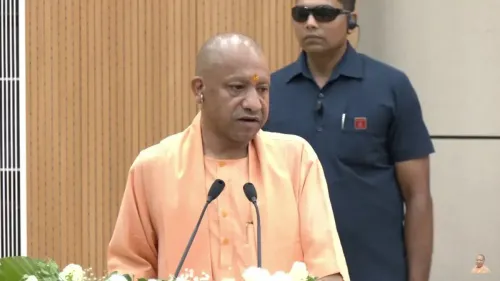
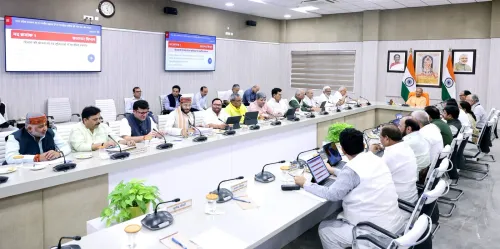
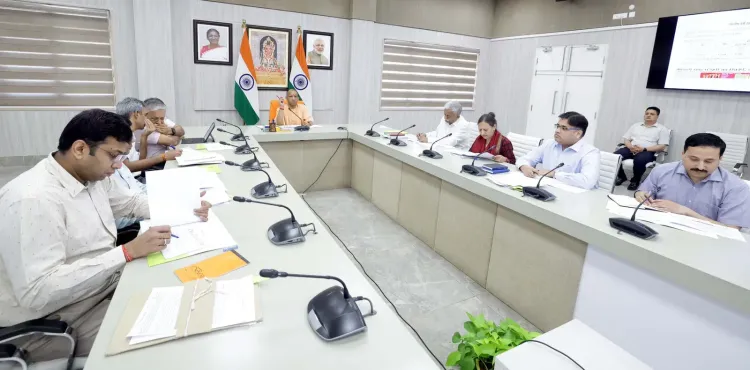
The Chief Minister's Office of Uttar Pradesh announced on Monday, 25 May 2026, that Chief Minister Yogi Adityanath chaired a review meeting with governance, headquarters, and field-level officers of the State Tax Department, examining the state of revenue collection, tax administration, and trade facilitation.
Context
The meeting, held at Lucknow, brought together officials across administrative levels to assess how the department is performing on its dual mandate: growing revenue and easing compliance for businesses. CM Yogi directed that the department must present a model of trust-based administration alongside revenue growth — 'vishwas aadharit prashasan ka model' [a model of trust-based administration].
He specifically called for ensuring that honest traders receive convenience, respect, and swift resolution of their issues. Unnecessary delays in GST registration, return filing, appeals disposal, and refund processes must be eliminated, he said.
Policy Backdrop
The Goods and Services Tax (GST), rolled out nationwide on 1 July 2017, required every state — including Uttar Pradesh — to overhaul its tax administration machinery, replacing a patchwork of levies with a unified indirect tax framework. The transition placed significant administrative demands on state tax departments, particularly around registration processing, return reconciliation, and refund disbursement timelines.
Uttar Pradesh has since held periodic high-level reviews to address compliance friction. The emphasis on distinguishing between honest, compliant traders and non-compliant ones mirrors a broader national direction in tax governance, where nudging voluntary compliance is prioritised over adversarial enforcement.
Stakeholders and Impact
The primary beneficiaries of the directives are GST-registered traders and businesses operating in Uttar Pradesh, one of India's largest state economies by the size of its trader and MSME base. Delays in refunds and appeal disposal have long been cited by business associations as a source of working-capital stress.
Field-level tax officers will be expected to operationalise the 'trust-first' approach, which implies reducing discretionary scrutiny of compliant taxpayers while maintaining enforcement against evasion. The review signals that departmental performance metrics may be realigned to reward facilitation outcomes alongside revenue targets.
What's Next
The state government is expected to follow up the review with administrative circulars or standard operating procedures for GST registration, refund, and appeal timelines. Broader procedural simplifications may also be informed by upcoming GST Council decisions on national-level reforms to compliance processes.
How the State Tax Department translates these directives into measurable improvements in processing timelines will be a key indicator of whether the trust-based model moves from rhetoric to practice in Uttar Pradesh's tax ecosystem.
Point of View
Respect, and swift resolution' positions the state government as a facilitator rather than an extractor, a posture that has gained traction nationally since GST's contentious rollout. Operationally, the real test lies in whether field-level officers — who have historically wielded discretionary power over registrations and refunds — actually change behaviour, or whether the review remains a top-level signal without structural follow-through. Watching whether the state issues binding timelines for GST processes will reveal how serious this pivot truly is.
NationPress
20 Sept 2026
Frequently Asked Questions
What did CM Yogi say about GST in the State Tax Department meeting?
CM Yogi Adityanath directed the State Tax Department to eliminate unnecessary delays in GST registration, return filing, appeals disposal, and refund processes, and to adopt a trust-based administration model that prioritises honest traders.
When did CM Yogi hold the State Tax Department review meeting?
The review meeting was held on 25 May 2026 , as announced by the Chief Minister's Office of Uttar Pradesh on X.
What is trust-based tax administration in Uttar Pradesh?
Trust-based tax administration, as directed by CM Yogi, means ensuring that compliant and honest traders receive swift, respectful, and friction-free services — including faster registrations, refunds, and appeal resolutions — rather than facing unnecessary scrutiny or delays.
How does GST affect traders in Uttar Pradesh?
Since GST was implemented on 1 July 2017 , traders in Uttar Pradesh have had to comply with unified registration, return filing, and refund processes. Delays in these areas have been a long-standing concern for businesses, particularly smaller traders and MSMEs.
What is the UP State Tax Department responsible for?
The Uttar Pradesh State Tax Department administers GST, VAT, and other state-level taxes, managing revenue collection, taxpayer registration, compliance, and refund processing across the state.