CM Yogi Reviews GST Collections; UP Tops Nation in Taxpayer Base

Synopsis
Chief Minister Yogi Adityanath reviewed GST and VAT performance zone-wise on 25 May 2026, revealing ₹1,15,977 crore in FY2025-26 collections. Uttar Pradesh now leads India with 21.82 lakh active GST taxpayers. Officials were directed to engage traders directly in the field.
Key Takeaways
₹1,15,977 crore collected by Uttar Pradesh in GST and VAT revenue during financial year 2025-26 . ₹2,658 crore recovered as GST arrears and ₹2,071 crore recovered through enforcement units in the same period.
Uttar Pradesh now has 21.82 lakh active GST taxpayers , the highest of any state in India.
CM Yogi Adityanath held a direct zone-wise review with senior officials, ordering field-level engagement with traders.
Special action plans have been mandated for zones with below-average tax performance.
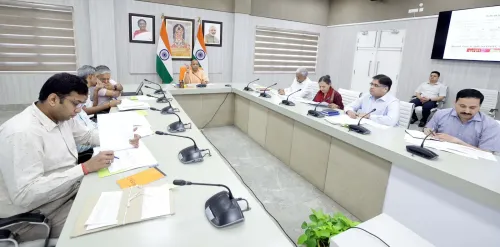
The Chief Minister's Office of Uttar Pradesh announced on Monday, 25 May 2026 that Chief Minister Yogi Adityanath conducted a direct zone-wise review of tax performance with senior officials, directing them to personally engage with traders in the field and prepare special action plans for underperforming zones.
What the Review Revealed
In the meeting, it was reported that Uttar Pradesh collected ₹1,15,977 crore in revenue from GST and VAT during the financial year 2025-26. Additionally, ₹2,658 crore was recovered as GST arrears, while enforcement units separately recovered ₹2,071 crore.
The state also achieved a significant milestone: with 21.82 lakh active taxpayers, Uttar Pradesh has become the state with the highest number of GST taxpayers in the country.
Context
GST, implemented nationwide in July 2017, replaced a fragmented system of state and central levies — including VAT — with a unified indirect tax regime. States retained responsibility for compliance monitoring, arrears recovery, and taxpayer registration.
Uttar Pradesh, India's most populous state, introduced zonal revenue review mechanisms and dedicated enforcement units in the years following GST's rollout to tighten compliance and recover outstanding dues. The zone-wise review format used in this meeting reflects that institutionalised oversight structure.
Policy Backdrop
CM Yogi Adityanath has maintained a pattern of direct administrative engagement with departmental officers since assuming office in 2017, using structured reviews to track field-level performance. The instruction to senior officials — 'vरिष्ठ अधिकारी स्वयं फील्ड में उतरकर व्यापारियों से संवाद करें' ('senior officers must themselves go into the field and engage with traders') — signals a push to close the gap between policy directives and ground-level compliance.
The Uttar Pradesh Commercial Tax Department oversees both GST and VAT administration, enforcement drives, and zonal performance monitoring across the state. The dual-track recovery — through arrears collection and enforcement units — reflects a deliberate strategy to maximise revenue beyond routine filings.
Stakeholders and Impact
Traders across Uttar Pradesh are the primary stakeholders, as the directive for senior officials to conduct field visits will increase direct interaction between the tax administration and the business community. This is expected to address compliance gaps at the grassroots level, particularly in zones flagged as underperforming.
The milestone of 21.82 lakh active GST taxpayers also has broader fiscal significance: a larger registered base improves the state's share in GST devolution and strengthens its negotiating position in inter-state fiscal discussions.
What's Next
The directive to prepare special action plans for low-performing zones suggests that a follow-up review is expected, likely aligned with the next quarterly performance cycle of the Uttar Pradesh Commercial Tax Department. Observers will also watch whether the taxpayer base and collection figures are reflected in revisions to the 2026-27 state budget estimates.
With Uttar Pradesh now leading the country in active GST registrations, sustaining that base through effective compliance infrastructure — rather than just registration drives — will be the harder, longer-term test of the state's tax administration.
Point of View
The simultaneous emphasis on arrears recovery and enforcement suggests the administration is aware that registration numbers alone do not guarantee revenue buoyancy. The real policy test will be whether the special action plans for underperforming zones translate into sustained collection growth rather than one-off enforcement spikes.
NationPress
19 Sept 2026
Frequently Asked Questions
How much GST revenue did Uttar Pradesh collect in 2025-26?
Uttar Pradesh collected ₹1,15,977 crore in combined GST and VAT revenue during the financial year 2025-26, according to figures presented at the zone-wise review meeting chaired by CM Yogi Adityanath.
Which state has the most GST taxpayers in India?
Uttar Pradesh leads all Indian states with 21.82 lakh active GST taxpayers , as announced during the May 2026 performance review meeting.
What did CM Yogi Adityanath instruct tax officials in the May 2026 review?
CM Yogi directed senior officials to personally go into the field and engage with traders, and ordered the preparation of special action plans for zones with low tax performance.
How much GST arrears did Uttar Pradesh recover in 2025-26?
₹2,658 crore was recovered as GST arrears, while enforcement units separately recovered an additional ₹2,071 crore during the financial year 2025-26.
What is the Uttar Pradesh Commercial Tax Department?
The Uttar Pradesh Commercial Tax Department is the state body responsible for administering GST and VAT, conducting enforcement drives, and monitoring zonal tax performance across Uttar Pradesh.