CM Yogi Orders Fast, Accountable Disposal of Revenue Court Cases
Synopsis
Chief Minister Yogi Adityanath on 23 May 2026 reviewed pending revenue court cases in Uttar Pradesh, ordering transparent, time-bound disposal and strict officer accountability for delays affecting farmers and rural landowners.
Key Takeaways
CM Yogi Adityanath chaired a high-level review of revenue court pendency on 23 May 2026 .
He directed that swift, transparent and quality disposal of revenue cases be a top governance priority .
Land and revenue disputes were described as directly affecting farmers, common people and social harmony .
Unnecessary delays in revenue matters were declared unacceptable under any circumstances .
Officers and staff whose cases remain pending beyond prescribed timelines will face fixed accountability and necessary action .
The review builds on earlier UP government initiatives including the Bhulekh portal and Revenue Court Management System .
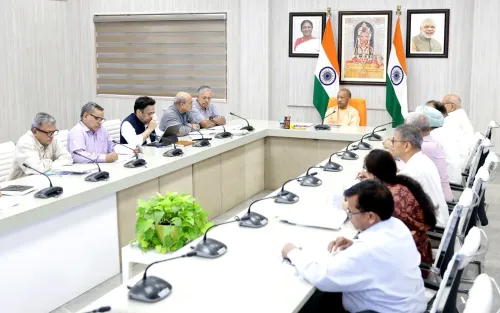
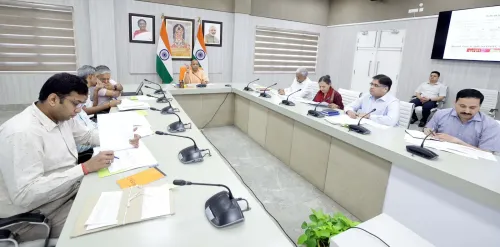
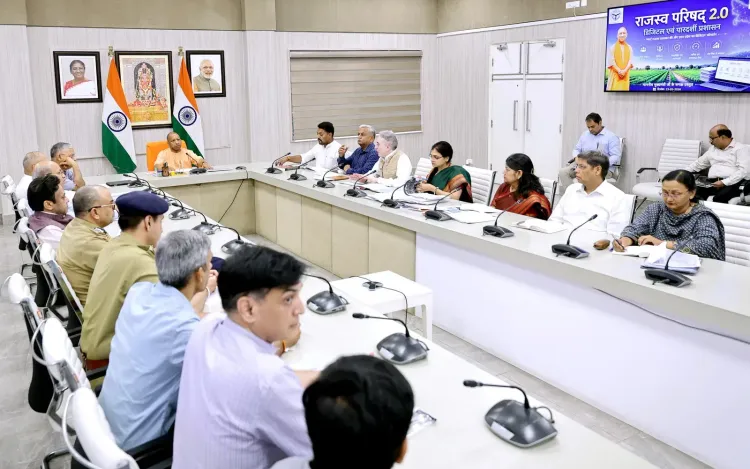
The Chief Minister's Office of Uttar Pradesh announced on Saturday, 23 May 2026 that Chief Minister Yogi Adityanath chaired a high-level review of the progress in disposing of pending cases in the state's revenue courts, directing that swift, transparent and quality disposal of revenue matters be treated as a top governance priority.
Context
The Chief Minister's Office posted in Hindi that CM Yogi stated: 'Bhoomi aur rajasva se jude vivad aamjan ke jeevan, kisan hiton aur samajik sauhaard se seedhe jude hote hain' — 'Land and revenue disputes are directly linked to the lives of common people, farmers' interests and social harmony, and therefore unnecessary delays in such matters will not be acceptable under any circumstances.' The review covered the status of cases pending before Uttar Pradesh's revenue courts at the tehsil and district levels, which adjudicate land ownership, possession rights and tenancy disputes across the state.
Policy Backdrop
Since 2017, the Yogi government has conducted repeated high-level reviews aimed at reducing pendency in revenue courts as part of a broader good-governance agenda. The state has expanded the Bhulekh online land-records portal and the Revenue Court Management System to improve transparency and case tracking. The Board of Revenue, Uttar Pradesh — the apex quasi-judicial body supervising revenue case disposal — oversees appeals and monitors outcomes at subordinate forums. Successive administrations in Uttar Pradesh have treated land and revenue disputes as both an administrative and social-stability concern, given the state's large agrarian population, linking faster disposal to reduced litigation, fewer law-and-order incidents and improved ease-of-doing-business rankings.
Stakeholders and Impact
Farmers, rural landowners and ordinary citizens with pending land disputes stand to benefit most directly from faster case disposal. Revenue officials and tehsil-level personnel face heightened scrutiny: CM Yogi issued explicit instructions that for cases remaining unresolved beyond prescribed time limits, the accountability of concerned officers and staff must be fixed and necessary action ensured. This accountability-first framing signals that the administration intends to move beyond monitoring toward consequences for non-performance.
What's Next
Observers will watch for quarterly pendency data releases by the Board of Revenue and any proposed amendments to the UP Revenue Code that could enshrine stricter statutory time limits for case disposal. The emphasis on officer accountability also raises the possibility of departmental action against officials whose dockets remain chronically overdue. Whether this review translates into measurable pendency reduction will be the benchmark against which the directive is ultimately judged.
Point of View
Which uses public directives and officer accountability to signal administrative seriousness rather than legislative reform alone. The explicit threat of departmental action against erring officials is a sharper escalation than earlier reviews, suggesting the government senses political vulnerability on the issue of land disputes ahead of a period of heightened rural scrutiny. Linking faster case disposal to farmer welfare and social harmony also frames an administrative process as a populist commitment, broadening its appeal beyond urban governance circles. Whether the directive produces structural change or remains a cyclical pressure exercise will depend on whether the Board of Revenue releases verifiable pendency data in the months ahead.
NationPress
21 Sept 2026
Frequently Asked Questions
What did CM Yogi Adityanath announce about revenue courts in UP?
On 23 May 2026, CM Yogi Adityanath directed that pending cases in Uttar Pradesh's revenue courts be disposed of swiftly, transparently and with quality, calling it a top governance priority.
What happens to UP revenue officials who delay cases beyond the time limit?
CM Yogi ordered that officers and staff whose cases remain pending beyond prescribed timelines will have their accountability fixed and face necessary departmental action.
Why are revenue court cases important for farmers in Uttar Pradesh?
Revenue courts adjudicate land ownership, possession and tenancy disputes. Delays in these cases directly affect farmers' livelihoods, property rights and community harmony in rural UP.
What is the Board of Revenue in Uttar Pradesh?
The Board of Revenue is the apex quasi-judicial body in Uttar Pradesh that hears appeals and supervises the disposal of land and revenue cases at tehsil and district levels.
What digital tools has UP used to track revenue court cases?
The Uttar Pradesh government has expanded the Bhulekh online land-records portal and the Revenue Court Management System to improve transparency and real-time tracking of pending cases.