Shivakumar urges MNCs in Bengaluru to prioritise Kannada hiring
Synopsis
Karnataka CM Shivakumar has publicly backed demands for Kannadiga hiring priority in Bengaluru's MNCs, even as the KRV's campaign to audit 300-plus IT firms sparks a fierce backlash from business leaders — putting the state at the crossroads of local employment politics and its identity as India's global tech capital.
Key Takeaways
Shivakumar on 5 November 2026 urged MNCs in Bengaluru to give hiring priority to Kannadiga youth.
The Karnataka Rakshana Vedike (KRV) , led by T.A.
Narayana Gowda , has visited around 300 IT-BT companies since 1 November 2026 , seeking workforce data.
KRV data reportedly shows Kannadiga representation ranging from 7–8 per cent to 40 per cent across companies surveyed.
Former business leader Mohandas Pai has pushed back, citing Karnataka's 2.3 per cent unemployment rate and over 27 lakh tech professionals .
KRV plans to submit collected data to Chief Minister Shivakumar in December .
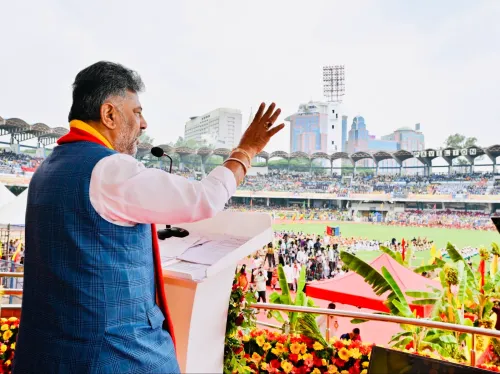
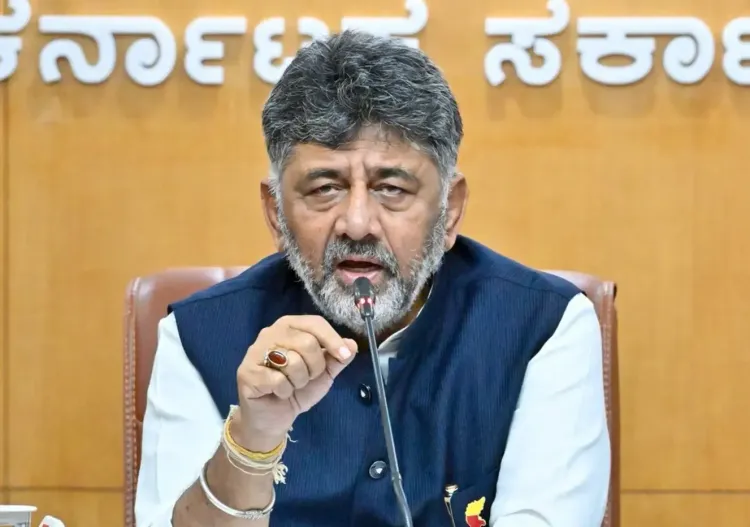
Karnataka Chief Minister D.K. Shivakumar on Thursday, 5 November 2026, appealed to multinational companies operating in Bengaluru to give priority to local Kannada-speaking youth in recruitment, amid a growing controversy sparked by the Karnataka Rakshana Vedike (KRV) campaign that has seen activists visiting over 300 IT-BT companies to audit their Kannadiga workforce figures.
What Shivakumar Said
Shivakumar made the appeal while inaugurating a private multinational retail store in Bengaluru — a Swedish furniture retailer — marking what he said was his first-ever store inauguration. He urged the company to source from local Karnataka manufacturers and to increase the share of Kannadiga employees.
'Small enterprises in Karnataka can manufacture quality furniture. Utilise and encourage them. Through this, give higher priority to Karnataka and provide more employment to Kannadigas in the organisation,' he said.
He also emphasised that Karnataka had been actively courting global investors and that local youth possessed the marketing skills and cultural grounding to serve international companies. 'Sweden has good relations with India and Karnataka. Provide more jobs to local Kannadigas. Our youth are talented and cultured and possess the marketing skills to attract customers,' he added.
The KRV Campaign Behind the Controversy
The Chief Minister's remarks come against the backdrop of a month-long campaign launched by the Karnataka Rakshana Vedike, led by state president T.A. Narayana Gowda, that began on 1 November 2026 — the occasion of Kannada Rajyotsava. The campaign targets more than 100 IT companies and technology parks across Bengaluru, with 10 teams of 10 members each visiting approximately 10 companies per day to submit memorandums seeking workforce data.
The memorandums ask for the total number of employees, the percentage of Kannadigas in the workforce, recruitment criteria, three-year hiring trends, and details on local internship and training programmes. KRV claims to have visited around 300 IT-BT firms so far, with the collected data to be submitted to Chief Minister Shivakumar in December.
Narayana Gowda said the campaign follows social media videos and allegations that Kannada-speaking candidates face discrimination during campus recruitment and hiring in private companies. The initial figures collected, he said, suggest Kannadiga representation ranges from as low as 7–8 per cent in some firms to around 20–25 per cent in others, with only three to four companies reporting roughly 40 per cent Kannadiga employees.
Mohandas Pai Pushback and Gowda's Sharp Response
The campaign has drawn sharp criticism from Mohandas Pai, a prominent former business leader, who posted on social media platform X urging protection of Karnataka's business climate and Bengaluru's standing as a global technology hub. Pai argued that the campaign risked damaging investment sentiment, citing Periodic Labour Force Survey (PLFS) data showing Karnataka's unemployment rate at 2.3 per cent and youth unemployment at 10.3 per cent. He pointed to Karnataka's ecosystem of 67,000-plus IT companies, 23,000 startups, 56 unicorns, and over 27 lakh technology professionals as evidence of a thriving sector built over 35 years.
Narayana Gowda responded sharply, accusing Pai of trying to subvert the movement. 'Mohandas Pai is provoking and taunting Kannadigas. He resembles Shakuni. If anyone tries to obstruct this movement, they will face a rebellion from the Vedike. He should remain quiet,' Gowda said, adding that the KRV had been fighting for the cause for 27 years.
Divided Reactions and What Comes Next
The campaign has triggered mixed reactions across Karnataka. Supporters argue that local youth deserve a proportionate share of employment in the state's booming IT sector, which is largely headquartered in Bengaluru. Critics, however, have raised concerns about the manner in which companies are being approached and employment data is being sought, with some warning that aggressive tactics could dent the city's reputation as an open, investor-friendly destination.
Notably, this is not the first time demands for Kannada-language preference or local hiring quotas have surfaced in Karnataka's IT industry debate; the KRV claims a 27-year history of such advocacy. The December submission to the Chief Minister will be a key moment — it could either translate into formal policy proposals or remain a pressure campaign, depending on how the government responds to the data.
Point of View
Pan-India (and global) talent flows; formalising local-preference norms, even informally through a Chief Minister's appeal, risks signalling a shift in the rules of engagement to investors. At the same time, the data KRV is collecting — if credible — surfaces a legitimate question: does Bengaluru's IT boom translate into proportionate employment for Kannadigas, or does it largely bypass the local workforce? The December submission will test whether this remains electoral optics or becomes the basis for enforceable policy, and that distinction matters enormously for every company considering its next investment in Karnataka.
NationPress
5 Nov 2026
Frequently Asked Questions
What did Karnataka CM Shivakumar say about Kannadiga hiring?
Chief Minister D.K. Shivakumar on 5 November 2026 appealed to multinational companies in Bengaluru to give higher priority to local Kannadiga youth in recruitment. He made the remarks while inaugurating a Swedish furniture retailer's store, urging the company to also source from local Karnataka manufacturers.
What is the Karnataka Rakshana Vedike campaign about?
The Karnataka Rakshana Vedike (KRV), led by T.A. Narayana Gowda, launched a month-long campaign on 1 November 2026 — Kannada Rajyotsava — to visit over 100 IT companies and technology parks in Bengaluru. Teams are submitting memorandums seeking data on the total number of employees, Kannadiga representation, recruitment criteria, and local internship programmes.
How many companies has the KRV visited so far?
According to the KRV, its activists have visited around 300 IT-BT companies across Bengaluru as of early November 2026. The organisation plans to compile the collected data and submit it to Chief Minister D.K. Shivakumar in December.
What has Mohandas Pai said about the KRV campaign?
Mohandas Pai has urged protection of Karnataka's business climate and Bengaluru's reputation as a global technology hub, opposing what he termed harm to investment sentiment. Citing PLFS data, he said Karnataka has a 2.3 per cent unemployment rate and over 27 lakh technology professionals, arguing the state's IT ecosystem was built over 35 years of collective effort.
Why does the Kannadiga employment debate matter for Bengaluru's IT sector?
Bengaluru hosts over 67,000 IT companies, 23,000 startups, and 56 unicorns, making it India's largest technology hub. Any shift toward mandatory or informal local-hiring preferences could affect how domestic and global companies plan recruitment and investment in the city, raising questions about balancing local employment aspirations with the city's globally competitive talent model.